Trump administration expands efforts to revoke citizenship from foreign-born Americans
The Justice Department is targeting naturalized citizens accused of fraud, while Todd Blanche’s broader language raised fears the review could stretch further.
The legal line is narrow: citizenship can be stripped from foreign-born Americans only when the government proves fraud, concealment or unlawful procurement, not because of later conduct. That standard, reinforced by the U.S. Supreme Court in Afroyim v. Rusk in 1967, is now at the center of a widening Trump administration drive that Acting Attorney General Todd Blanche described in sweeping terms.
Blanche told CBS News immigration correspondent Camilo Montoya-Galvez that “There are a lot of individuals who are citizens who shouldn’t be.” He declined to give a specific number of people who could lose citizenship, but said the administration was not limiting itself to any one group and that more would be revealed in the coming days and weeks. His comments suggested a push that goes beyond isolated fraud cases and toward a more aggressive review of naturalized Americans.

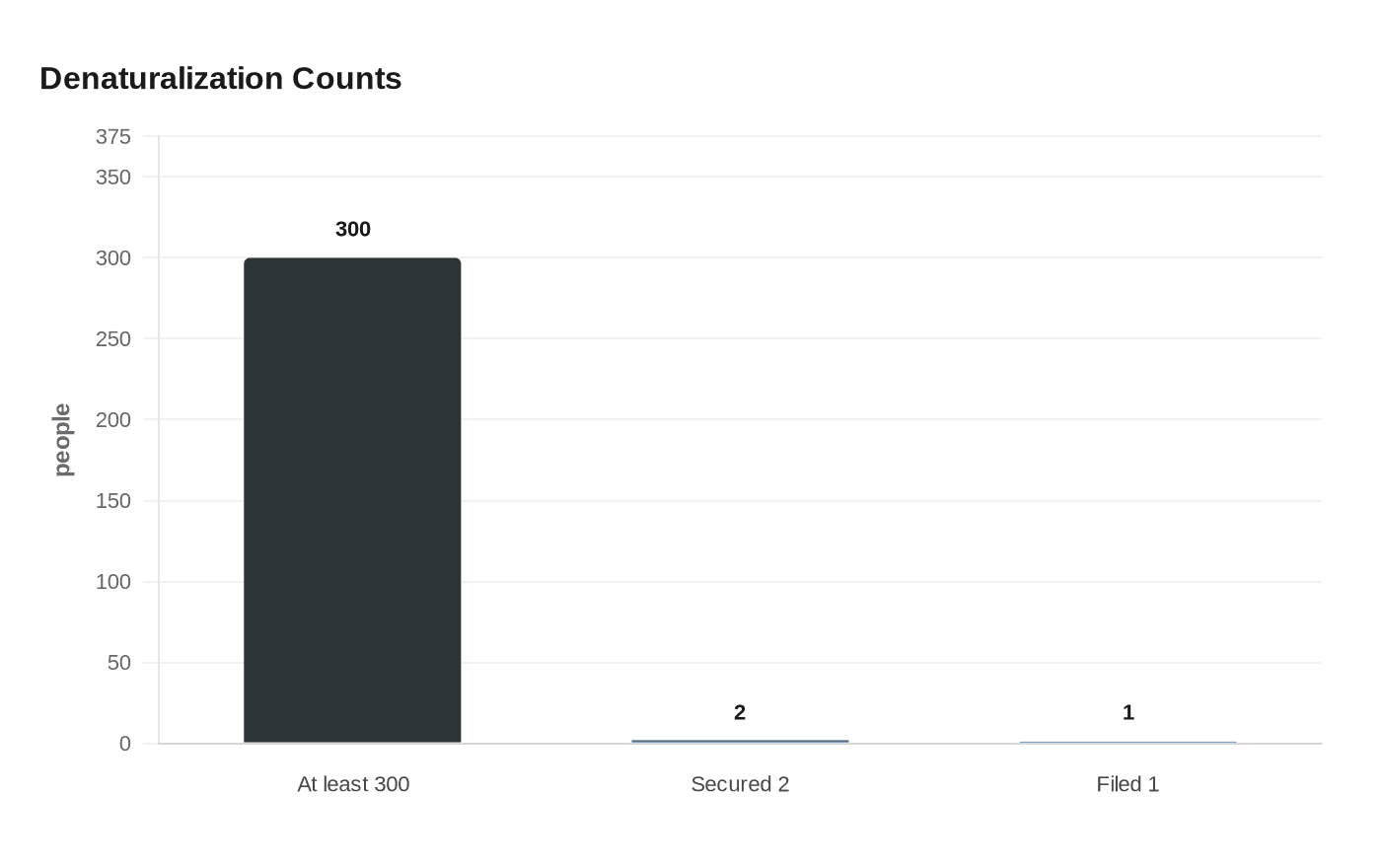
The scope already appears significant. NBC News reported in April that the Justice Department was targeting at least 300 foreign-born Americans for possible denaturalization. Other reporting described internal government goals of 100 to 200 denaturalization referrals per month in fiscal year 2026, a pace that would represent a major escalation from historical practice. The Justice Department Civil Division made denaturalization a formal enforcement priority in a June 11, 2025 memo, and the administration has begun showing results this spring.
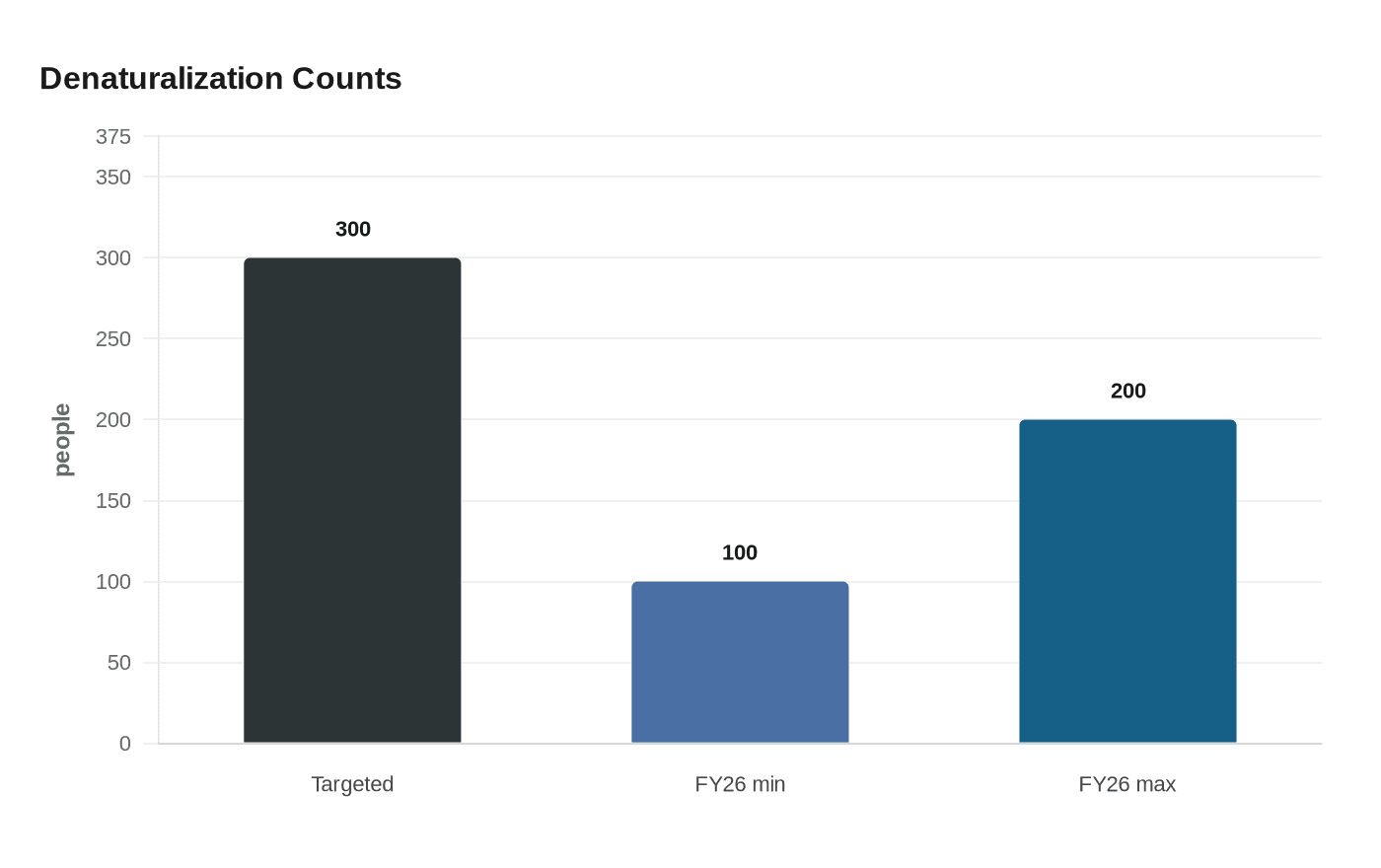
In March, the Justice Department said it had secured the denaturalization of two people and filed to revoke the citizenship of a third. In a separate case, the department filed a civil denaturalization complaint in Baltimore, Maryland, against Emmanuel Oluwatosin Kazeem, whom it described as a native of Nigeria and the mastermind of a multimillion-dollar identity theft and fraudulent tax-return conspiracy. Those cases fit the traditional legal theory for denaturalization: the government must show that citizenship was obtained through fraud or illegal procurement, not simply that a citizen later ran afoul of immigration policy or criminal law.
That distinction is what worries immigration advocates and legal groups, including the American Immigration Lawyers Association, which say the 2025 Justice Department memo marked an expansion that could chill naturalized citizens and deepen due-process concerns. Blanche’s remarks came as he also called for removing immigration judges the department believes are ruling too slowly or not following the law, underscoring a broader effort to speed deportations and tighten enforcement across the immigration system.
This article was produced by Prism’s automated news system from verified source data, official records, and press releases, then run through automated quality and moderation checks before publishing. The system is built and supervised by the people who set the standards it runs under. Read our full AI policy.
Did this article answer your question?