Trump administration seeks to shift coal ash oversight to states
If coal ash oversight shifts to states, the core question is who will force cleanup at polluted sites where groundwater already fails federal standards.
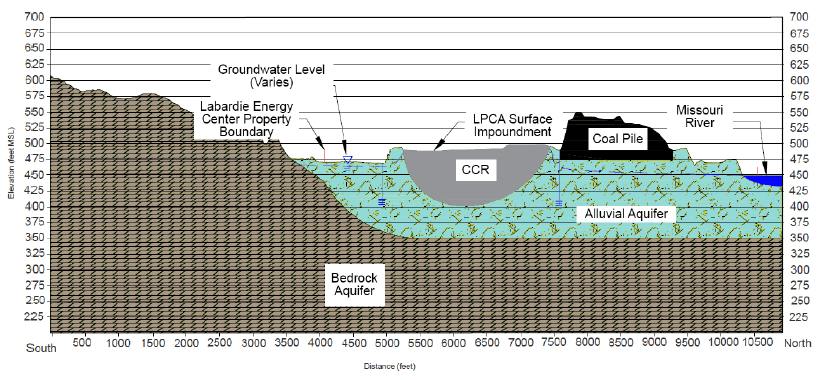
If the U.S. Environmental Protection Agency gives states more room to police coal ash, the central enforcement question is immediate: who will monitor contamination and compel utilities to clean it up when groundwater already shows damage at thousands of disposal units?
The Trump administration’s April 2026 proposal would weaken groundwater-protection and cleanup requirements for some coal ash sites and give states more authority, a sharp turn from the federal framework built after one of the country’s worst industrial spills. EPA first set national minimum coal ash criteria on April 17, 2015, after the December 22, 2008, dike failure at Tennessee Valley Authority’s Kingston Fossil Plant in Harriman, Roane County, Tennessee, sent more than 1 billion gallons of coal ash slurry into the Emory River area.
That federal baseline expanded again on May 8, 2024, when EPA finalized a rule covering inactive surface impoundments at inactive electric utilities, known as legacy CCR surface impoundments, and added requirements for a new category called CCR management units. EPA has also made coal ash a national enforcement priority for 2024 to 2027, warning that violations can lead to catastrophic releases and long-term contamination of groundwater, drinking water and surface water.
Environmental groups say the proposed rollback would leave communities with less protection just as the scale of the problem remains large. Advocates cite industry data showing at least 91% of coal plants are contaminating groundwater above federal safety standards. EPA’s enforcement focus has been described as covering roughly 300 regulated facilities, including 240 landfills and 535 surface impoundments, a footprint that spans the country’s aging coal fleet and the waste left behind.
Coal ash contains mercury, arsenic, lead, cadmium and chromium. Harvard Environmental and Energy Law Program has said about one-third of coal ash is beneficially reused, often in cement or wallboard, while the rest is typically stored in landfills or surface impoundments. That means the remaining waste stream still sits near rivers, wells and neighborhoods, where the stakes are measured not just in cleanup costs but in public health.
Earthjustice, the Southern Environmental Law Center and the Sierra Club have opposed shifting responsibility away from Washington, arguing that a state-by-state patchwork would weaken protections for communities already living with contaminated water supplies. After Kingston, federal minimum standards were meant to stop exactly that kind of uneven oversight. The new proposal would test whether states can do the job, or whether polluted communities are left waiting for enforcement that never arrives.
This article was produced by Prism’s automated news system from verified source data, official records, and press releases, then run through automated quality and moderation checks before publishing. The system is built and supervised by the people who set the standards it runs under. Read our full AI policy.
Know something we missed? Have a correction or additional information?
Submit a Tip