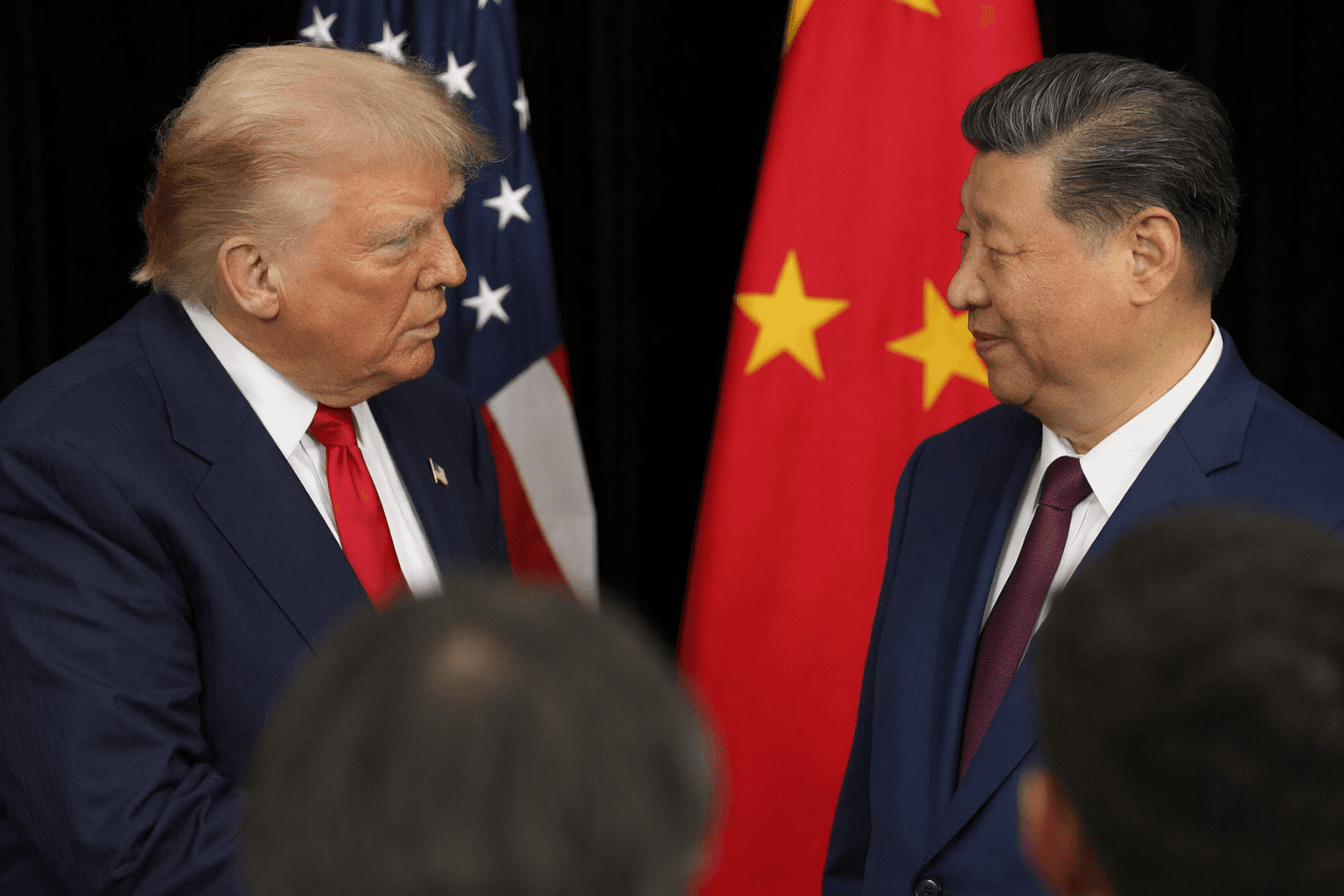
Trump and Xi meet as U.S.-China tensions, and China’s rise, loom
Trump and Xi met under the shadow of Taiwan, trade and war fears, as China’s heft met slower growth, debt strains and a $336 billion military budget.

Donald Trump and Xi Jinping met with the U.S.-China rivalry at full boil, and the familiar story of an unstoppable Chinese ascent ran into a more complicated reality. China is still a manufacturing giant, a military heavyweight and a force across Asia and beyond. But its economic momentum is slowing, its domestic demand is weak, and its property sector remains under strain.
Taiwan sat near the center of the encounter. The island remains one of the biggest diplomatic flashpoints between Washington and Beijing, and Xi has long treated it as a core issue. That makes every summit between the two presidents about more than trade. It is also about military signaling, regional security and whether both sides can keep competition from sliding into crisis.
The economic numbers show how deeply the two countries remain tied together even as tensions deepen. The United States recorded a goods trade deficit with China of $202.1 billion in 2025. U.S. goods imports from China totaled $308.4 billion, while exports to China reached $106.3 billion. That imbalance underscores both America’s dependence on Chinese goods and China’s dependence on access to the U.S. market.
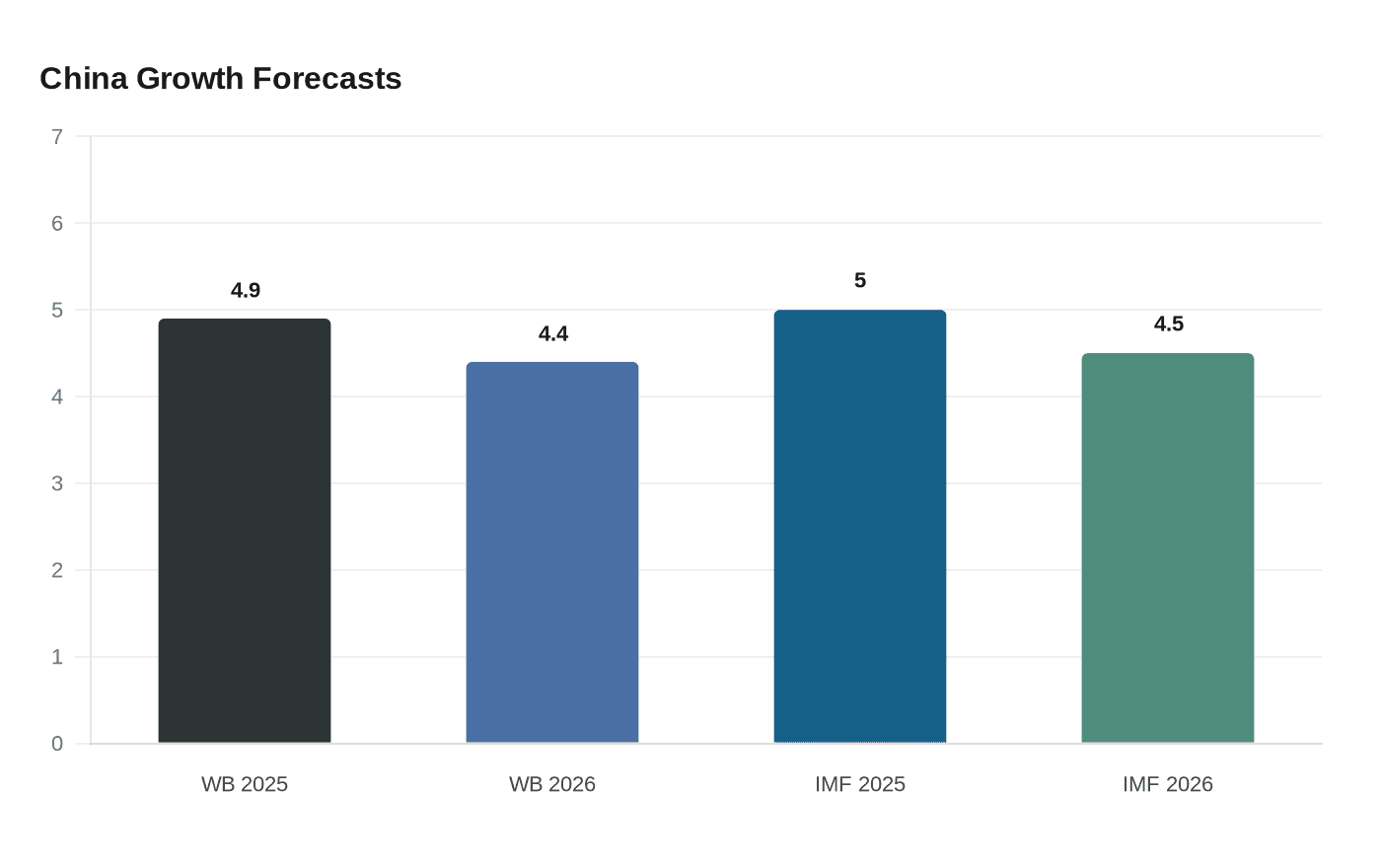
Yet the numbers behind China’s growth story are less dramatic than the slogan of inevitable rise suggests. The World Bank estimated China’s economy grew 4.9% in 2025 and projected 4.4% growth in 2026. The International Monetary Fund was slightly more upbeat, projecting 5.0% growth in 2025 and 4.5% in 2026. Both institutions pointed to weak domestic demand, property-sector weakness and deflationary pressures. China is still expanding, but not at the pace that once fueled expectations of near-limitless ascent.
Military power remains the clearest area of Chinese strength. The Stockholm International Peace Research Institute estimated China’s military spending at $336 billion in 2025, up 7.4% from the year before. That made China the world’s second-largest military spender, behind the United States, while global military spending reached a record $2.887 trillion. The buildup reinforces Beijing’s reach in the Western Pacific, even as it raises the risk of a harder confrontation over Taiwan and other security disputes.
Trump and Xi have also been in direct contact over trade, including tariffs, soybeans and rare earth minerals, showing that the rivalry still runs through supply chains as much as through warplanes. China remains powerful, but the evidence points to a rise marked by real strength and real limits. The challenge for Washington is to read both at once.
Know something we missed? Have a correction or additional information?
Submit a Tip