Trump and Xi project warmth as tensions loom over Taiwan, trade
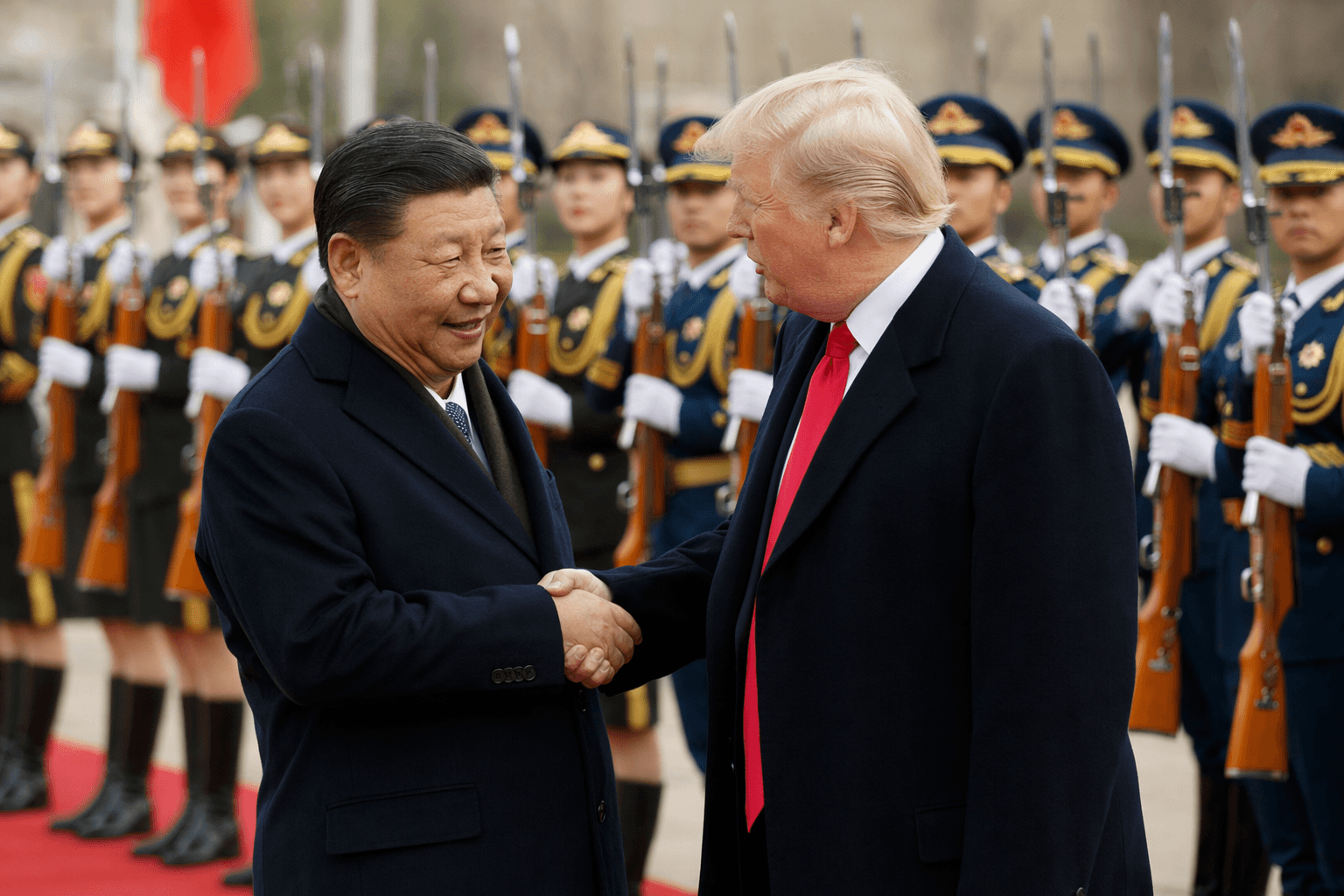
Trump and Xi clasped hands in Beijing as military honors framed a summit shadowed by Taiwan and trade. Both sides signaled control, not détente.

The handshake was the point, at least at first. Donald Trump and Xi Jinping opened their Beijing summit with smiles, a firm clasp of hands and a tightly choreographed welcome at the Great Hall of the People, where red carpet, military honors and schoolchildren along the route turned diplomacy into stagecraft.
The pageantry mattered because the talks arrived at a moment of deep friction between the United States and China. Trump was making his first visit to China as president in nearly a decade, and the summit on May 14, 2026, was widely viewed as a test of whether the two powers could contain a rivalry that has grown around trade, export controls, supply chains, human rights and security concerns.
Taiwan remained the most dangerous fault line. Xi warned Trump that mishandling the issue could lead to conflict, and Chinese readouts described Taiwan as the most important issue in the bilateral relationship. Beijing’s framing pushed instead for a constructive China-U.S. relationship of strategic stability, with Chinese officials and CNBC describing the goal as managed stability and a framework built around cooperation and measured competition.
That language reflected how much was at stake economically as well as strategically. The agenda covered expanded market access for U.S. companies in China, increased Chinese investment in the United States, more Chinese purchases of U.S. oil and agricultural goods, and better use of diplomatic and military communication channels. A preparatory trade meeting involved Scott Bessent and He Lifeng, underscoring that the summit was as much about managing escalation as it was about any grand bargain.
The trip also drew unusual business attention. Elon Musk and Jensen Huang were among the prominent figures present, a sign of how closely corporate leaders were watching the outcome as tariffs, technology restrictions and supply-chain pressure continue to shape the relationship between the world’s two largest economies.
The body language matched the politics. Trump’s larger-than-life, physically assertive style, especially his trademark handshake, was on display in an opening exchange that looked warm on the surface but highly managed underneath. The posture, the contact and the precision of the setting all pointed to the same message: both leaders wanted to project control and stability, even as Taiwan and trade kept the rivalry unresolved.
Know something we missed? Have a correction or additional information?
Submit a Tip
