Trump approval sinks to historic second-term low in new polls
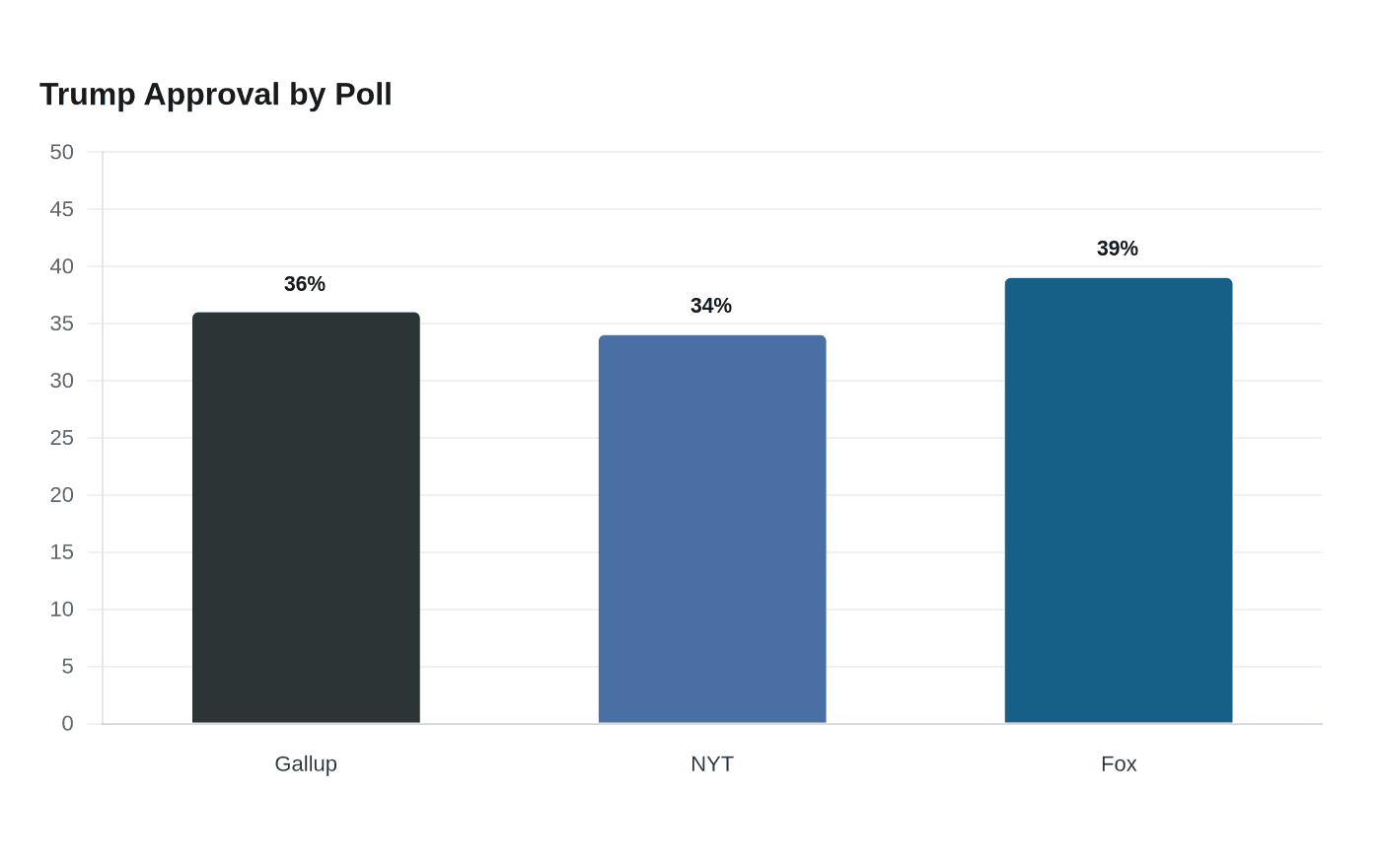
Trump's approval fell to 36% in Gallup, with other trackers at 34% and 39%. The slump is deepest among independents, but a second term blunts the pressure to change course.
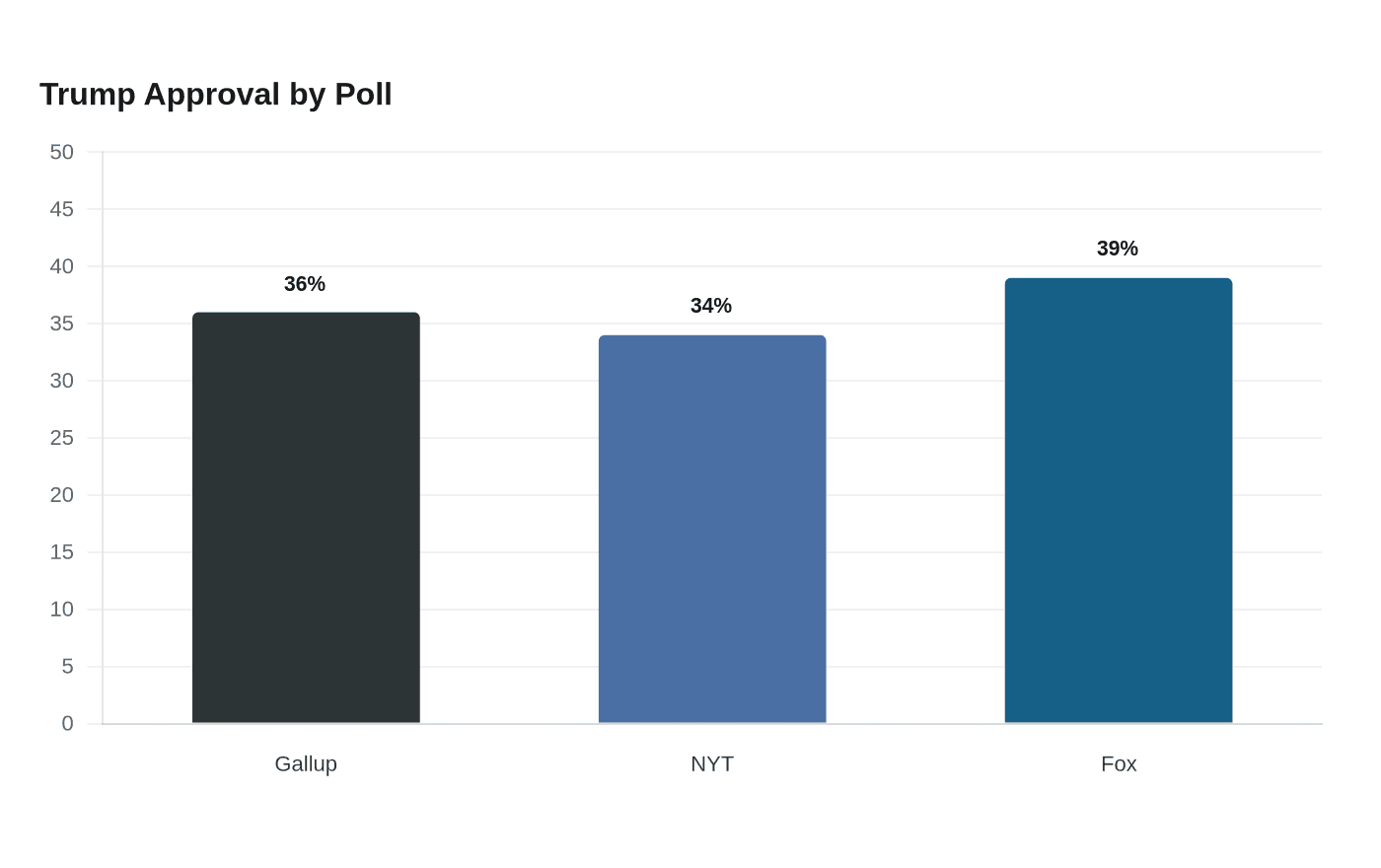
Gallup said Donald Trump’s job approval fell to 36% in July 2026, a new second-term low and five points below its prior reading. Other trackers landed in the same range, with The New York Times polling tracker putting Trump at 34% on Aug. 1 and a late-July Fox News poll showing 39% approval.
The weakest numbers have come from voters outside Trump’s core. Gallup had already reported a 37% second-term low among independents, and an Economist/YouGov survey taken July 25-27 said approval hit a record low driven down by Gen X, white Americans and independents. Forbes added another marker on July 30, saying Trump’s net approval reached a record low in Nate Silver’s Silver Bulletin tracker.

The public is also registering discontent with Trump’s priorities. A CNN/SSRS poll released July 29 found 73% of U.S. adults said he had not paid enough attention to the country’s most important problems, while only 27% said he had the right priorities. Polling analysts have tied the weakness to economic dissatisfaction, gas prices and the Iran war, a mix that has pushed Trump’s numbers toward the bottom of the modern presidential range.
What makes the slide different in a second term is that it does not carry the same built-in political penalty. Trump does not face reelection, so approval ratings no longer translate as directly into a looming vote against him. That removes the strongest incentive most presidents have to soften their agenda, court swing voters or change course quickly when public opinion turns.
The result is a president who can absorb historically weak ratings with fewer immediate consequences. Party incentives also point the same way: Republican officials have little reason to abandon a president who still commands the party base, even as independents and other movable voters turn away. Conservative media helps further insulate him from broader public criticism, limiting the pressure that can force a policy reset.
That is why the policies most likely to continue are the ones already central to Trump’s second-term profile, including his economic message, his focus on prices and his hard line on the Iran war. Gallup’s long-run comparisons, along with benchmarks maintained by the American Presidency Project and the Cornell Roper Center for Public Opinion Research, place these readings among the weakest for a second-term president at this stage of office, but the structure of Trump’s politics leaves him room to keep governing much as he is.
This article was produced by Prism’s automated news system from verified source data, official records, and press releases, then run through automated quality and moderation checks before publishing. The system is built and supervised by the people who set the standards it runs under. Read our full AI policy.
Did this article answer your question?