Trump asks Congress for $87.6 billion to fund Iran war costs
The White House asked for $87.6 billion, with $67 billion for the Pentagon, as Congress weighs war costs, farm aid, Ebola response and D.C. projects.

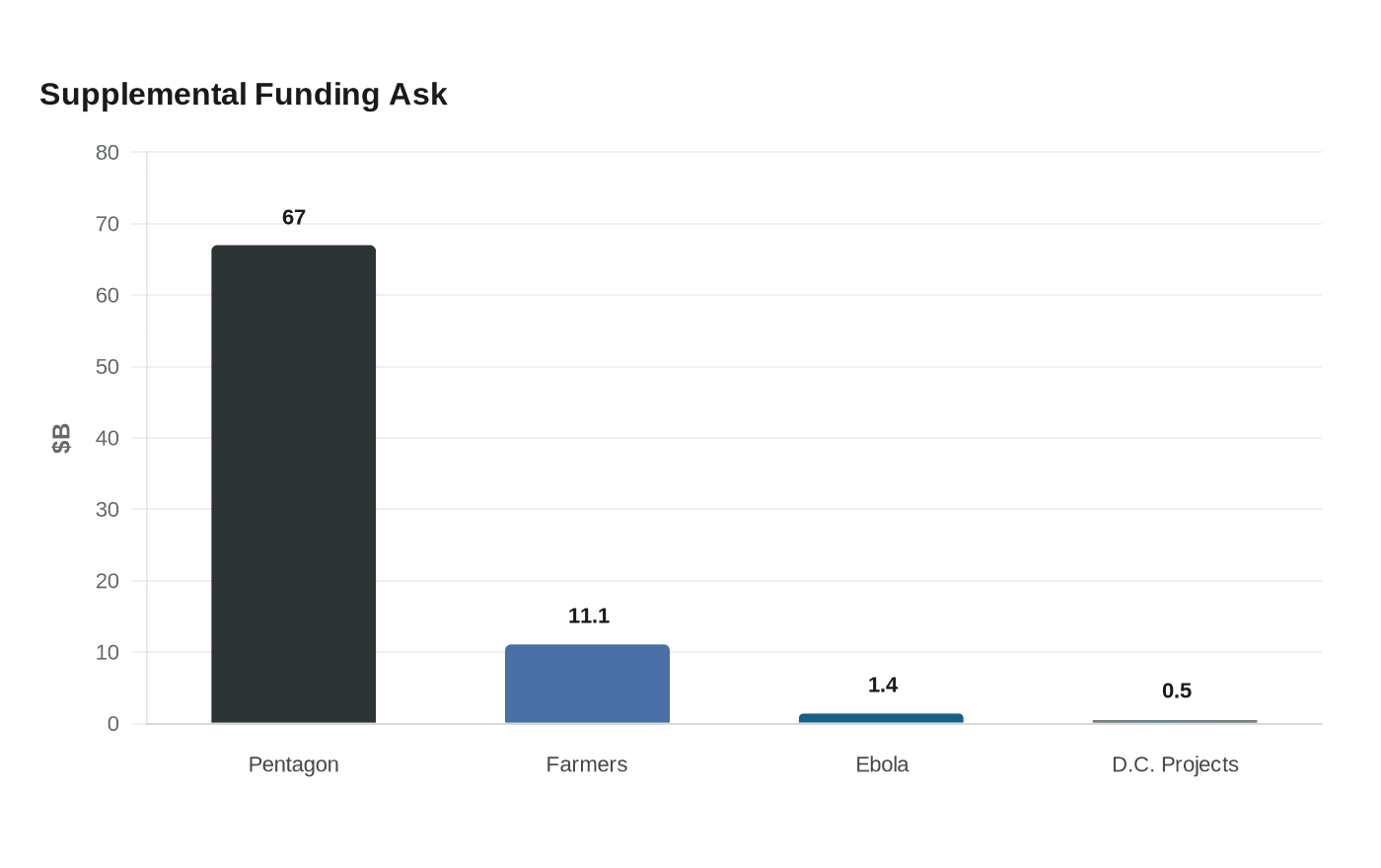
The White House asked Congress for about $87.6 billion to cover Iran war costs and other urgent needs, putting a high-stakes price tag on a conflict already driving pressure on the Pentagon’s stockpiles and on lawmakers’ willingness to sign off after the fighting has begun. Roughly $67 billion of the request is for the Pentagon, including $21 billion for munitions and strengthening the defense industrial base, $17.3 billion for operational costs and $12.1 billion for classified programs.
White House Office of Management and Budget Director Russell Vought sent the package to House Speaker Mike Johnson and pressed Congress to move quickly. The request also includes $11.1 billion for U.S. farmers, $1.4 billion to respond to an Ebola outbreak in Central Africa and $500 million for restoration and construction projects in and around Washington, D.C., underscoring how the administration folded nonwar priorities into the same supplemental bill.
The spending ask lands as lawmakers are already confronting the politics of the conflict. The Senate voted 50-48 on Tuesday to approve a war powers resolution aimed at ending U.S. hostilities with Iran, a rare rebuke that followed the House’s passage of a similar resolution earlier in June. That vote signaled bipartisan unease with the war and set up a direct test for congressional leaders, including Senate Majority Leader John Thune and Senate Democratic leader Chuck Schumer, as they weigh whether to advance the money anyway.
The battle over the funding is likely to be especially difficult for vulnerable Republicans who may face backlash for backing a war many voters oppose. Democrats are already framing the request as a question of authorization as much as appropriations. Virginia Sen. Mark Warner said he would “take a look at anything,” but argued that Trump should have sought congressional authorization before the conflict.
The financial pressure is mounting fast. Reports have put the Iran war’s cost at nearly $1 billion a day, a pace that helps explain why the administration is asking for such a large supplemental and why the Pentagon wants money to replenish munitions, operational capacity and classified programs so quickly. The request now moves into a Congress that has already shown it is willing to challenge the war itself before agreeing to pay for it.
This article was produced by Prism’s automated news system from verified source data, official records, and press releases, then run through automated quality and moderation checks before publishing. The system is built and supervised by the people who set the standards it runs under. Read our full AI policy.
Know something we missed? Have a correction or additional information?
Submit a Tip