Trump claims Iran accepted nuclear deal, Tehran denies broader agreement
Trump said Iran had accepted nearly all demands, but Tehran only backed reopening the Strait of Hormuz and rejected any uranium transfer to the U.S.
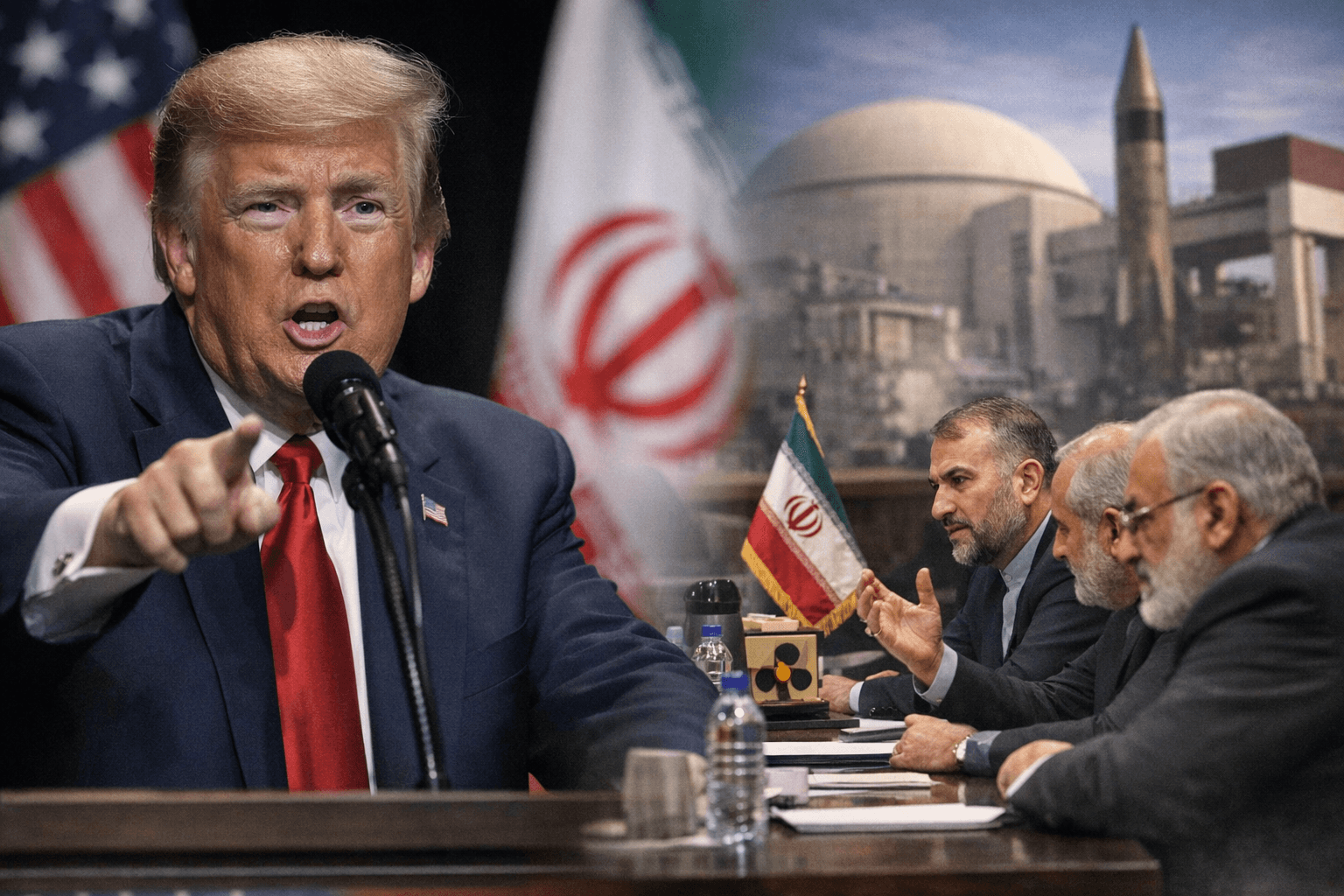
Donald Trump said Iran had effectively accepted his terms, but Tehran quickly narrowed the claim to a much smaller concession: reopening the Strait of Hormuz to commercial shipping. The split left the central question unresolved, whether the two sides had moved toward a real nuclear deal or only a temporary pause around a dangerously volatile standoff.
In a CBS News interview on April 17, Trump said Iran had “agreed to everything,” including work to remove its enriched uranium. He told Reuters the same day that the United States would work with Iran to recover the material and bring it back to the United States, describing the effort as moving at a “nice leisurely pace” and saying no U.S. troops would be involved. Those comments suggested an arrangement centered on the handling of Iran’s stockpile, not a broader settlement of sanctions, regional tensions, or military posture.
Tehran pushed back immediately. Iranian Foreign Ministry spokesman Esmaeil Baqaei said Iran’s enriched uranium is not going to be transferred anywhere, and that moving uranium to the United States had never been part of the talks. Iranian officials’ narrower language pointed to one concrete opening, the return of commercial traffic through the Strait of Hormuz, while rejecting Trump’s portrayal of an expansive agreement.
The stakes remain high because Iran’s enrichment program has moved far beyond the limits set under the 2015 nuclear deal. The JCPOA capped enrichment at 3.67% and limited the stockpile, but the United States withdrew in 2018 and Iran later expanded its program. The International Atomic Energy Agency said Iran held 440.9 kilograms of uranium enriched to 60% on the eve of the June 2025 attacks, a level much closer to weapons-grade than civilian reactor fuel.
That stockpile became even more sensitive after the June 12, 2025, resolution by the IAEA Board of Governors, which found Iran in breach of its non-proliferation obligations for the first time in 20 years. The crisis deepened after U.S. and Israeli strikes on Iranian nuclear sites in June 2025, which later analysis said left the location of some highly enriched uranium uncertain.
Against that backdrop, Reuters reported on April 16 that negotiators had scaled back ambitions for a comprehensive peace agreement and were instead exploring a temporary memorandum aimed at preventing another round of conflict. The main unresolved issue remained the same one that has blocked previous talks: whether Iran would stop enriching uranium at all. Iran has repeatedly treated domestic enrichment as a red line, making any real breakthrough dependent on whether the two sides can bridge that gap without another military escalation.
This article was produced by Prism’s automated news system from verified source data, official records, and press releases, then run through automated quality and moderation checks before publishing. The system is built and supervised by the people who set the standards it runs under. Read our full AI policy.
Did this article answer your question?


