Trump Clashes With NATO Chief Rutte During White House Visit
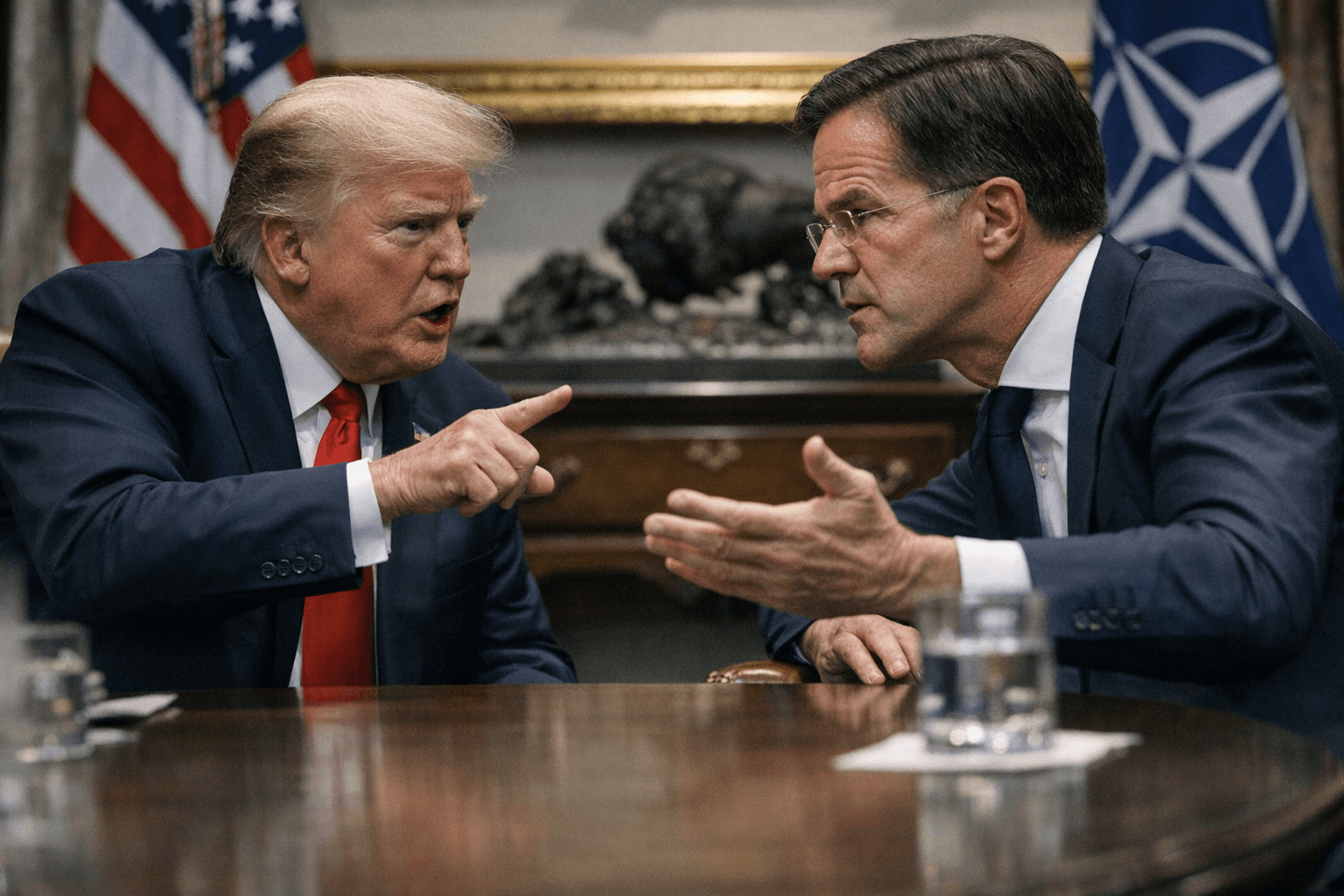
Trump blasted NATO on Truth Social after a two-hour White House meeting with Secretary General Mark Rutte, renewing Greenland threats and raising fears of a U.S. exit from the 80-year-old alliance.
The all-caps Truth Social post landed within hours of the handshakes: "NATO WASN'T THERE WHEN WE NEEDED THEM, AND THEY WON'T BE THERE IF WE NEED THEM AGAIN. REMEMBER GREENLAND, THAT BIG, POORLY RUN, PIECE OF ICE!!!" President Trump's Wednesday broadside against NATO, fired off after a roughly two-hour closed-door session with Secretary General Mark Rutte, crystallized a crisis that has been building since the U.S.-Iran war began in late February and now puts the nearly 80-year-old alliance on its most precarious footing since the Cold War.
The meeting was a diplomatic high-wire act for Rutte, who arrived at the White House having already met with Secretary of State Marco Rubio at the State Department Wednesday morning. Rubio and Rutte discussed the Iran conflict, U.S. diplomacy on Ukraine, and what the State Department described as "increasing coordination and burden shifting with NATO allies." Those talks were cordial by comparison to what followed.
Ahead of the White House sit-down, Press Secretary Karoline Leavitt set the tone bluntly, telling reporters that member states had "turned their backs on the American people" who fund their defense, and quoting Trump directly: "They were tested, and they failed." Leavitt confirmed that a possible U.S. withdrawal from the alliance was "something the president will be discussing" with Rutte.
The core grievance is the Strait of Hormuz. Iran effectively closed the chokepoint, through which roughly 20 percent of the world's oil flowed, after the war began, and Trump pressed allies to send naval forces to help reopen it. Several refused. France, Spain, and Italy blocked U.S. military aircraft from using their bases for the war effort. Italy briefly shut down the Sigonella air base in Sicily entirely; France allowed access to a southern base only after receiving assurances that planes involved in Iranian strikes would not land there. Countries that did support the effort, including Poland, Romania, Lithuania, and Greece, are now positioned to benefit from a potential U.S. troop repositioning under plans described as being in their early stages but backed by senior Trump officials.
Those plans carry real weight: approximately 70,000 U.S. troops are currently stationed across Europe. The administration is weighing both relocations toward allied countries deemed cooperative and the closure of at least one base, possibly in Germany or Spain. In his first term, Trump ordered a reduction of American forces in Germany by roughly 10,000.
Outright NATO withdrawal faces a legal barrier Congress erected in 2023, which requires legislative approval before any president can exit the alliance. But Trump has never acknowledged that constraint as binding, and European officials have said his threats alone erode deterrence against Russia, particularly for the Baltic states, regardless of whether he follows through.
Rutte, long dubbed the "Trump whisperer" for his skill at managing the relationship, conceded significant ground after emerging from the session. Speaking to CNN, he described the discussion as "a very frank, very open discussion, but it was also a discussion between two good friends," and acknowledged that Trump "is clearly disappointed with many NATO allies, and I can see his point." Asked directly whether some allies had been tested and failed, Rutte answered: "Some of them, yes." He sought to limit the damage by noting that "the large majority of European nations have been helpful with basing, logistics, overflights, and meeting their commitments," and the White House issued no formal readout of the meeting.
Trump had told reporters days earlier that his frustration with the alliance traced back even further than Iran: "It all began, if you want to know the truth, Greenland. They don't want to give it to us, and I said, 'bye-bye.'" The Truth Social post after the Rutte meeting made the same connection explicit, pairing the Iran grievance with a fresh jab at the Danish territory, which is home to a U.S. military base and which Rutte had previously persuaded Trump to pursue through diplomacy rather than force.
For Europe, the practical calculation is sharpening fast. Eastern European members that supported the Hormuz coalition are racing to lock in U.S. presence before the political winds shift further. Western European governments blocking base access to U.S. aircraft are betting that Trump's threats remain leverage rather than policy, even as analysts warn the alliance's credibility with Russia depends on that bet being right.
This article was produced by Prism’s automated news system from verified source data, official records, and press releases, then run through automated quality and moderation checks before publishing. The system is built and supervised by the people who set the standards it runs under. Read our full AI policy.
Did this article answer your question?


