Trump declares $1 billion damages demand against Harvard amid grant fight
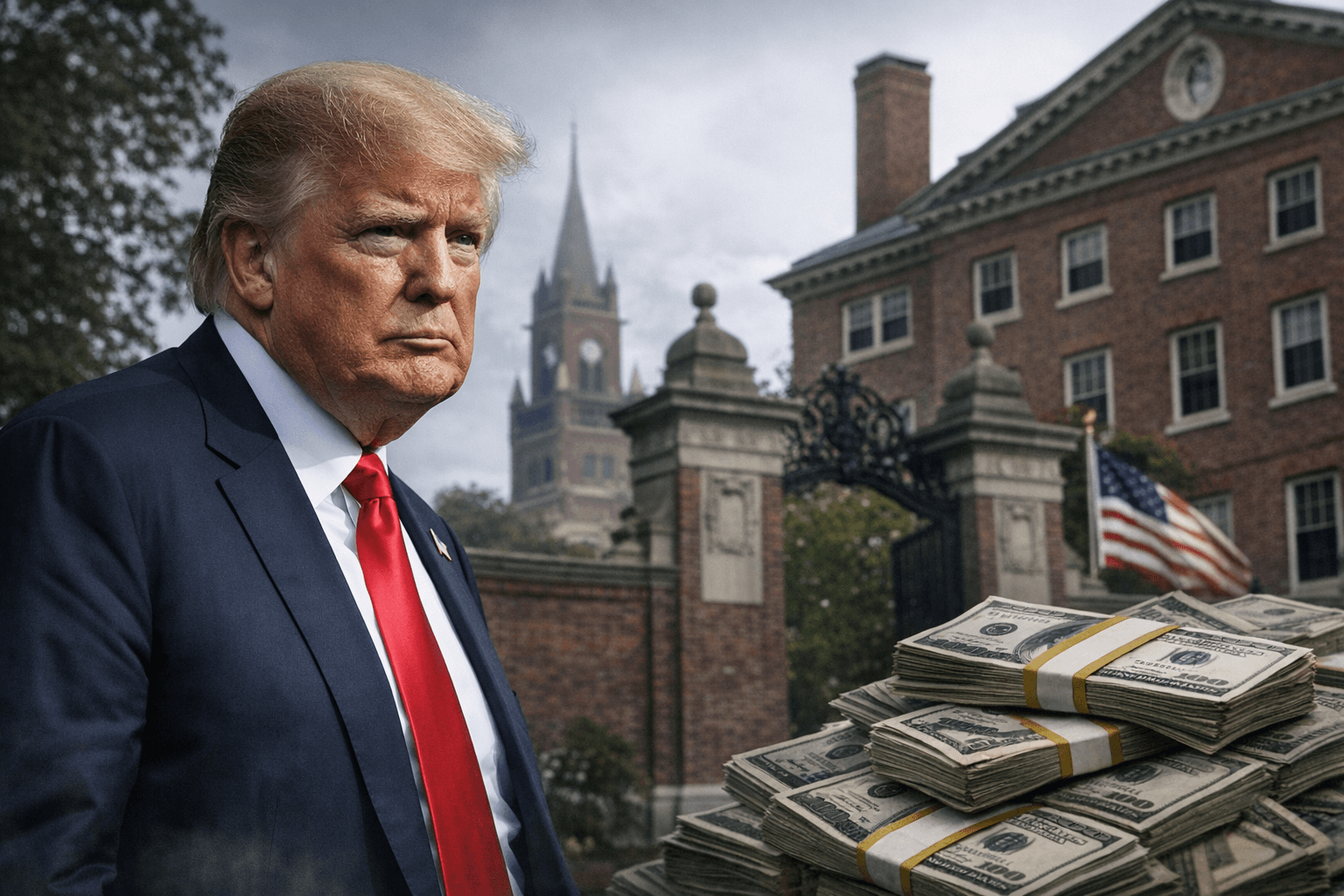
President Trump said his administration is seeking $1 billion from Harvard, escalating a dispute over billions in frozen research grants and raising new legal and policy stakes.

President Donald Trump posted late on Monday on Truth Social that his administration is seeking “One Billion Dollars in damages, and want nothing further to do, into the future, with Harvard University.” The declaration intensifies a protracted conflict over the White House’s decision to freeze and revoke federal research funding to the Ivy League school, a dispute that has already produced court rulings finding the government acted unlawfully.
The demand follows litigation in which a federal judge, U.S. District Judge Allison Burroughs, ruled for Harvard and ordered restoration of more than $2 billion in research grants that the administration had blocked. The administration appealed a judge’s ruling in December and has said it will continue to challenge court decisions that restored the funding. It also has signaled it intends to keep Harvard ineligible for future grants while pursuing other pressure tactics.
Legal experts say a government claim seeking nine-figure damages from a private university would be highly unusual and could establish new precedent on the boundaries between federal funding authority and institutional autonomy. The administration has tied its actions to allegations that Harvard and other campuses did not adequately address wave of antisemitic incidents tied to pro-Palestinian protests, framing the pressure as enforcement of federal standards tied to grant eligibility. Harvard has denied those accusations and sued to restore funding, arguing the government cannot condition grants on curbing campus speech and academic inquiry.
The standoff has unfolded alongside negotiations with other institutions. Columbia, Penn and Brown reached agreements that preserved their funding; Harvard has so far refused to settle, and previous talks reportedly included demands ranging from $200 million to $500 million, which were later abandoned or disputed. The current $1 billion demand, announced by the president, represents a sharp escalation from those reported negotiation figures. It was not immediately clear whether the administration’s statement reflects a formal court filing seeking damages or a public declaration of intent.
Beyond litigation, the administration has threatened additional levers of pressure, including challenges to tax-exempt status and control over patents arising from federally funded research. Those threats, and the broad use of grant leverage, raise questions for federal research policy and university risk management. The consequences extend to the scientific ecosystem: universities reliant on federal grants could face uncertainty about long-term funding rules, and researchers may confront new political risk in pursuing federally supported projects.
The dispute carries political implications as well. For lawmakers in both parties, the case poses choices about oversight of campus conduct, defense of academic freedom and stewardship of taxpayer-funded research. For voters, especially in districts with major research institutions, the controversy highlights how federal policy decisions on campus speech and grant administration can ripple into local economies, employment and civic life.
As the fight moves forward, the key legal questions will be whether the government can quantify and recover damages from a university over policy disagreements, and whether courts will limit the executive branch’s use of funding conditionality as a tool of institutional discipline. The practical stakes are immediate: billions in science funding, patent ownership, and the institutional independence of America’s major research universities.
This article was produced by Prism’s automated news system from verified source data, official records, and press releases, then run through automated quality and moderation checks before publishing. The system is built and supervised by the people who set the standards it runs under. Read our full AI policy.
Did this article answer your question?

