Trump delays Taiwan arms sale after Xi summit, drawing bipartisan pressure
Trump left a $14 billion Taiwan arms package in limbo after meeting Xi Jinping in Beijing, triggering warnings from Taipei and fresh bipartisan pressure in Washington.
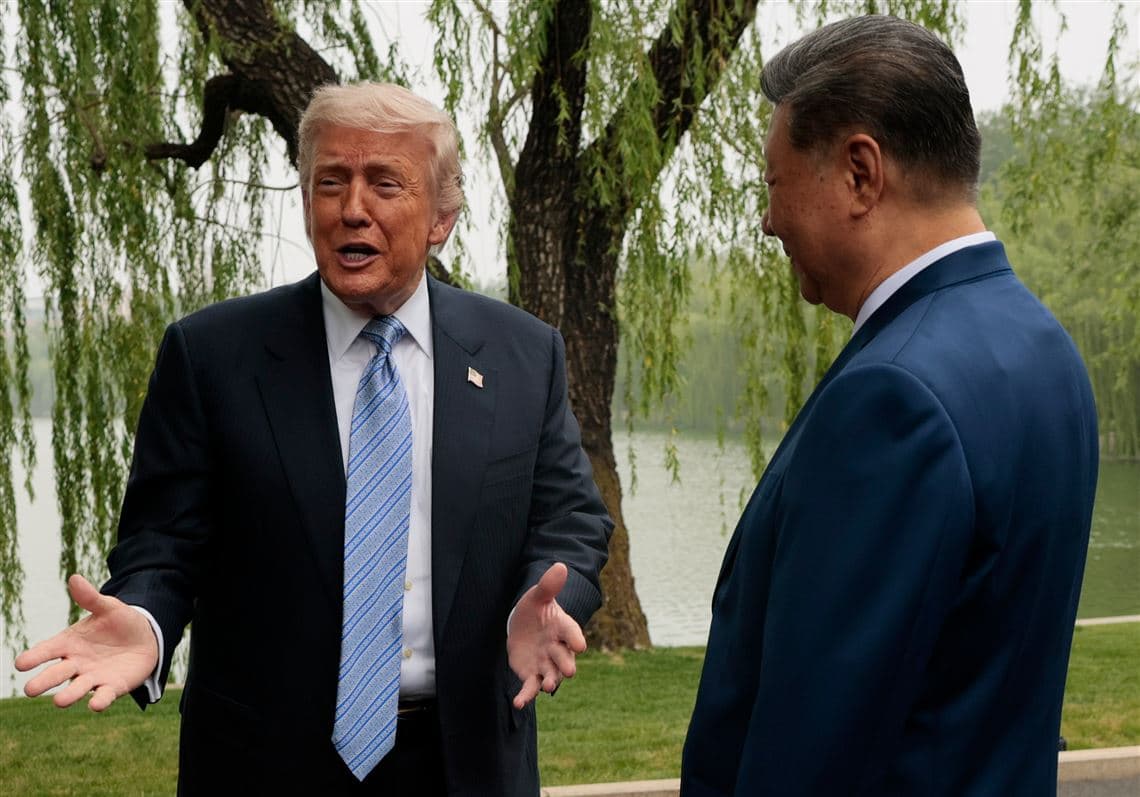
Donald Trump’s decision to leave a major Taiwan arms sale unsettled allies and lawmakers after his Beijing summit with Xi Jinping, where the president went from promising to discuss the package to saying he had not made a final decision. The shift has sharpened questions about whether Taiwan policy is being folded into leader-to-leader dealmaking, with the White House signaling flexibility even as Beijing keeps the island at the center of its pressure campaign.
Before the meeting, Trump said he would raise U.S. arms sales to Taiwan with Xi. Afterward, he said he had not decided whether to move ahead and would determine the issue soon. The proposed package is widely reported at about $14 billion, and multiple reports say it cannot advance until Trump formally sends it to Congress. That leaves the sale in a holding pattern at a moment when Washington is already balancing support for Taipei against the risk of antagonizing Beijing.
The timing matters because the Beijing summit was the first visit by a U.S. president to China since 2017, and Taiwan featured prominently in the talks. Xi reportedly warned that mishandling Taiwan could lead to conflict, while Trump said Xi raised the issue directly and that he made no commitment either way on the arms package. The contrast between Trump’s pre-summit posture and his post-summit hesitation has fueled concern that a core security issue is being treated as a bargaining chip rather than a settled policy.
Taipei moved quickly to push back. Taiwan’s government said U.S. arms sales are based on U.S. law, including the Taiwan Relations Act, and serve as a shared deterrent against regional threats. Taiwan’s foreign ministry also described Taiwan as a sovereign and independent nation with a U.S. security commitment, an unusually direct reminder that arms deliveries are seen there not as optional diplomacy but as a test of Washington’s reliability.
In Washington, the pause drew bipartisan resistance. Lawmakers from both parties urged Trump to continue military support for Taiwan after the summit, warning against any break from long-standing U.S. policy. Jeanne Shaheen and Thom Tillis were among those pressing for continuity, reflecting how quickly Trump’s ambiguity has turned into a credibility problem on Capitol Hill.
The hesitation also fits a broader pattern. Trump’s administration already authorized a separate record $11 billion weapons package for Taiwan in December 2025, but that sale has not moved forward either. For Taipei, that combination of delay and uncertainty weakens deterrence. For Beijing, it suggests pressure can slow U.S. support. For allies watching from Tokyo to European capitals, it raises the cost of not knowing whether Taiwan policy will hold when it collides with personal diplomacy.
Know something we missed? Have a correction or additional information?
Submit a Tip