Trump Holds White House Executive Order Signing Amid Legal Challenges
Trump used a White House signing ceremony as his administration faced hundreds of lawsuits and repeated court setbacks, with another executive action added on April 18.
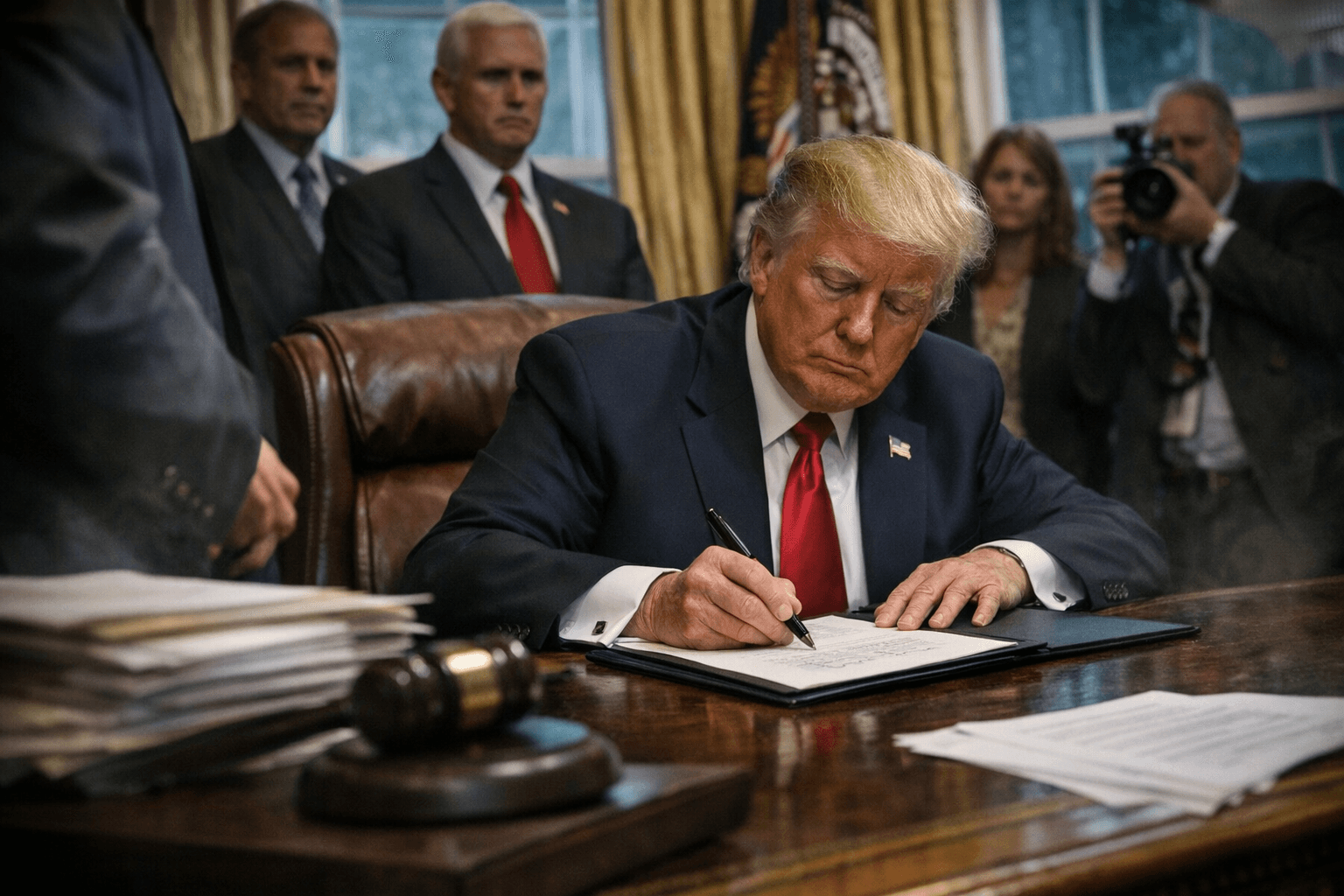
The White House turned the West Wing into a stage for another executive action even as President Donald Trump’s second administration kept running into court. The live event listing on Saturday, April 18, identified the session simply as “President Trump Signs an Executive Order,” a sign of how central unilateral action has become to the president’s governing style.
The timing matters because the administration has been issuing executive orders at a steady clip, with the White House’s own executive-orders page showing a cluster of recent actions dated April 3, March 31, March 26, March 24, March 20, March 16 and March 13, 2026. That pattern shows a White House trying to move quickly through executive authority rather than waiting for Congress, where major policy changes can stall or die.
Executive orders can direct federal agencies, set enforcement priorities and reshape how existing law is carried out. They cannot create new statutes on their own, and that is where the limits appear first. Any order that requires new money, new penalties or a broader rewrite of policy can run into Congress on the budget side, or into the courts if challengers argue the president has overstepped his authority. The White House has already seen how fragile that strategy can be.
One recent example was the April 3 order titled “Urgent National Action to Save College Sports.” The White House said Trump signed it after a roundtable on college athletics, using an executive order to signal support for a major cultural and political priority without waiting for a legislative package. That kind of move can have an immediate symbolic impact, especially for college athletes, athletic departments and universities watching for federal direction, but the practical effects depend on whether agencies can carry it out and whether courts allow it to stand.
The legal backdrop is unusually heavy. The Associated Press has tracked hundreds of lawsuits filed against Trump’s second-administration actions, including executive orders, and courts have already blocked the administration in a number of cases. That makes every new signing more than a photo opportunity. It becomes an opening shot in a fight over what the president can do alone, how far federal agencies will go, and whether judges will let the order take effect before the next challenge lands in Washington.
This article was produced by Prism’s automated news system from verified source data, official records, and press releases, then run through automated quality and moderation checks before publishing. The system is built and supervised by the people who set the standards it runs under. Read our full AI policy.
Did this article answer your question?

