Trump orders blockade of Iranian ports, threatens Strait of Hormuz traffic
Trump ordered a blockade of Iranian ports, but CENTCOM said ships bound for non-Iranian ports could still cross Hormuz. The move put 20 million barrels a day of oil flow under immediate strain.
The practical effect of the U.S. move was narrower than the rhetoric, but still severe: ships entering or leaving Iranian ports and coastal areas were to be blocked, while vessels moving through the Strait of Hormuz to and from non-Iranian ports were to be allowed through. U.S. Central Command said the blockade began Monday at 10 a.m. ET, or 5:30 p.m. in Iran, and covered Iranian ports on the Arabian Gulf and Gulf of Oman.
President Donald Trump said the action followed failed U.S.-Iran talks in Pakistan that did not produce a peace deal. He also said the Navy would intercept vessels that had paid tolls to Iran to transit the waterway, sharpening the risk that enforcement could quickly spill beyond port facilities and into the strait itself. Iran warned that military vessels approaching the Strait of Hormuz would face a strong response.
The stakes were immediate because the Strait of Hormuz remains one of the world’s most important energy chokepoints. The U.S. Energy Information Administration said about 20 million barrels per day moved through the strait in 2024, equal to roughly one-fifth of global petroleum liquids consumption. The International Energy Agency says the strait is the main export route for oil from Saudi Arabia, the United Arab Emirates, Kuwait, Qatar, Iraq, Bahrain and Iran, with much of that crude headed to Asian buyers including China, India and Japan.
The Congressional Research Service says about 27% of global maritime trade in crude oil and petroleum products passes through the strait, along with roughly 20% of global LNG trade. That means even a partial interruption could alter shipping schedules, tanker insurance costs and fuel markets within hours, especially if vessels begin to reroute or delay sailings while navies sort out what the blockade means in practice.
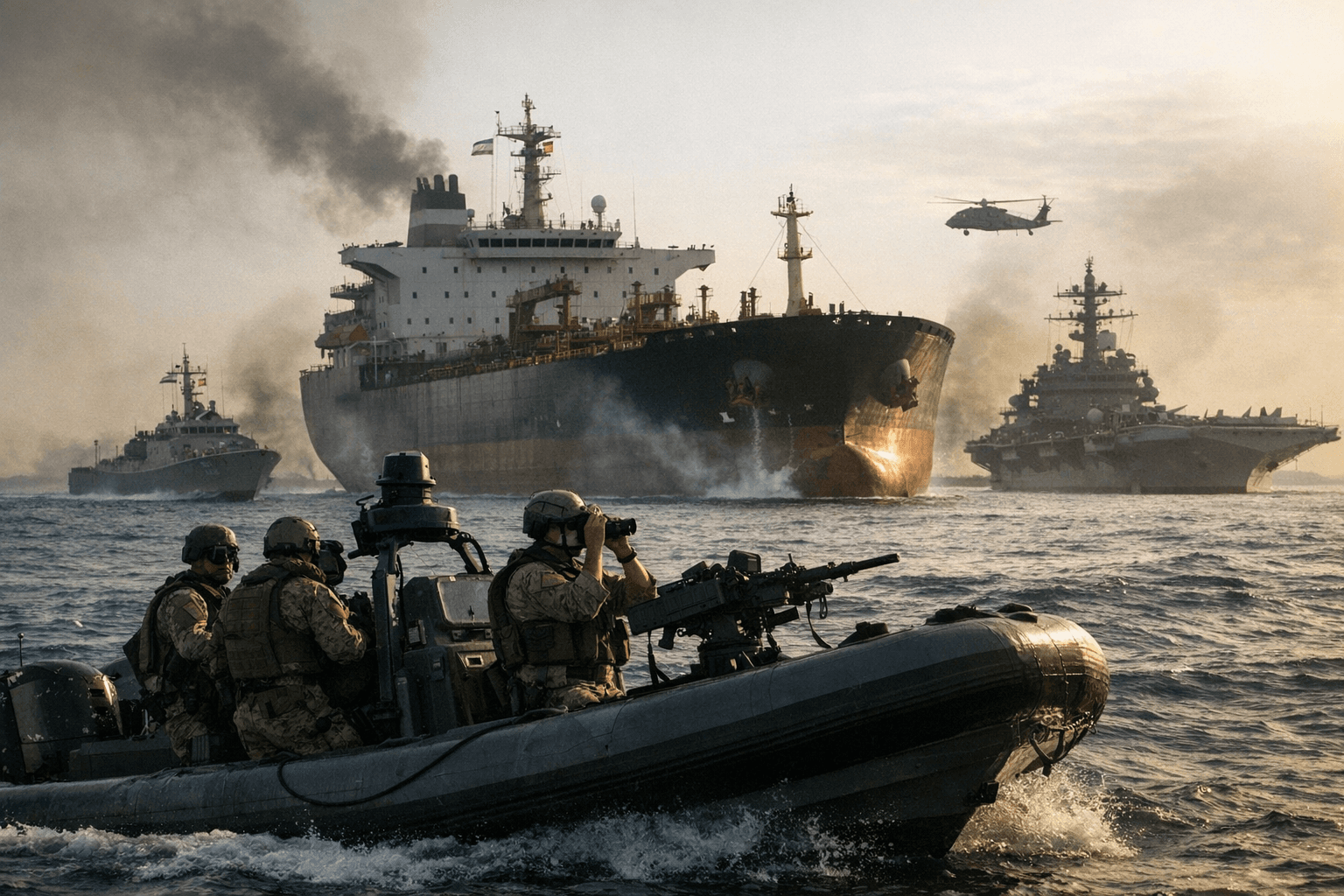
The legal and military backdrop is unusually tense. United Nations experts say the Strait of Hormuz is an international strait where ships generally have navigational rights if they pass continuously and expeditiously. The U.S. military had already warned on March 11 that civilians and commercial crews should avoid Iranian port facilities used by Iranian naval forces, saying civilian ports used for military purposes can lose protected status under international law.
The confrontation has already drawn wider diplomatic fallout. Russia and China vetoed a U.N. Security Council resolution aimed at reopening the strait on April 7, and China has urged calm and restraint. Reuters reported three supertankers passed through the strait on April 11, a sign that commercial traffic was still moving even as the risk of a sudden shutdown hung over one of the world’s most sensitive waterways.
Know something we missed? Have a correction or additional information?
Submit a Tip