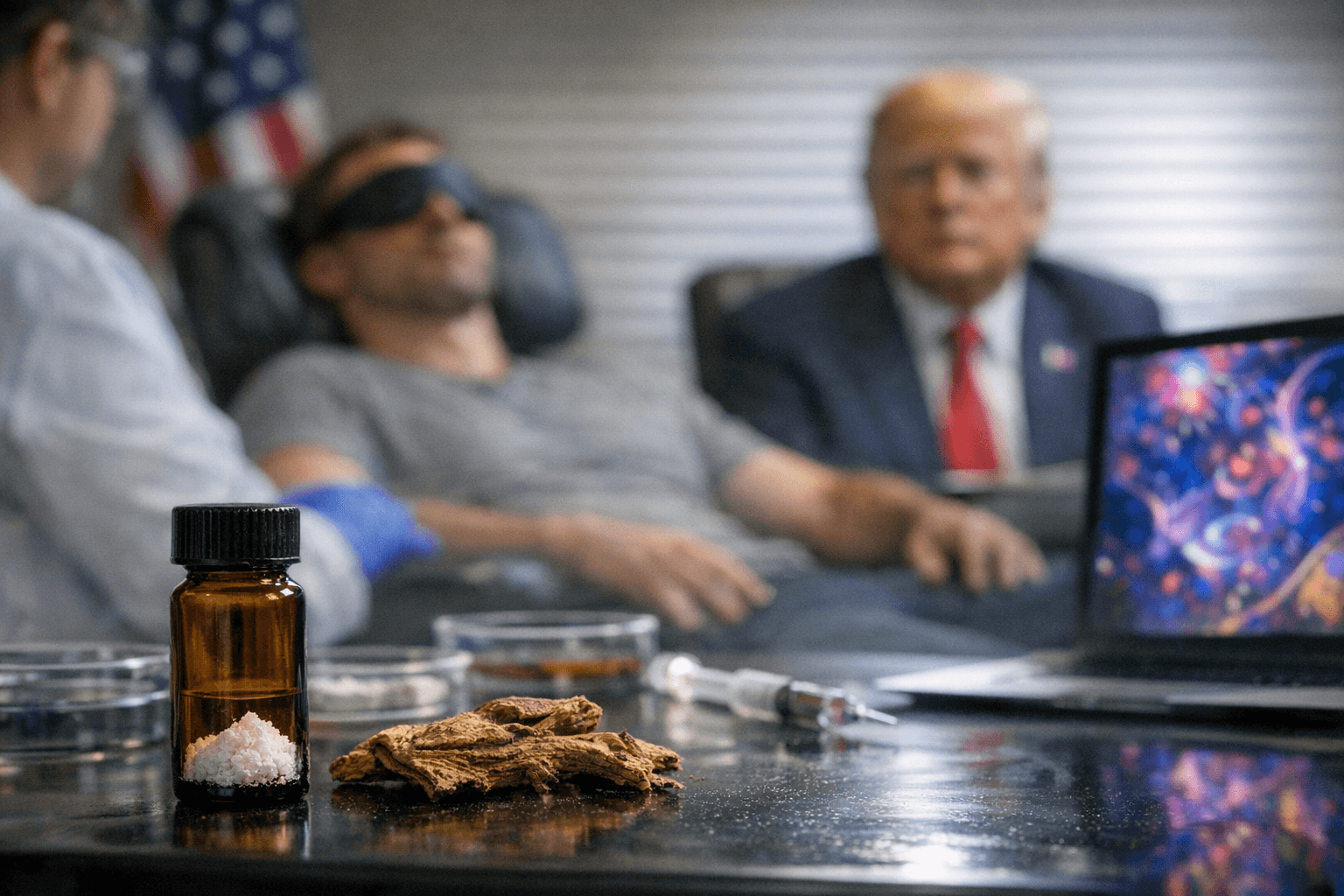
Trump orders expanded psychedelic research for mental health treatments
Trump ordered a federal push on psychedelic drugs, but the order still leaves patients waiting on FDA data, DEA action and more trials.
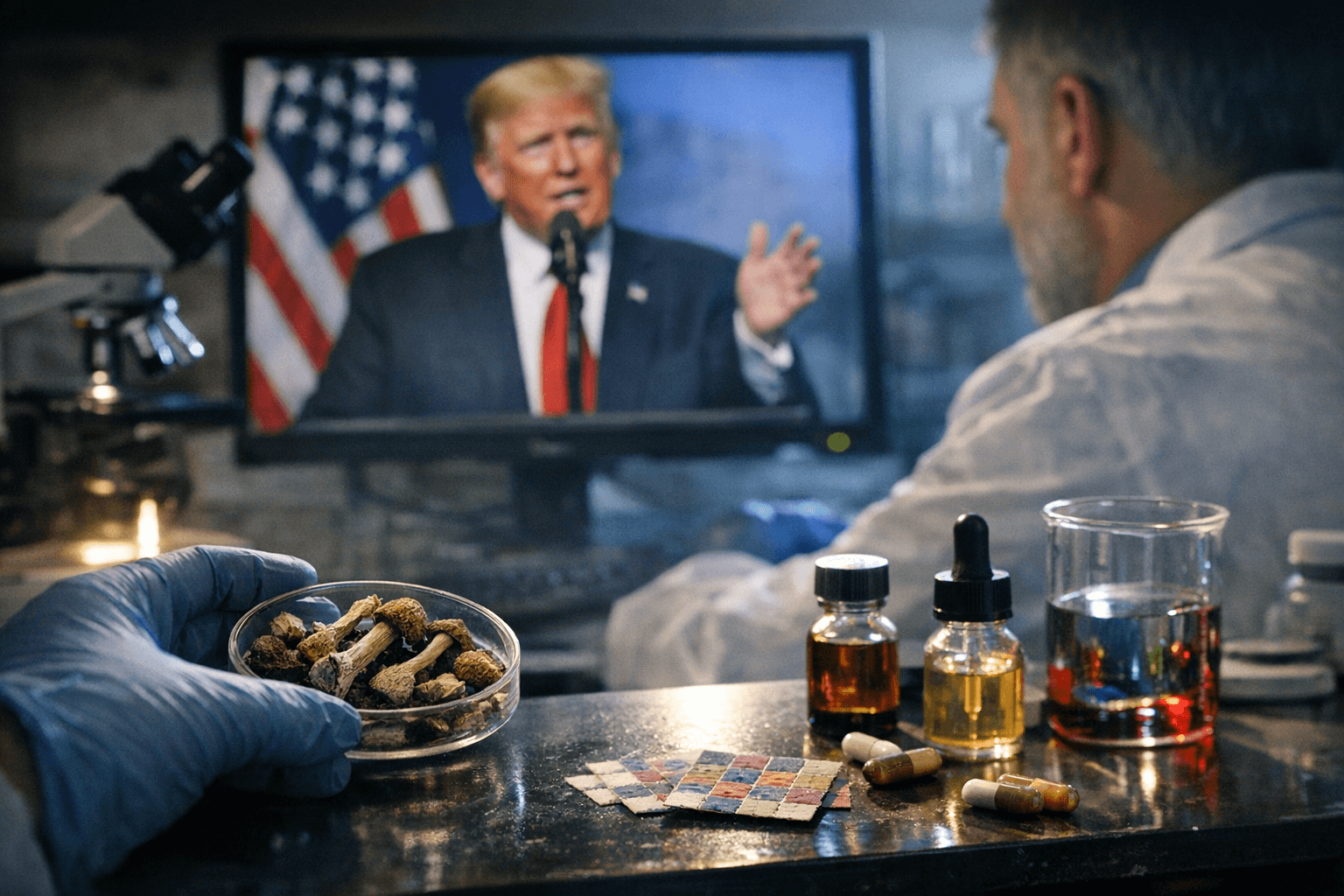
President Donald Trump ordered a new federal push into psychedelic medicine on April 18, but the move stopped well short of legalizing the drugs or putting them on pharmacy shelves. The executive order seeks to speed research and review for mental health treatments, yet its practical effect still depends on FDA decisions, DEA scheduling action and the results of larger clinical trials.
The order, titled “Accelerating Medical Treatments for Serious Mental Illness,” directs the Food and Drug Administration commissioner to extend Commissioner’s National Priority Vouchers to eligible psychedelic drugs that have Breakthrough Therapy designations. It also tells the FDA and the Drug Enforcement Administration to create a pathway for eligible patients to access investigational psychedelic drugs, including ibogaine compounds, under the Right to Try Act. The White House said the order is meant to cut red tape, not to bypass evidence standards.
Trump also ordered the Department of Health and Human Services to allocate $50 million through ARPA-H to match state investments in psychedelic research, and instructed HHS, the FDA and the Department of Veterans Affairs to work with private-sector partners to expand clinical-trial participation and evidence generation. The Attorney General was directed to begin reviews of relevant products after successful Phase 3 trials so they can be rescheduled after FDA approval, where appropriate. Marty Makary, the FDA commissioner, said three psychedelics would be added to the National Priority Voucher pilot program and that decisions on the drugs could come as soon as this summer.
The White House cast the order as a response to serious mental illness and suicide, especially among veterans. It said more than 14 million American adults have a serious mental illness, and about 8 million are on prescription medication for those conditions. Trump said the federal government would commit $50 million to psychedelic research and said the order would open a path for ibogaine to be administered to “desperately ill patients” under Right to Try. He also said the drugs had shown “life-changing potential” and could have a “tremendous impact” in the United States and abroad.
Still, the regulatory barriers remain formidable. Ibogaine and related compounds remain Schedule I controlled substances under federal law, meaning they are still treated as having no accepted medical use and a high potential for abuse. Reuters reported that Mexico has ibogaine treatment centers that draw some U.S. veterans, underscoring how far the domestic system remains from routine access.
The reaction was swift and broadly supportive from veterans groups, patient advocates and industry players. The American Legion said the move could offer hope to veterans dealing with PTSD, traumatic brain injuries and other invisible wounds. Americans for Ibogaine’s W. Bryan Hubbard called it a historic turning point and said “the era of federal prohibition of psychedelic medicine in America is coming to an end.” But the policy shift may be narrower than the rhetoric suggests: it accelerates research and creates new review channels, yet patients will still need stronger data and formal approvals before these therapies become widely available.
Know something we missed? Have a correction or additional information?
Submit a Tip