Trump Orders Naval Blockade of Strait of Hormuz, Threatening Global Energy Flow
A U.S. blockade of Hormuz could hit 20 million barrels a day of oil flow and raise freight, fuel and conflict risks within hours.
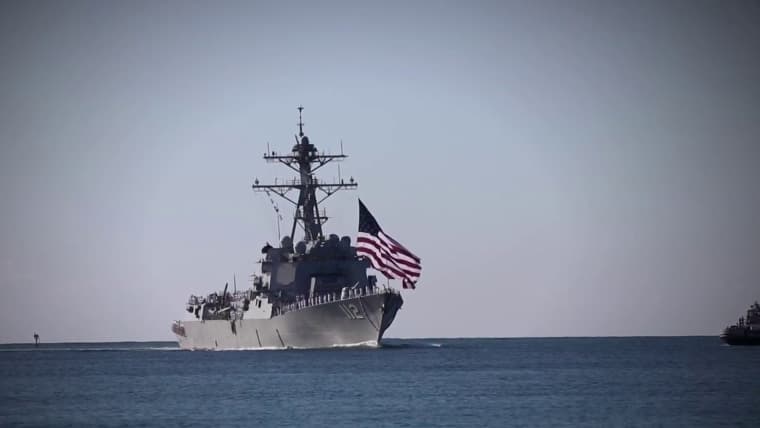
A U.S. naval blockade of the Strait of Hormuz threatened to squeeze one of the world’s most important energy corridors within hours, putting nearly 20 million barrels a day of oil flow and a large share of global liquefied natural gas trade at risk. The U.S. military said the move would begin Monday, April 13, at 10 a.m. ET, with enforcement aimed at maritime traffic to and from Iranian ports.
U.S. Central Command said vessels of all nations entering or departing Iranian ports and coastal areas would be stopped impartially, while ships merely transiting the strait to and from non-Iranian ports would not be impeded. Even so, the practical effect could be immediate. The Strait of Hormuz carried about 20 million barrels per day in 2024, according to the U.S. Energy Information Administration, equal to roughly one-fifth of global petroleum liquids consumption.
The geography leaves little room for error. The International Energy Agency says the strait is only 29 nautical miles wide at its narrowest point, with two 2-mile-wide shipping channels and a 2-mile buffer zone. That narrow passage links the Arabian Gulf and the Gulf of Oman, and analysts have long warned that few practical alternatives exist if the route is disrupted.
The stakes go beyond crude oil. The Strait of Hormuz carries around one-quarter of global seaborne oil trade and about 20% of global LNG trade, according to United Nations and trade monitoring data. The World Trade Organization’s trade tracker and the United Nations Conference on Trade and Development have also flagged ripple effects for fertilizer-related products and agricultural shipments, meaning higher costs could spread beyond fuel into food and supply chains.

The escalation comes after talks in Pakistan failed to produce a peace agreement and after a ceasefire reached on April 8 was already under strain. Trump’s warning that the U.S. Navy would intercept vessels that paid a toll to Iran and destroy mines laid in the strait added to fears of a wider confrontation, with consequences that could reach global oil and gas prices in a matter of hours.
For shippers, refiners and import-dependent economies, the immediate question is whether the blockade remains tightly focused on Iranian-linked traffic or quickly becomes a broader disruption in one of the planet’s most fragile maritime chokepoints. Either way, the first test is already set for this morning, and the next 24 to 72 hours will determine whether the crisis stays contained or spills into a wider regional conflict.
Sources:
Know something we missed? Have a correction or additional information?
Submit a Tip