Trump orders Navy to shoot boats laying mines in Strait of Hormuz
Trump ordered the Navy to kill any boat laying mines in the Strait of Hormuz, raising the risk of a wider Gulf clash just as jet fuel markets start to tighten.
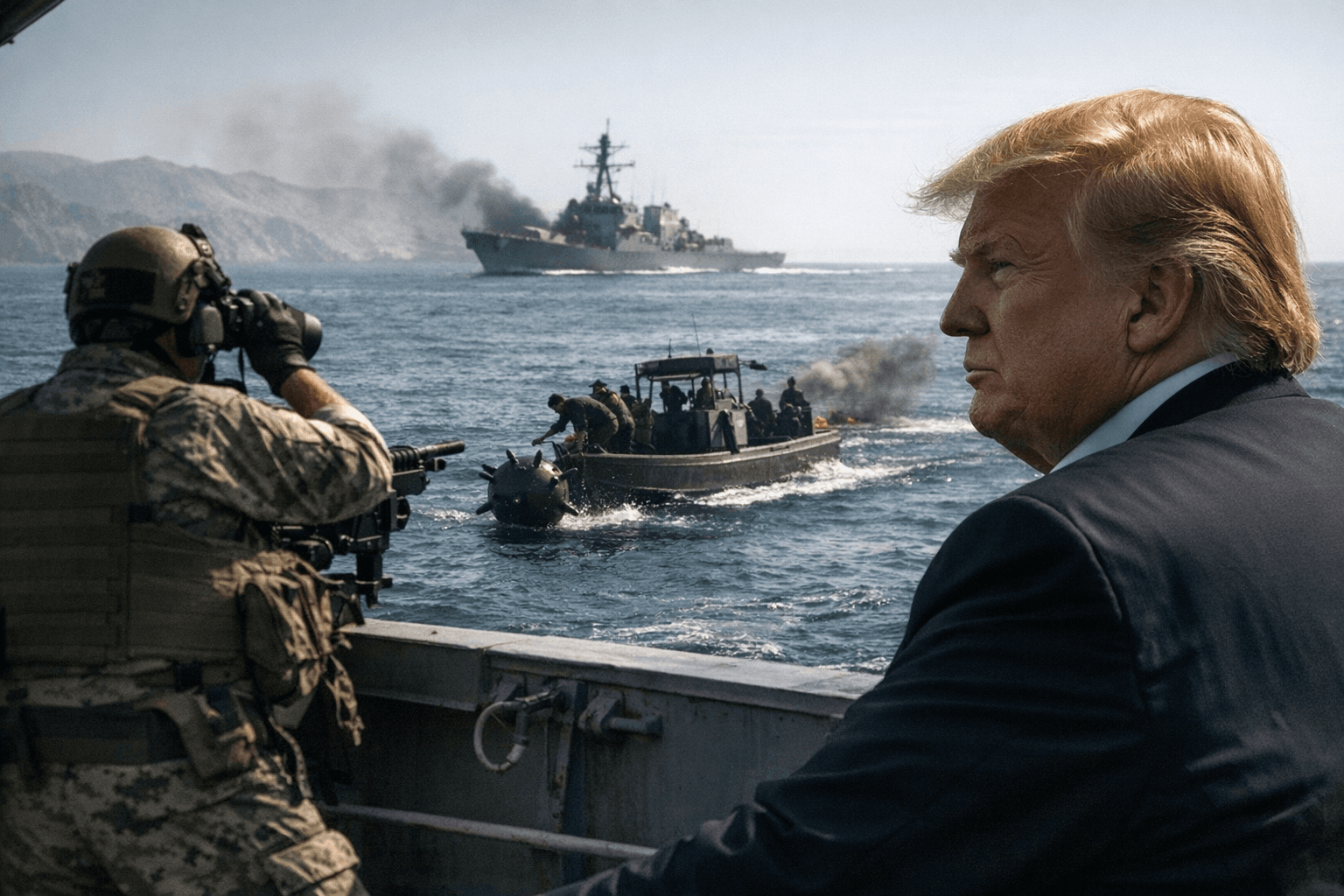
The White House has moved the standoff in the Strait of Hormuz from a shipping threat to a direct military warning, with Donald Trump saying he ordered the U.S. Navy “to shoot and kill” any boat laying mines in the waterway and that there should be “no hesitation.” He also said U.S. minesweepers should keep clearing the strait at a “tripled up level,” a signal that Washington sees mine warfare as an immediate trigger for escalation.
The stakes are unusually high because the Strait of Hormuz is one of the world’s most important energy corridors. About 20 million barrels of oil a day flowed through it in 2024, roughly one-fifth of global petroleum liquids consumption, and about one-fifth of global liquefied natural gas trade also passed through the passage. The bulk of the oil leaving the strait goes to Asian buyers, especially China, India and Japan, so a prolonged disruption would not stay local to the Persian Gulf. It would hit prices, shipping schedules and energy security far beyond the region.
Behind the scenes, the warning reflects concern that mine clearing could become a long operation. A Pentagon official told lawmakers in a classified briefing that clearing the Strait of Hormuz could take up to six months, underscoring how quickly a few small boats could choke off a critical maritime route. The strait connects the Persian Gulf with the Gulf of Oman, and the International Energy Agency has described it as the primary export route for oil from Saudi Arabia, the United Arab Emirates, Kuwait, Qatar, Iraq, Bahrain and Iran.
The first disruptions Americans are likely to feel may not be at the dock but at the airport. Chevron chief executive Mike Wirth told CBS News’ Margaret Brennan on Face the Nation that aviation will “probably get worse over the next few weeks” because jet fuel is tightening in Europe and Asia. He said airlines are already adjusting flight schedules and passing higher fuel costs through to fares, which means travelers could see fewer flights, fuller planes and higher ticket prices.
European airlines have already begun canceling flights or adding fuel surcharges as jet fuel supplies shrink, and the broader risk is that a mine threat in Hormuz turns into another test of global trade resilience. Analysts and veterans of the 1980s Iran-Iraq “Tanker War” have drawn the same comparison before: in the Gulf, attacks on shipping can move from a regional security problem to a world market shock with very little warning.
Know something we missed? Have a correction or additional information?
Submit a Tip