Trump pauses Strait of Hormuz escort mission amid Iran deal talks
Washington launched a Strait of Hormuz escort, then halted it two days later as Iran signaled talks. The reversal exposed shaky U.S. leverage over a vital oil chokepoint.
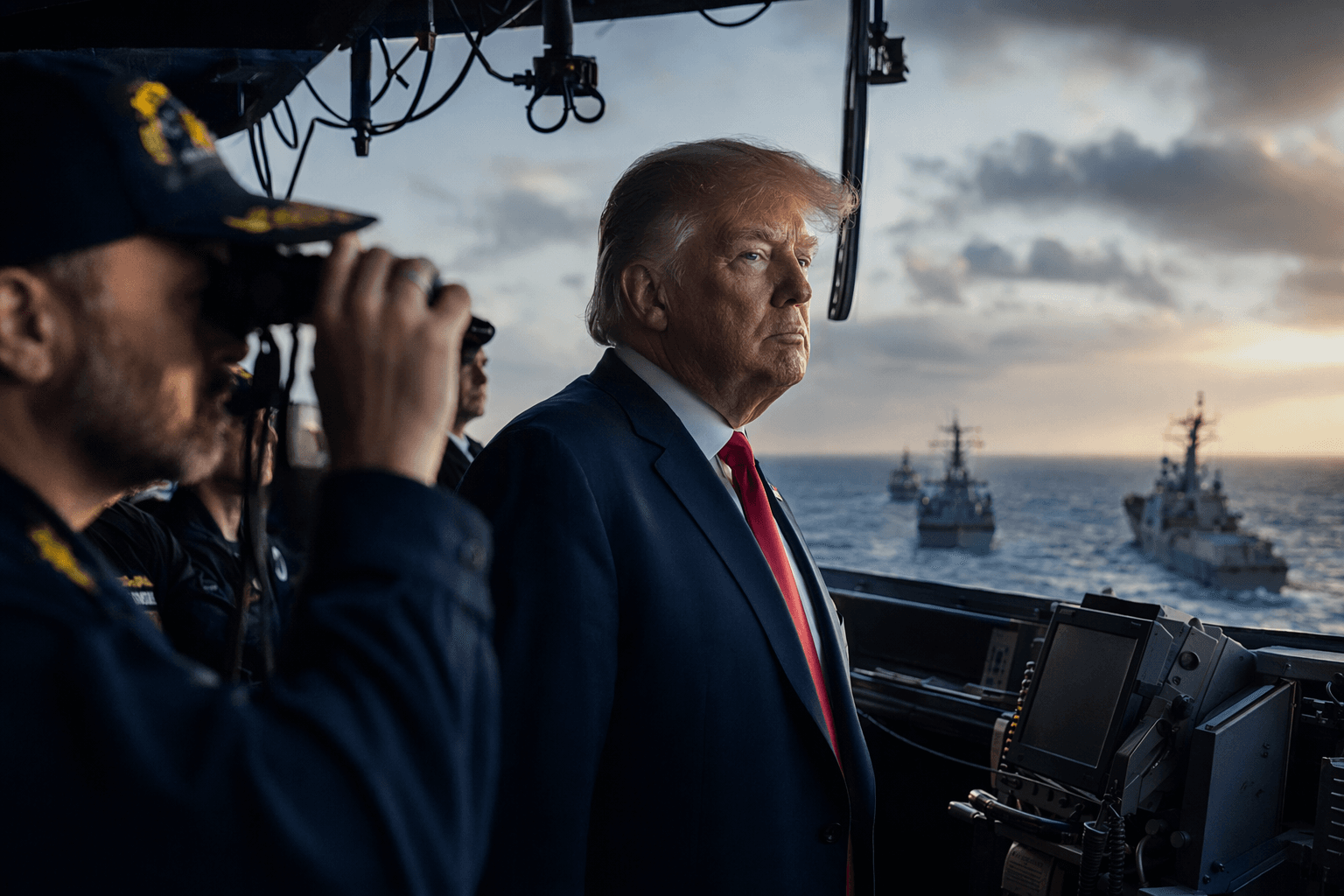
President Donald Trump abruptly paused Project Freedom just days after ordering U.S. forces to guide ships through the Strait of Hormuz, turning a show of military resolve into a test of diplomatic leverage. Energy Secretary Chris Wright said the mission was halted “at Iran’s request” after Tehran said “let’s make a deal,” a reversal that underscored how quickly the White House shifted from force projection to negotiation.
The stakes were immediate because the Strait of Hormuz is one of the world’s most dangerous energy chokepoints. The International Energy Agency says the waterway is only 29 nautical miles wide at its narrowest point, with two-mile-wide navigable channels and a two-mile buffer zone. In 2025, an average of 20 million barrels per day of crude oil and oil products moved through it, roughly 25% of global seaborne oil trade. The IEA also says a closure would trap much of Qatar and the United Arab Emirates’ liquefied natural gas exports, with those two producers accounting for almost 20% of global LNG trade.
The operation was launched late Sunday and took effect Monday, according to CBS News. U.S. Central Command initially said the military helped two American-flagged vessels pass through the strait and cleared Iranian mines from part of the route farther from Iran’s coastline. Iran responded with threats, warning that any ship transiting without its permission would be targeted. On Monday, two U.S. Navy destroyers crossing the strait came under fire from missiles, drones and boats. The ships were not hit, and the U.S. later destroyed six Iranian small boats after the attack.
Trump told CBS News on Tuesday that he had paused Project Freedom “for a short period of time” because the U.S. and Iran had made “Great Progress…toward a Complete and Final Agreement.” He also said the decision was made at Pakistan’s request, reflecting Islamabad’s role as one of the mediators trying to keep the talks alive. The U.S. blockade of Iranian ports remained in place.
The White House framed the mission as a humanitarian response to stranded mariners. Marco Rubio said Project Freedom was meant to “rescue” sailors who had been “left for dead” by Iran, while Trump said it was designed to help “neutral and innocent bystanders” get safely out of the waterway. CNBC reported that nearly 23,000 sailors aboard vessels representing 87 countries had been stranded in the Persian Gulf, and Rubio said at least 10 sailors had died as a result of the blockade. CNBC also reported the U.S. deployed more than 100 land- and sea-based aircraft, guided-missile destroyers, unmanned platforms and 15,000 service members to support the effort.
The sudden pause leaves the core question unresolved: whether Washington is deterring Iran or signaling that pressure can be bargained away quickly. With oil already vulnerable and shipping confidence fragile, even a brief opening in Hormuz may not restore normal trade, insurance coverage or market calm. If the policy looks improvised, the risk is that Iran, shippers and energy markets all price in uncertainty faster than Washington can correct it.
This article was produced by Prism’s automated news system from verified source data, official records, and press releases, then run through automated quality and moderation checks before publishing. The system is built and supervised by the people who set the standards it runs under. Read our full AI policy.
Did this article answer your question?