Trump plans beef import boost as cattle herd hits 75-year low
Trump’s beef plan aimed to ease prices, but the cattle herd is at its smallest since 1951 and imports may help ground beef faster than steaks.
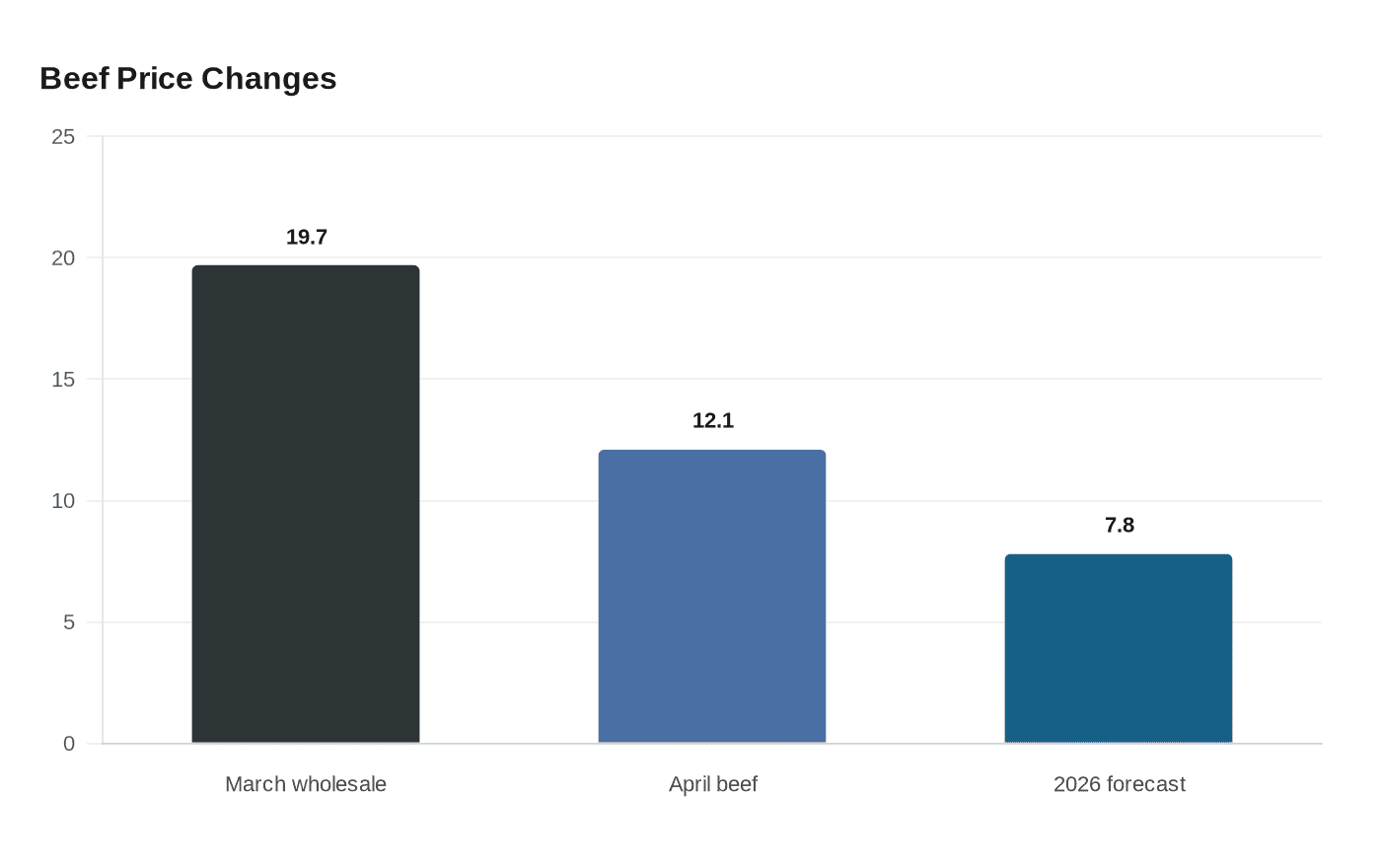
President Donald Trump moved to pair more beef imports with measures meant to rebuild the U.S. cattle herd as beef costs kept climbing, but the policy faced a basic timing problem: herd rebuilding takes years, while shoppers are paying now. Beef prices were 12.1% higher in April than a year earlier, and they were more than 16% above the level when Trump returned to office in January 2025.
The core supply problem is already deep in the numbers. The U.S. cattle inventory stood at 86.2 million head on Jan. 1, 2026, the smallest since 1951. Ranchers have been squeezed by drought, high feed costs and a strong incentive to sell animals for slaughter instead of holding them back for breeding, which has kept the herd from recovering even as prices rise.
Trump had already tried to open the import spigot. In February, he signed a proclamation that increased the low-tariff quota for Argentine lean beef trimmings by 80,000 metric tons for 2026, split into four quarterly tranches of 20,000 metric tons starting Feb. 13. Last year he removed a 40% punitive tariff on Brazilian beef and coffee. Even so, prices kept rising, underscoring how little immediate relief those steps delivered to consumers.
The latest plan would go further by boosting imports and directing the Small Business Administration to expand lending for ranchers, while also reducing protections for gray and Mexican wolves that prey on cattle herds. The White House delayed the planned Monday signing, and no executive order or fact sheet had been released by Monday afternoon. That left the market with policy signals but no new details on how fast, or how far, the administration intended to go.
Economists say the likely effect is uneven. Most of the imported beef discussed in the plan is lean trimmings used for ground beef, which means the extra supply could help hamburger chains and processors more than grocery shoppers buying steaks and roasts. David Anderson of Texas A&M University said the country was already importing a record amount and was skeptical that additional imports would sharply lower consumer prices.
The trade data show how heavily the market is already leaning on foreign supply. Brazilian beef shipments to the United States reached $795 million in the first three months of 2026, up 21% from a year earlier, after totaling $1.75 billion in 2025, up 39% from 2024. The Agriculture Department expects record beef imports this year of 5.8 billion pounds, up about 6% from 2025 and 25% from 2024, while still projecting 2026 beef production at 25.920 billion pounds.
For ranchers, the politics are more than an economics lesson. The National Cattlemen’s Beef Association called Trump’s earlier Argentine beef import plan “misguided,” warning that manipulating markets could hurt American producers while doing little to cut store prices. With wholesale beef prices 19.7% higher in March than a year earlier and the Agriculture Department forecasting another 7.8% increase in 2026, the White House is betting that imports can ease pressure now even as rebuilding the herd remains a long-lag answer to a short-term affordability crisis.
This article was produced by Prism’s automated news system from verified source data, official records, and press releases, then run through automated quality and moderation checks before publishing. The system is built and supervised by the people who set the standards it runs under. Read our full AI policy.
Did this article answer your question?
%3Amax_bytes(150000)%3Astrip_icc()%2FCertificate-of-deposit-2301f2164ceb4e91b100cb92aa6f868a.jpg&w=1920&q=75)