Trump Pressures Iran to Negotiate as Israel Kills IRGC Naval Commander
Israel killed IRGC naval chief Alireza Tangsiri — the architect of the Strait of Hormuz blockade — as Trump warned Iran to "get serious" in peace talks or face consequences.
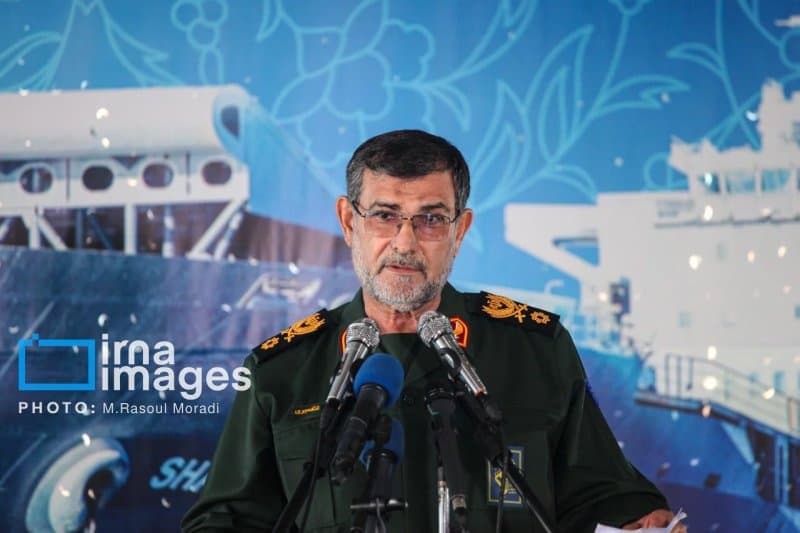
Israel's Defense Forces announced Thursday that Alireza Tangsiri, the commander of Iran's Islamic Revolutionary Guard Corps Navy, had been killed in a "precise strike" at the port city of Bandar Abbas, accusing him of directing efforts to close the strategically vital Strait of Hormuz. The IDF later said all of the IRGC Navy's key commanders had been killed in the same strike.
Defense Minister Israel Katz described Tangsiri as "the person directly responsible for the terror operation of mining and blocking the Strait of Hormuz to maritime traffic." U.S. Central Command confirmed Tangsiri's death, with CENTCOM commander Adm. Brad Cooper stating that the killing "makes the region safer." In the research notes, Cooper was also quoted saying the strike put Iran's navy on a path toward "irreversible decline" and that the U.S. would keep striking naval targets.
There was no confirmation of the killing from Iranian authorities. Tangsiri had led the IRGC Navy since August 2018, when he was promoted to the position by Supreme Leader Ali Khamenei. During his tenure, Tangsiri oversaw a major buildup of the IRGC Navy, expanding its capabilities with thousands of weapons, particularly missiles and naval mines, and directed attacks on oil tankers and commercial vessels using drones and maritime mines.
The killing landed hours after President Donald Trump issued a blunt ultimatum on social media. Trump on Thursday told Iran to "get serious soon" about a peace deal with Washington, or face the consequences. "They better get serious soon, before it is too late, because once that happens, there is NO TURNING BACK, and it won't be pretty!" he posted on Truth Social. Speaking the night before at the National Republican Congressional Committee's annual dinner, Trump had claimed Iranian leaders were secretly eager to end the war. "They are negotiating, by the way, and they want to make a deal so badly," he told the gathered Republican members of Congress. "But they're afraid to say it, because they figure they'll be killed by their own people. They're also afraid they'll be killed by us."
Tehran pushed back. Iranian Foreign Minister Abbas Araghchi told state media that officials were reviewing an American proposal to end the war but said Tehran had no intention of holding direct talks with the U.S., adding that an exchange of messages through mediators "does not mean negotiations with the U.S." Iran's foreign minister also said the country sought an end to the war "on our own terms, of course, and in a way that it will not be repeated here again."
The Trump administration, working through mediators Pakistan, Egypt, and Turkey, had asked Iran to hold a high-level meeting to discuss a U.S. proposal for ending the war. Trump's five-day pause on strikes against Iranian energy infrastructure expires Saturday, and a dramatic military escalation will grow more likely if no progress is made in diplomatic talks, particularly if the Strait of Hormuz remains closed. Secretary of State Marco Rubio said Thursday that "progress has been made" in negotiations, telling reporters: "There are intermediary countries that are passing messages and progress has been made — some concrete progress has been made."
The stakes of the stalemate are enormous. The Strait of Hormuz, a critical waterway through which a fifth of the world's oil and gas passes, was effectively closed to almost all shipping in the early days of the conflict, sending oil prices soaring, hitting global stock markets, and threatening a global economic crisis. A senior Iranian official told Iran's English-language Press TV that U.S. terms were "excessive," called the negotiations "a ploy," and said the war would only end "on Tehran's own terms and timeline."
The U.S. is reportedly preparing to send thousands more soldiers to the region who could be rapidly deployed for additional military action; analysts told CNBC the U.S. could attempt to seize Kharg Island or reopen the strait if negotiations falter. Any move on Kharg Island carries a distinct secondary risk: fears that such a deployment would prompt Tehran to call on Yemen's Houthis to strike shipping in the Red Sea, through which roughly $1 trillion worth of goods passed each year before the war. Houthi leader Abdul-Malik al-Houthi had already condemned the U.S.-Israel war with Iran as "unjustifiable" and called for solidarity protests in Sana'a.
Members of the House Armed Services Committee said they were unsatisfied with a briefing by Trump administration officials on the war, its objectives, and timeline, the latest sign of growing unease over the war effort even among members of Trump's own party. Critics in Congress argue Trump violated the Constitution by launching what he himself has called "major combat operations" without a Congressional vote — a legal dispute that shows no sign of resolution as the strikes continue and the four-week conflict deepens.
Know something we missed? Have a correction or additional information?
Submit a Tip