Trump Rejects Cease-Fire Proposal as Tuesday Deadline Approaches
Trump dismissed a Pakistan-brokered 45-day cease-fire plan as "not good enough," with Iran also rejecting it as his 8 p.m. Tuesday ultimatum closes in.
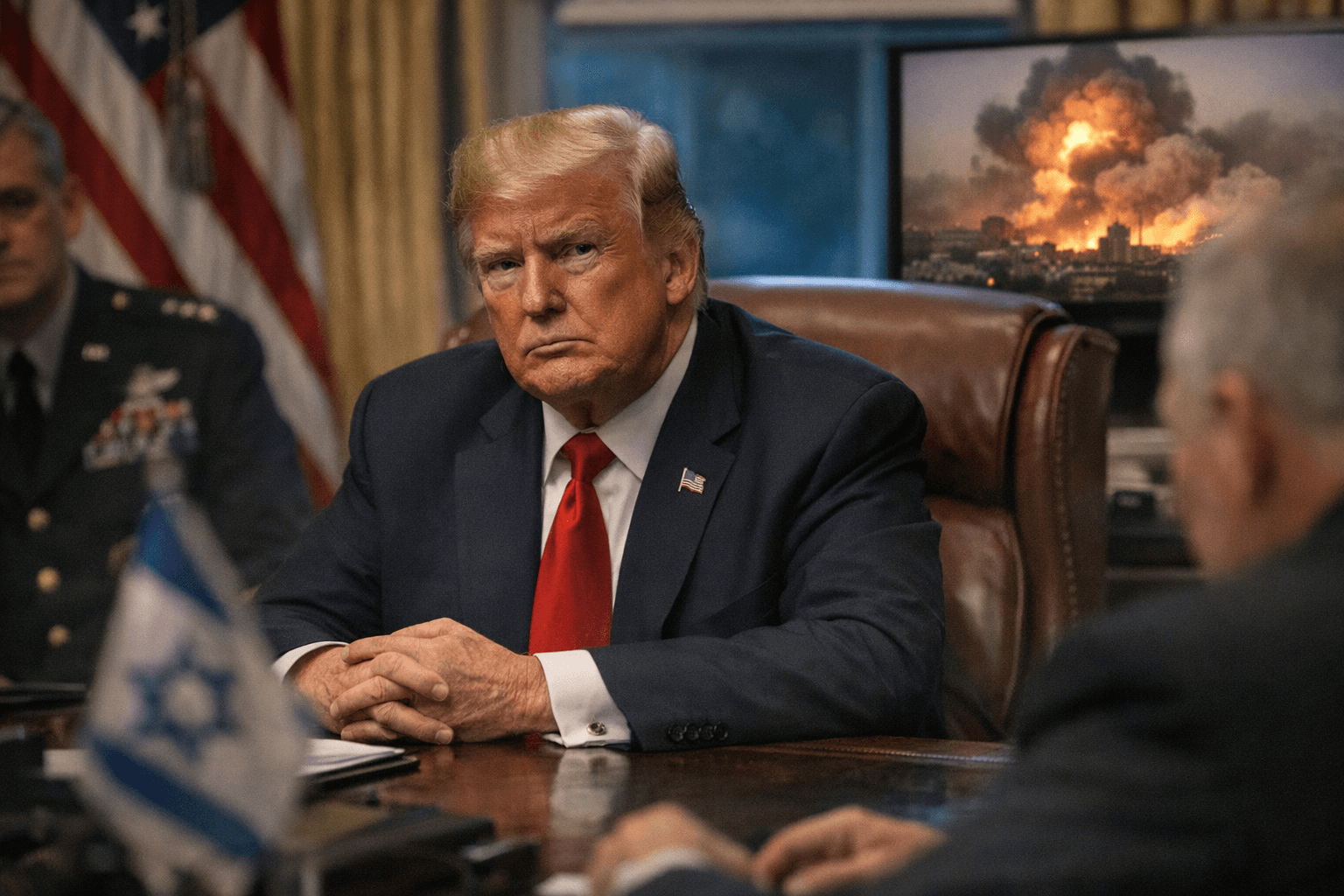
With his self-imposed deadline ticking toward 8 p.m. Eastern time on Tuesday, President Donald Trump dismissed a Pakistan-brokered cease-fire framework for the Iran war as "a significant step" but "not good enough," while Tehran simultaneously rejected the same proposal and demanded a permanent end to hostilities rather than a temporary truce.
The proposal, tentatively dubbed the Islamabad Accord, was assembled by Pakistan overnight and exchanged with both Washington and Tehran. It envisioned a two-phase approach: an immediate cessation of hostilities and reopening of the Strait of Hormuz, followed by a 15- to 20-day window to finalize a broader settlement that would require Iran to commit to abandoning its nuclear weapons program in exchange for sanctions relief and the release of frozen assets. Pakistan's army chief, Field Marshal Asim Munir, spent the night in direct contact with Vice President JD Vance, special envoy Steve Witkoff, and Iranian Foreign Minister Abbas Araqchi in a final push to close a deal.
Iran's answer, conveyed to mediators through Islamabad in a 10-point response, was an emphatic rejection of any temporary arrangement. Tehran demanded a protocol for safe passage through the Strait of Hormuz, reconstruction guarantees, and the lifting of sanctions as part of a comprehensive and permanent peace. "Iran wants the war to end, but not in the way or on the timeline that Trump is seeking," one source familiar with the negotiations said.
Trump showed no sign of softening. At a White House press conference Monday, he threatened to reduce Iran's civilian infrastructure to rubble within hours if no deal materialized. "Every bridge in Iran will be decimated," he told reporters. "Every power plant in Iran will be out of business, burning, exploding and never to be used again." He added: "The entire country can be taken out in one night, and that night might be tomorrow night."
The war, now in its 38th day, was triggered on February 28 by U.S.-Israeli strikes on Iran that killed Supreme Leader Ali Khamenei. His son, Mojtaba Khamenei, was installed as the country's new supreme leader within days, a succession Trump publicly called "a big mistake." Since the conflict began, Iran has effectively shut the Strait of Hormuz, cutting off a waterway through which roughly 20 percent of the world's oil supplies normally flow.
Iran's refusal to engage directly with Washington, sustained since the February 28 strikes, has made Pakistan the sole communication channel between the two sides. Tehran's 10-point response made its distrust of Trump explicit, with Iranian officials signaling they have "raised additional guarantees" given their lack of confidence in U.S. commitments. With neither side accepting the Islamabad Accord and the deadline hours away, the diplomatic gap between Washington and Tehran remained as wide as at any point since the war began.
This article was produced by Prism’s automated news system from verified source data, official records, and press releases, then run through automated quality and moderation checks before publishing. The system is built and supervised by the people who set the standards it runs under. Read our full AI policy.
Did this article answer your question?

