Trump renames Reflecting Pool blue for America’s 250th anniversary
The pool was meant to turn American flag blue for America’s 250th anniversary, but algae reappeared days after a $14.2 million renovation.
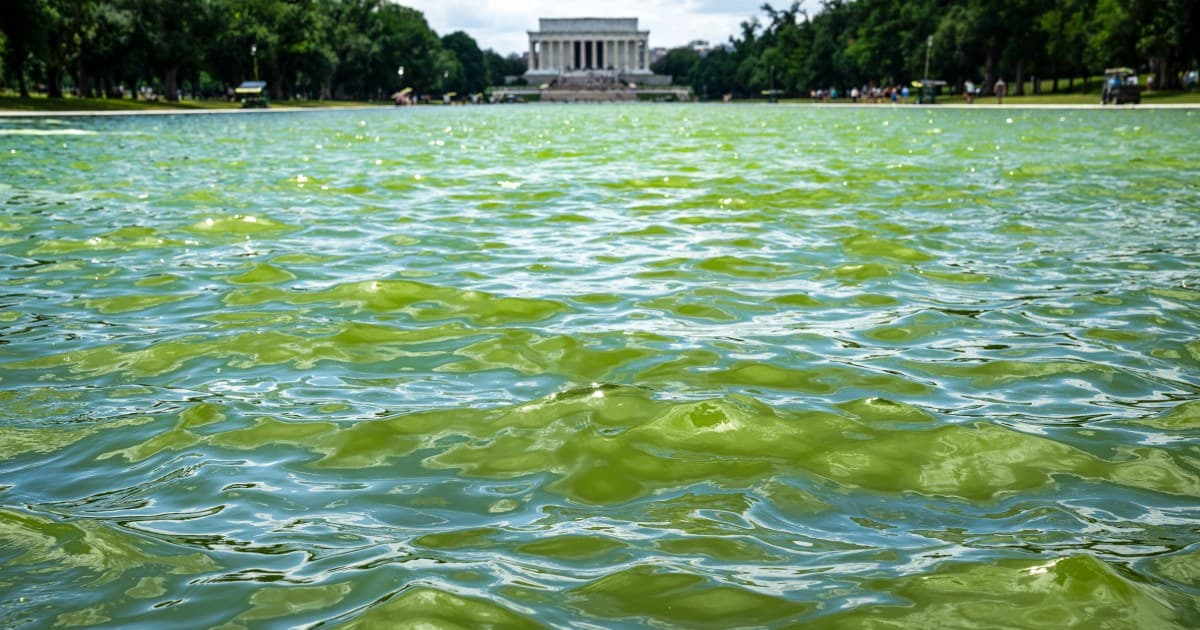
The Trump administration set out to make the Lincoln Memorial Reflecting Pool an American flag blue centerpiece for America’s 250th anniversary, but the water was already turning green again within days of the renovation finishing. The result has turned a highly visible federal beautification project on the National Mall into a test of whether symbolism can outrun ecology, upkeep and public cost.
The National Park Service, under the Department of the Interior, oversaw work on the pool that sits between the Lincoln Memorial and the Washington Monument, along the central axis of Washington’s memorial landscape. That axis dates to the 1902 McMillan Plan. Crews began building the Reflecting Pool in 1921, after the Lincoln Memorial was dedicated on May 30, 1922, and the pool was not completed until about two years later. The park service calls it one of Washington’s most recognizable and filmed sites, and its political weight has been obvious for decades, including the March on Washington on August 28, 1963, when more than 200,000 people moved along the pool to the Lincoln Memorial.

The price of the remake has become part of the story. Trump initially said the work would cost about $1.5 million to $1.8 million, but later federal contracting records put the project at about $14.2 million. Those records also showed roughly $1.7 million went to Green Water Solutions for an ozone nanobubbling system, while Atlantic Industrial Coatings was paid to line the pool in the dark blue finish chosen for the project. National Park Service materials said the work included cleaning the pool, repairing joints and installing lining material. The project also added permanent walkways, refurbished paving, lighting and accessible pedestrian paths.

The aesthetic goal has quickly collided with a familiar maintenance problem. In 2012, the National Park Service renovated the pool’s structure and installed a sustainable circulation system that draws water from the Tidal Basin. Earlier park notices said a water-line problem had compromised circulation, triggered algae growth and left the water with a noticeable green tint, and the pool was drained and cleaned again in 2017 for algae-related maintenance and treatment. Federal officials later said crews were vacuuming algae from the pool and using hydrogen peroxide to fight the bloom, while coverage said the problem could last for months, potentially into October, because the basin is shallow and the water moves slowly.

What was supposed to read as a crisp patriotic refresh now looks like a lesson in the limits of scenic engineering. On the National Mall, the administration’s effort to rebrand a historic federal landmark for the nation’s 250th anniversary is running into the physics of standing water and the recurring cost of keeping it presentable.
This article was produced by Prism’s automated news system from verified source data, official records, and press releases, then run through automated quality and moderation checks before publishing. The system is built and supervised by the people who set the standards it runs under. Read our full AI policy.
Did this article answer your question?