Trump sanctions drive major hotel operators to exit Cuba
Major hotel operators are pulling out of Cuba after Trump’s sanctions widened, deepening pressure on a tourism sector already crushed by weak demand and power shortages.
The Trump administration’s tougher Cuba policy is already producing a measurable shift: major international hotel operators are retreating, cutting into one of the island’s last reliable sources of foreign cash. The change accelerated after Executive Order 14404 on May 1, 2026, expanded sanctions to cover foreign people, companies and financial institutions that do business with sanctioned Cuban entities, including the military-linked conglomerate GAESA.
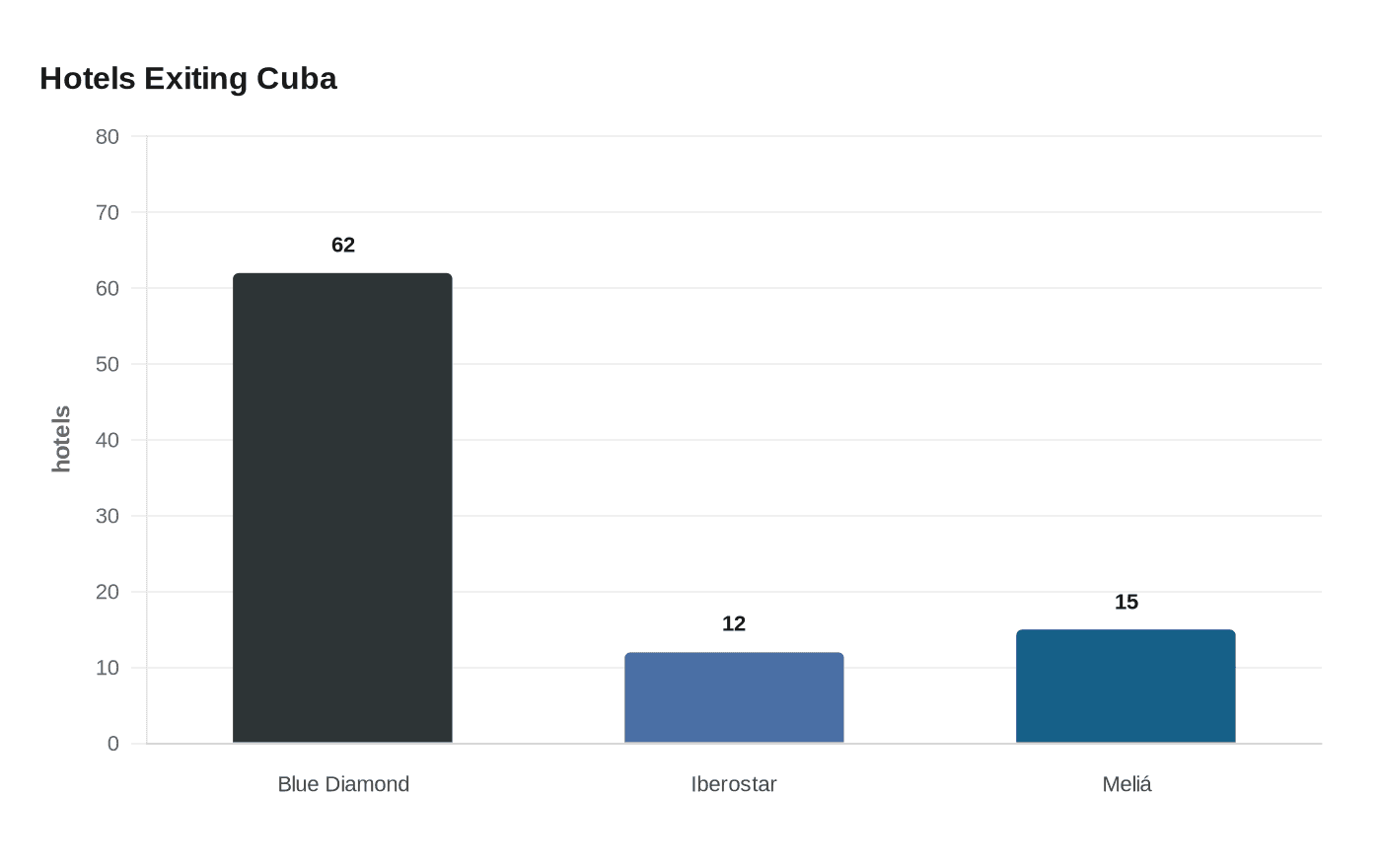
Blue Diamond Resorts said it was immediately withdrawing from Cuba, where it had managed 62 hotels and more than 12,900 rooms. Spain’s Iberostar followed by stopping operations at 12 hotels tied to GAESA, while keeping some presence on the island through properties linked to other state-owned groups not swept up in the new sanctions framework. Meliá Hotels International then said on June 3 that it would immediately stop managing, marketing and providing brand services for 15 hotels in Cuba, after telling owners on May 26 that the business climate had worsened because of geopolitical, legal and economic conditions.
The pullback lands in a tourism market already under severe strain. Cuba received 328,608 international tourists from January through April 2026, a drop of 55.8% from the same period a year earlier. Meliá’s own properties were already being hit hard, with most of its Cuba hotels closed or inactive because of power shortages and weak tourism demand. That leaves the burden not just on the Cuban state and GAESA, but on hotel workers, subcontractors and private entrepreneurs who depend on visitor spending for income, supplies and transport.
Havana has defended GAESA, saying the military-run conglomerate has contributed to Cuba’s economic and social development despite the renewed U.S. pressure campaign. But the latest departures suggest the sanctions are reshaping commercial behavior faster than they are changing the island’s politics. Cuba’s central bank also said it would suspend Visa and Mastercard transactions starting June 6, citing the same sanctions pressure, a sign that the financial fallout is spreading beyond hotels and into everyday commerce.
This article was produced by Prism’s automated news system from verified source data, official records, and press releases, then run through automated quality and moderation checks before publishing. The system is built and supervised by the people who set the standards it runs under. Read our full AI policy.
Know something we missed? Have a correction or additional information?
Submit a Tip