Trump Says Allies Refused to Help, Forcing U.S. to Act Alone on Iran
Trump acknowledged the U.S. struck Iran without allied backing; Spain denied bases and the UK refused to join, triggering NATO's sharpest fracture in decades.

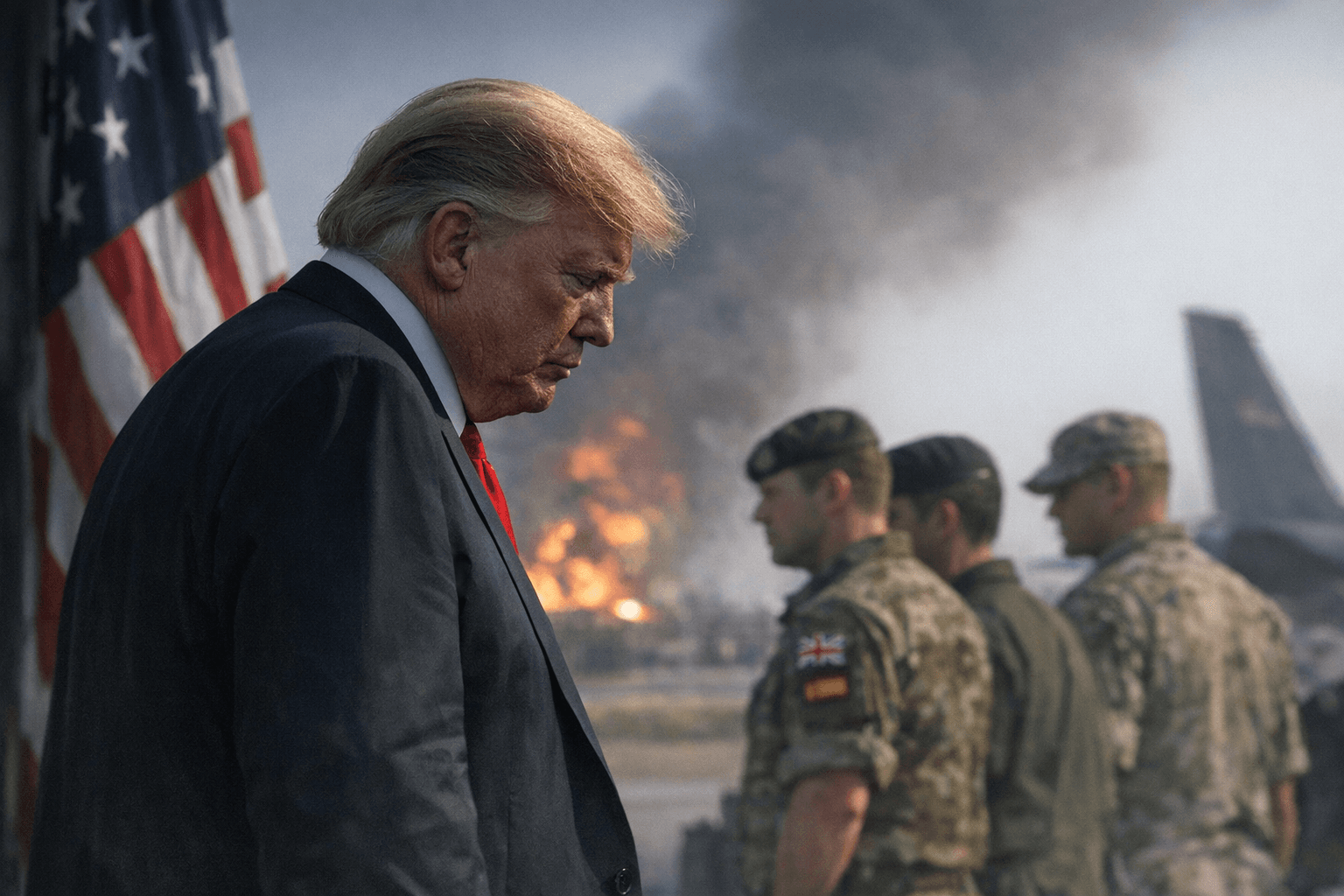
Standing before a prime-time audience of tens of millions, President Donald Trump made an extraordinary admission in his Wednesday night address: the United States launched Operation Epic Fury against Iran on February 28 largely alone, not because it chose to, but because its closest allies said no.
Spain, the most vocal European opponent of the war, closed its airspace to U.S. military planes involved in the conflict and said last month that the U.S. could not use jointly operated military bases in the war, which Spanish Prime Minister Pedro Sanchez described as "unjustifiable" and "dangerous." The United Kingdom refused to allow U.S. forces to use British bases for strikes from the outset. Defense Secretary Pete Hegseth mocked the refusal during a press briefing Tuesday. "Last time I checked, there was supposed to be a big, bad Royal Navy that could be prepared to do things like that as well," he said. NATO Secretary-General Mark Rutte offered a structural explanation for how it reached that point: "The U.S. was not able to consult with allies because they wanted to keep the campaign secret."
That secrecy carried a compounding cost. Without basing rights, the Pentagon was forced to route operations around a geometry of denial. Without advance political consultation, allies had no framework to justify joining a war their publics opposed. Secretary of State Marco Rubio, speaking on Fox News before the speech, framed the fracture in terms that raised the stakes for every future security commitment Washington might call in. "When we need the help of our allies, they're going to deny us basing rights and they're going to deny us overflight," Rubio said, adding that NATO had become "a one-way street." He said the U.S. would need to "reexamine" the alliance after the Iran conflict ends. Trump went further in an interview with The Telegraph, saying he was considering pulling out of NATO, calling the alliance "a paper tiger" and adding that "Putin knows that too."
The diplomatic fallout converges on the Strait of Hormuz. The waterway normally carries 20 percent of the world's oil, and Iran has effectively shut it down. Brent crude has risen 27 percent since the war began to just over $100 a barrel, and gas prices crossed $4 a gallon on average in the U.S. Trump, in his speech, dismissed the problem as someone else's burden. "The United States imports almost no oil through the Hormuz Strait and won't be taking any in the future. We don't need it," he said, signaling he could end the war without restoring access to the waterway. Defense analysts were blunt about what that means. "It is a monumental failure," said Mark Cancian of the Center for Strategic and International Studies. "Iran has done to the United States what Ukraine has done to the Russians, and that is, without the attributes of a conventional navy, they have exercised control over a major waterway." Cancian noted that allied governments lack America's military power and could not realistically reopen the strait on their own.
UK Prime Minister Keir Starmer sought to hold the alliance together, calling NATO "the single most effective military alliance the world has ever seen." He announced that 35 countries had signed a statement committing to restore maritime security in the strait, with London hosting a diplomatic conference on the issue this week. But that multilateral effort is operating in the shadow of a war started without allied knowledge, a fact that complicates any collective post-conflict stabilization.
Trump's speech was the first prime-time address the president had given since the start of the war on February 28, although he has frequently spoken with reporters about the operation. He predicted the conflict would conclude within two to three weeks and declared the campaign's "core strategic objectives are nearing completion." Iran's foreign ministry rejected Trump's claim that Iranian leadership had sought a ceasefire, calling it "false and baseless." With Tehran pledging to keep fighting until it has guarantees against future strikes, and no allied forces committed to post-conflict stabilization, the distance between Trump's timeline and a durable exit remains America's alone to close.
Know something we missed? Have a correction or additional information?
Submit a Tip