Trump says Americans' finances not a factor in Iran war calculus
Trump said Iran, not household budgets, was driving his war decisions, even as inflation hit 3.8% and gas costs kept climbing.

Donald Trump brushed aside the strain on family finances as he defended his Iran strategy, saying Americans’ financial situation was motivating him “not even a little bit” and that “The only thing that matters when I’m talking about Iran, they can’t have a nuclear weapon.” He made the comments Tuesday as he left the White House for a trip to China, a stark contrast with a fresh Labor Department report showing inflation had accelerated again in April.
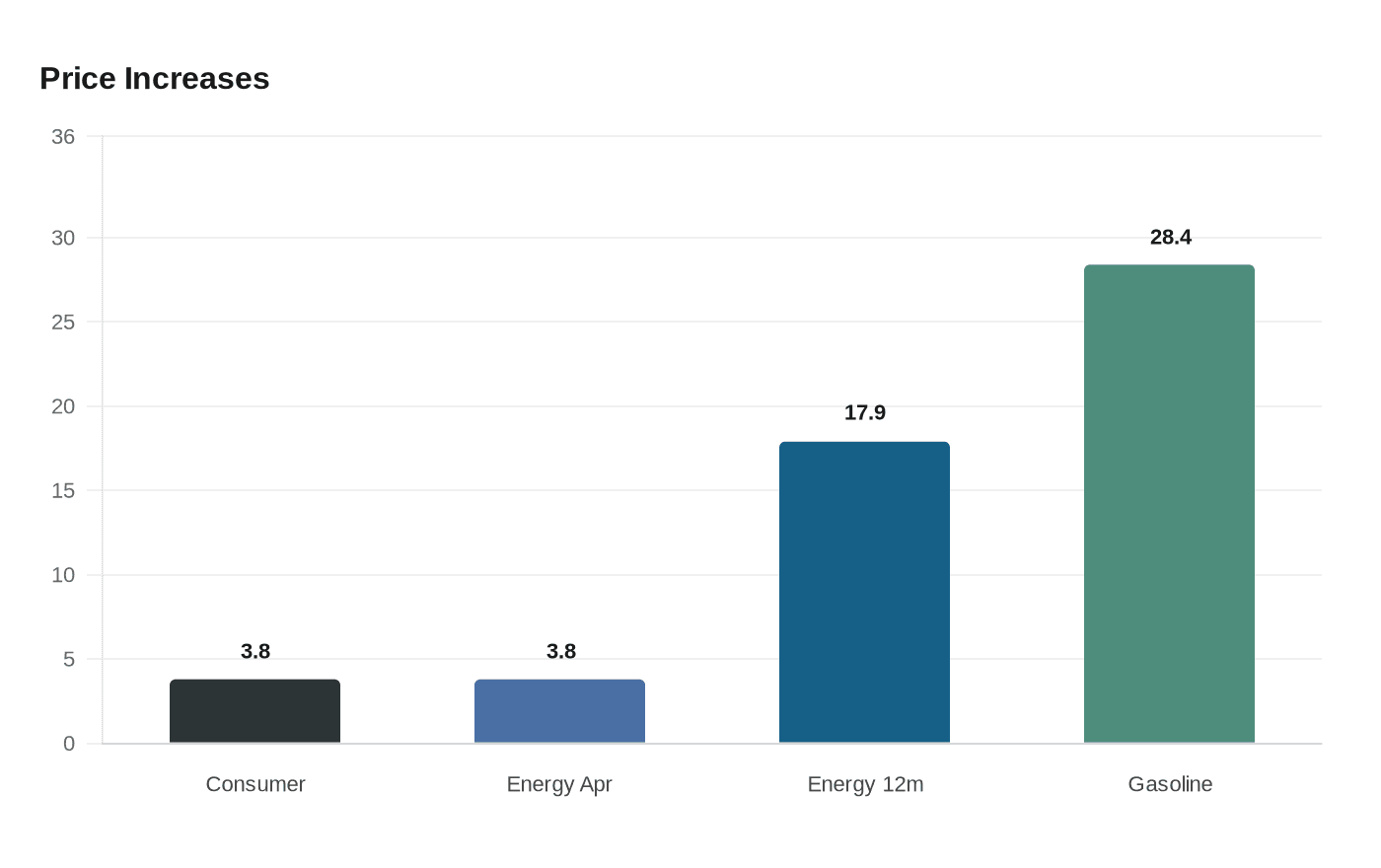
The Bureau of Labor Statistics said consumer prices rose 3.8% from a year earlier, the fastest annual pace since May 2023. Energy prices were a major driver: the energy index rose 3.8% in April and 17.9% over the past 12 months, while gasoline prices were up 28.4% from a year earlier. The figures reinforced the political pressure surrounding a war that has already pushed costs higher for households trying to balance fuel bills, groceries and rent.
Public skepticism is growing alongside the economic pain. A Reuters/Ipsos poll completed May 11 found that 66% of Americans said Trump had not clearly explained why the United States went to war with Iran. The same survey found that 63% said recent gas price increases had hurt their household finances, up from 55% in a mid-March poll. Trump’s approval rating in the poll stood at 36%, two points higher than a late-April low, but still deeply underwater as the conflict drags on.
The comment immediately became a political opening for Democrats and a point of defense for Republicans. House Speaker Mike Johnson said Wednesday that Trump thinks about Americans’ financial situations “constantly,” while Senate Minority Leader Chuck Schumer and House Minority Leader Hakeem Jeffries quickly used the remark to argue that Republicans are ignoring the war’s economic toll.
The broader risk for the White House is that the war in Iran, now in its 11th week, is colliding with a domestic cost-of-living squeeze that voters feel in real time. Analysts have warned that higher energy costs, inflation and uncertainty over the Strait of Hormuz could complicate Republican efforts to hold congressional majorities in November 2026, especially if Democrats keep tying foreign-policy decisions to the price Americans pay at the pump. An Associated Press analysis in March had already said the conflict was hurting Trump politically and giving Democrats a way to frame the war as economic mismanagement.
Know something we missed? Have a correction or additional information?
Submit a Tip

