Trump Says Another Round of Iran Peace Talks Could Happen Soon
Trump floated new Iran talks, but the real test is whether a fragile ceasefire, a U.S. blockade and Strait of Hormuz shipping can hold.
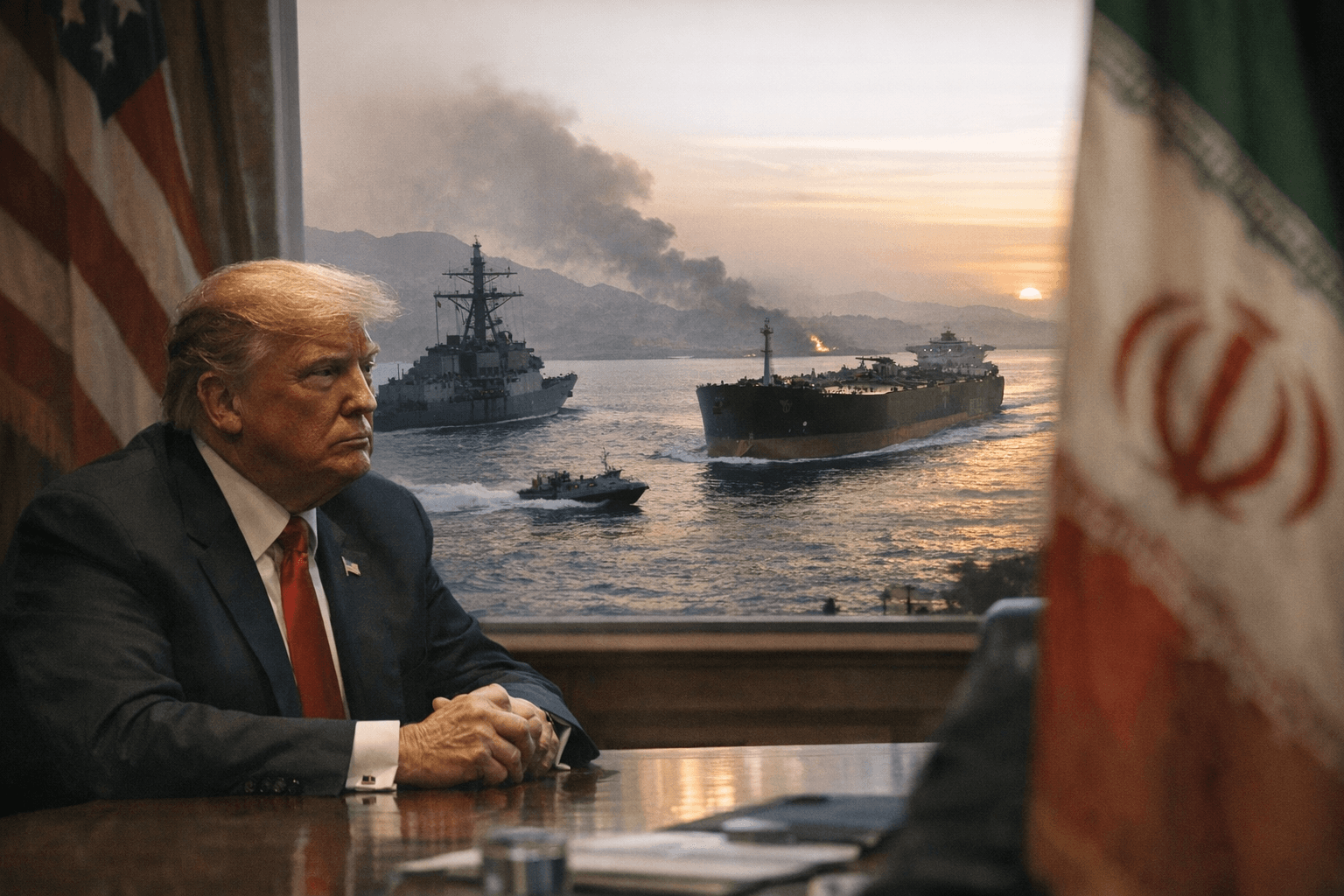
Donald Trump said another round of peace talks with Iran could happen soon, but the only verified movement so far is a proposal for a second meeting after U.S.-Iran negotiations in Islamabad collapsed without an agreement following roughly 21 hours of talks. Pakistani officials have pushed for another round, while diplomats are trying to arrange it before a fragile ceasefire expires next week.
The stakes extend far beyond the negotiating table. The United States has imposed a blockade on ships entering or leaving Iranian ports and on parts of the Strait of Hormuz, one of the world’s most important energy chokepoints. Iran warned it would retaliate after the blockade began April 13 at 10 a.m. EDT, and the risk of miscalculation has raised alarms over shipping, oil prices and the stability of the ceasefire itself.
Inside the diplomacy, the gap remains wide. Mohammad Bagher Qalibaf, Iran’s parliamentary speaker, said the U.S. failed to win the trust of the Iranian delegation. JD Vance said the talks “did make some progress,” even though no deal was reached. Iran also received a message from the United States through mediators, a sign that back-channel contacts are continuing even as public positions stay hard-edged.
The Strait of Hormuz is the pressure point that makes any new talks matter. The U.S. Energy Information Administration says about 20 million barrels per day of oil flowed through the strait in 2024, roughly 20% of global petroleum liquids consumption. The International Energy Agency says an average of 20 million barrels per day of crude oil and oil products were shipped through it in 2025. UNCTAD says the waterway carries around a quarter of global seaborne oil trade, along with major volumes of liquefied natural gas and fertilizers.
Traffic has already been disrupted. UNCTAD says ship transits through the strait have fallen sharply, with movement near a halt. CBS News has reported that only about a dozen ships passed through in the first two days of the ceasefire, a stark drop from normal traffic. That slowdown is more than a shipping problem; higher energy, fertilizer and transport costs can feed into food prices and deepen cost-of-living pressure for households already stretched by inflation.
Any real breakthrough would have to do more than reopen a diplomatic channel. It would need to extend the ceasefire, ease pressure on the Strait of Hormuz and restore enough trust to keep oil flowing and markets from pricing in a wider crisis.
This article was produced by Prism’s automated news system from verified source data, official records, and press releases, then run through automated quality and moderation checks before publishing. The system is built and supervised by the people who set the standards it runs under. Read our full AI policy.
Did this article answer your question?


