Trump Says Navy Seized Iranian Tanker as Ceasefire Talks Falter
Trump said the Navy seized an Iranian tanker as 10,000 U.S. troops enforced a blockade that has already turned back 13 ships. The move sharpened doubts about whether ceasefire talks can survive.
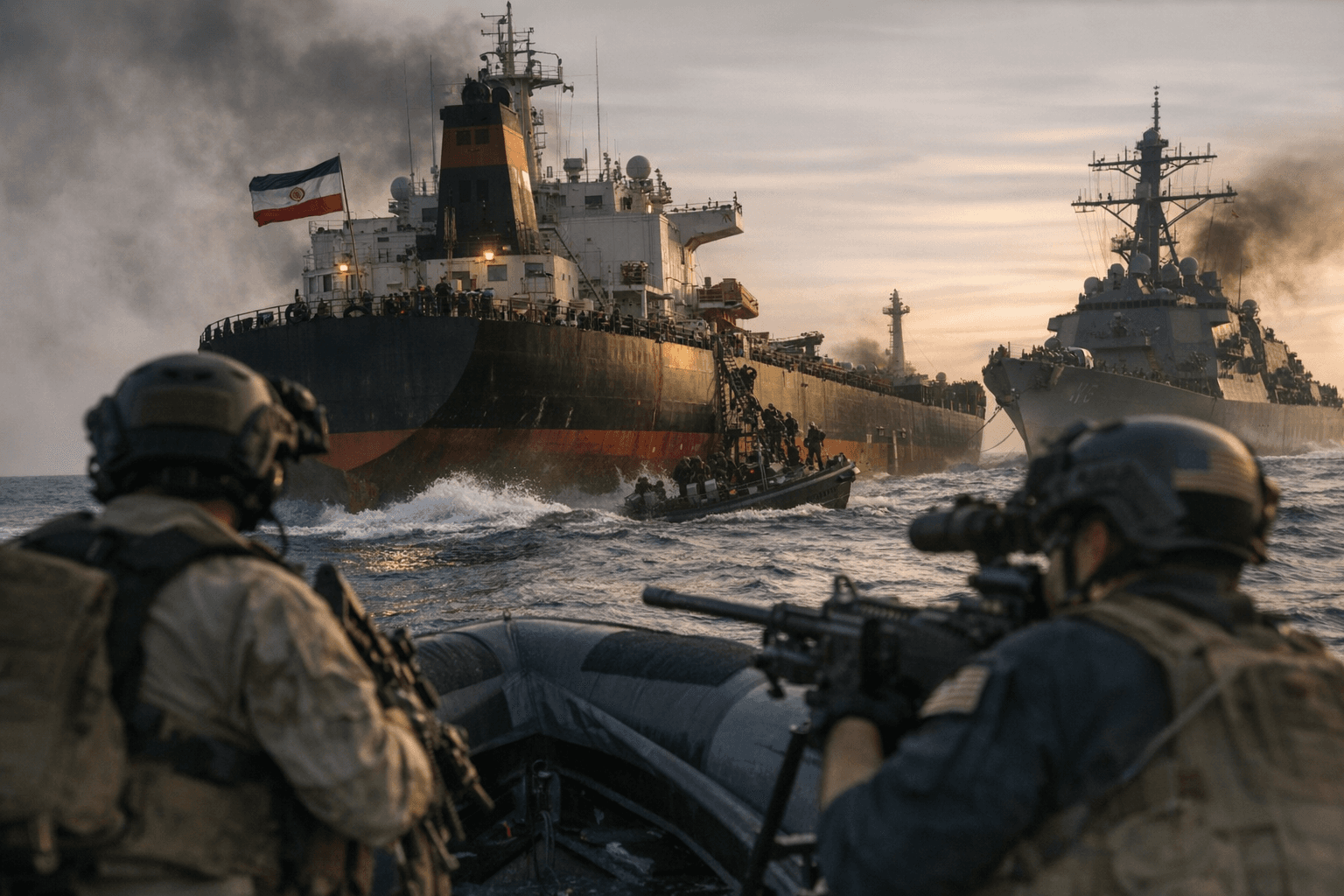
The Navy’s seizure of an Iranian tanker pushed the standoff with Tehran into a more dangerous phase, just as ceasefire talks were already fraying and negotiators prepared to head back to Pakistan. Donald Trump said the ship was struck and seized after attempting to cross the U.S. blockade, a move that signaled Washington was willing to back its maritime restrictions with direct military force.
The blockade of Iran’s ports and coastal areas began at 10 a.m. ET on April 13, 2026, and the military said it would allow transit through the Strait of Hormuz only for ships traveling between non-Iranian ports. In the first 24 hours, the U.S. military turned back six ships. It later said the total had reached 13 ships since the blockade began, with more than 10,000 U.S. troops being used to enforce it.
That enforcement posture now sits at the center of the ceasefire test. The White House said Vice President JD Vance would return to Pakistan tomorrow for a new round of peace talks with Iran after weekend negotiations failed to produce a deal. Trump, meanwhile, cast the next move as Iran’s responsibility, a message that suggests Washington is pairing pressure at sea with a demand for concessions at the table.
Tehran answered by keeping commercial traffic in the Strait of Hormuz moving, at least in principle. On April 17, Iranian Foreign Minister Abbas Araghchi said the strait was “completely open” for commercial vessels for the remainder of the ceasefire, though ships would have to use a coordinated route. The market took that as a sign of reduced immediate risk: oil prices fell 12% after the announcement.
But the policy clash is now bigger than one tanker. China publicly called the U.S. blockade “dangerous and irresponsible,” warning that the world must not be allowed to “revert to the law of the jungle.” That criticism underscored the diplomatic cost of a blockade that has placed a strategic waterway, global shipping, and a fragile ceasefire on the same collision course.
With one tanker seized and more warships still enforcing the blockade, the question is no longer only whether Washington can deter Iran. It is whether the administration is still managing a ceasefire, or drifting into a direct confrontation that could narrow the space for talks before Vance reaches Pakistan again.
This article was produced by Prism’s automated news system from verified source data, official records, and press releases, then run through automated quality and moderation checks before publishing. The system is built and supervised by the people who set the standards it runs under. Read our full AI policy.
Did this article answer your question?