Trump Signs Executive Order Restricting Mail-In Voting, Creating Federal Voter List
Trump signed an order forcing DHS to build a federal voter list and blocking USPS from delivering mail ballots to unapproved voters, a move legal scholars say is unconstitutional on its face.
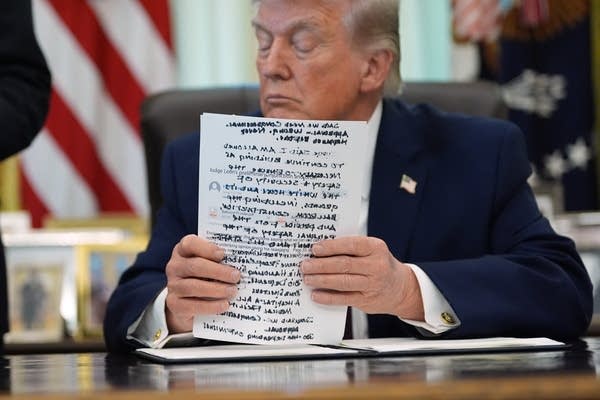
The Constitution assigns power over federal elections to state legislatures and Congress. President Donald Trump's executive order signed Tuesday in the Oval Office would reroute that authority through three federal agencies, and election law scholars say courts will not allow it.
The order directs Homeland Security Secretary Markwayne Mullin, working with the Social Security Administration, to compile a "State Citizenship List" of confirmed U.S. citizens eligible to vote in each state. The U.S. Postal Service would then be required to deliver mail ballots only to voters pre-enrolled on a state-specific "Mail-in and Absentee Participation List," meaning any eligible voter absent from that database could be blocked from receiving an absentee ballot. States must submit their approved voter lists to USPS no fewer than 60 days before each federal election, and mailed ballots would carry unique barcodes for tracking. States that refuse to comply face loss of federal funding under directives issued to Attorney General Pam Bondi.
Those mechanics would directly affect the 30.3 percent of the 2024 electorate that voted by mail, according to the U.S. Election Assistance Commission. Pew Research Center data put the share of validated mail voters at roughly 34 percent. The method skews Democratic: 44 percent of Democratic voters cast mail or absentee ballots in 2024, compared with 26 percent of Republicans. Trump himself voted by mail in Florida local elections just days before signing the order.
The central constitutional obstacle is the Elections Clause, which reserves to states and Congress the authority over the time, place, and manner of federal elections. Florida State University law professor Michael Morley said "there's really nothing that the executive branch can do on its own in terms of direct mandates." UCLA election law professor Rick Hasen called the order "unconstitutional and not something that could really be implemented in time" for the November 2026 midterms, noting it "misunderstands the constitutional structure of election administration." Election integrity researcher David Becker called it "unconstitutional on its face," adding that "the Constitution clearly gives the president no power over elections."
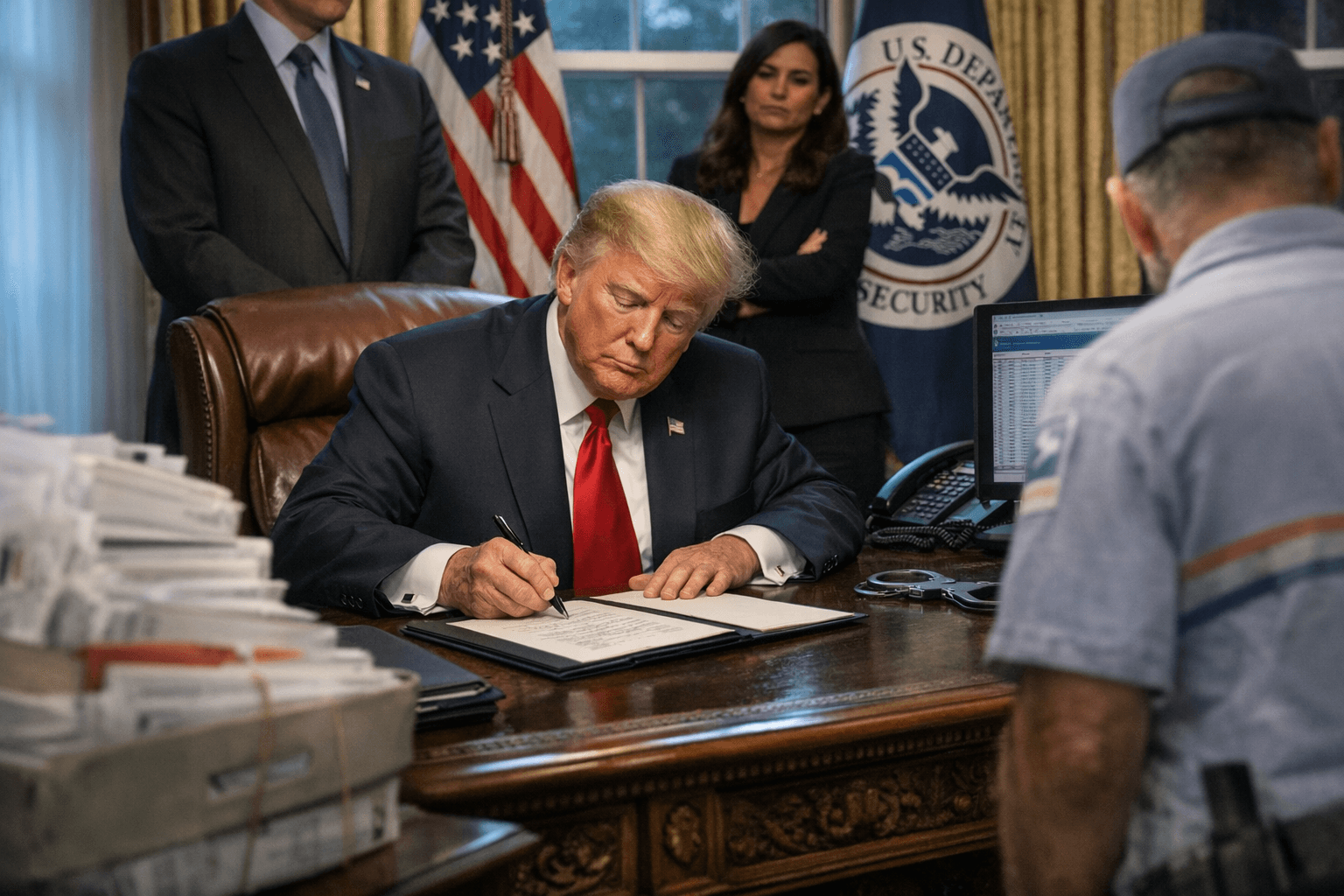
The order's likely legal path will resemble the fate of Trump's first election executive order, EO 14248, signed in March 2025. That order sought documentary proof-of-citizenship requirements for voter registration and mandated that mail ballots arrive at election offices by Election Day. A federal district court in Washington, D.C. issued a preliminary injunction in April 2025 pausing key provisions, with other challenges still active when Tuesday's order was signed. Democratic election lawyer Marc Elias declared on X that a lawsuit would follow immediately, and the NAACP said the order "will not stand." Trump, anticipating judicial resistance, told the signing ceremony audience: "You may find a rogue judge. A lot of rogue judges. Very bad, bad people."
The administration's fraud justification rests on a sparse factual record. A 2025 Brookings Institution report found mail voting fraud occurred in approximately 0.000043 percent of ballots cast, about four cases per 10 million. The Heritage Foundation, aligned broadly with Trump's politics, has documented roughly 100 verified cases of noncitizen voting nationwide since 2000. Noncitizen voting is already a federal crime.
One Supreme Court case may ultimately deliver what the executive order cannot. A 2024 RNC lawsuit challenging Mississippi's practice of accepting mail ballots received after Election Day advanced through the conservative Fifth Circuit before the Supreme Court agreed to hear it. A ruling for the Republicans would establish durable legal precedent that no executive order, however sweeping, can manufacture on its own.
Sources:
Know something we missed? Have a correction or additional information?
Submit a Tip