Trump Supporters at CPAC Back Iran Policy but Fear the Costs at Home
Nassar Meyman wants regime change; 59% of Americans say the Iran war is already excessive. CPAC revealed a coalition testing its own limits.
Nassar Meyman traveled to Grapevine, Texas, with a clear preference for how the war in Iran should end: full regime change, with Crown Prince Pahlavi leading what comes next. What worried him was the possibility that Donald Trump might settle for something less.
"I hope Trump will be really serious about getting rid of the regime in Iran and we have a new start with the leadership of Crown Prince Pahlavi," the Dallas resident said at the Conservative Political Action Conference. "Sometimes, when Mr. Trump talks about, 'I'm going to negotiate and find somebody inside the regime, somebody inside Iran', that makes us rather worried."
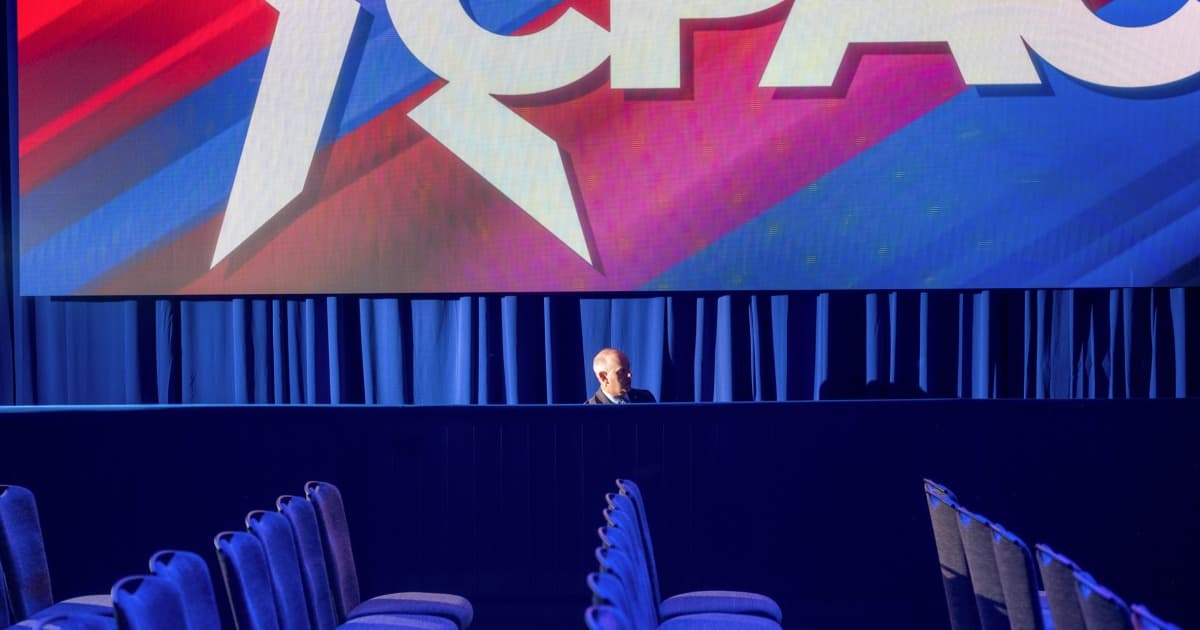
Meyman's unease captured a broader tension at CPAC, where thousands of activists, influencers and Republican lawmakers gathered for one of conservatism's largest annual events. The war in Iran hung over what was supposed to be a moment of unified purpose. One year ago at this same conference, Elon Musk wielded a chainsaw as a symbol of bureaucratic demolition and Trump vowed to "forge a new and lasting political majority." This year, neither the president nor Vice President JD Vance was publicly announced as a speaker.
The gap between conservative loyalty and national skepticism over the war was stark in the polling. An AP-NORC poll showed about 59% of Americans believe the military action in Iran is excessive. Yet 86% of conservatives approved of Trump's job performance in a February AP-NORC poll, underscoring how completely the right and the broader public had diverged. A CBS News poll released the weekend before CPAC found 84% of Republicans approved of the U.S. taking military action against Iran; support fell to 70% among non-MAGA Republicans. Among independents, opposition ran even higher: 69% told CBS they were against U.S. military action.
That divergence matters most in an election year. Americans' views on the war and its effects on energy prices could determine who wins control of Congress. The House Republican majority is already considered in jeopardy, and the party's hold on the Senate is less certain than it was twelve months ago. One day before CPAC opened, a Democrat flipped the Florida state legislative seat that is home to Trump's Mar-a-Lago estate. Trump's signature domestic policy, a voting-rules overhaul targeted at November's midterms, has stalled in a Republican-controlled Congress, and worries about jobs and household costs continue to weigh on his approval numbers.
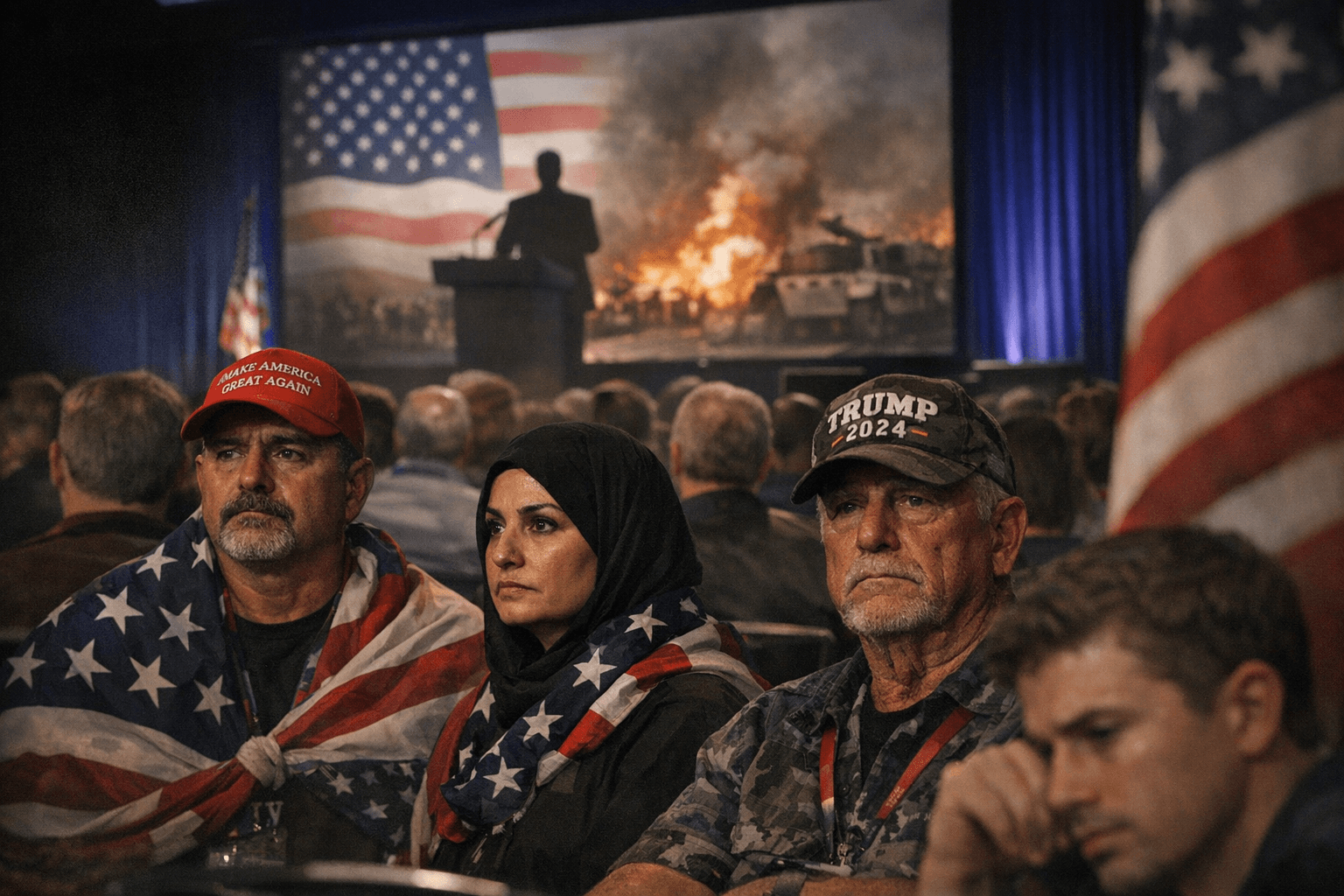
Many Iranian-American attendees at CPAC said they believed sending troops to Iran would be necessary to topple the regime or destroy its missile stockpiles. An attendee identified as Nezhad warned that even if the U.S. degraded Iran's military capabilities, the regime's repressive internal security forces could still cling to power. Deborah Thorne, a longtime Trump ally, said she supports the administration's efforts in Iran but is not looking for a long-term war.
John Gizzi, a CPAC veteran and columnist for Newsmax, framed the conference's central challenge plainly: "This is obviously going to be a hot topic." Gizzi noted the possibility of greater U.S. involvement over an uncertain length of time, a prospect that sits uneasily within a movement built on "America First" skepticism of foreign entanglements.
Texas Rep. Steve Toth, who defeated incumbent Republican Dan Crenshaw in the March 3 primary, attended CPAC and argued the base has not turned on Trump. "From MAGA people, for the most part, I don't hear frustration with the president," Toth said, before acknowledging a gap in how the administration has made its case: "I don't know that we're doing a great job at communicating the full ramifications."
The costs of the conflict have grown harder to paper over. On March 18, Trump traveled to Joint Base Andrews after attending the casualty return at Dover Air Force Base for six crew members of an Air Force refueling aircraft who died when their plane crashed in western Iraq while supporting operations against Iran. With the MAGA movement now weighing regime change against rising prices, stalled legislation and an uncertain congressional map, the chainsaw optimism of a year ago has given way to something considerably more difficult to resolve.
Know something we missed? Have a correction or additional information?
Submit a Tip