Trump threatens Hormuz blockade after Iran talks fail in Islamabad
Trump warned of a Strait of Hormuz blockade after Islamabad talks collapsed, posting on Truth Social on April 7 that "a whole civilization will die tonight, never to be brought back again."

President Donald Trump escalated a confrontation with Iran after a Pakistan-mediated ceasefire and weekend negotiations in Islamabad ended without a deal, floating a naval blockade of the Strait of Hormuz that would carry major legal, military and market consequences. Trump posted on Truth Social on April 7, 2026, writing, "A whole civilization will die tonight, never to be brought back again," and on April 10 told the New York Post, "We're loading up the ships" and that the United States was rearming warships with "the best ammunition" if talks failed. The Pakistan-hosted negotiations, led for the U.S. by Vice President J.D. Vance, ran roughly 21 hours on April 11–12 and concluded without a breakthrough.
The immediate political fallout in Washington was sharp and partisan. More than 70 House and Senate Democrats publicly called for Trump's removal or 25th Amendment action, and former House Speaker Nancy Pelosi urged Cabinet intervention. Most congressional Republicans remained muted; Sen. Ron Johnson offered a public warning against attacks on civilian infrastructure and described the rhetoric as possibly bluster. Efforts by House Democrats to curtail presidential war powers were blocked by Republican votes in the House.
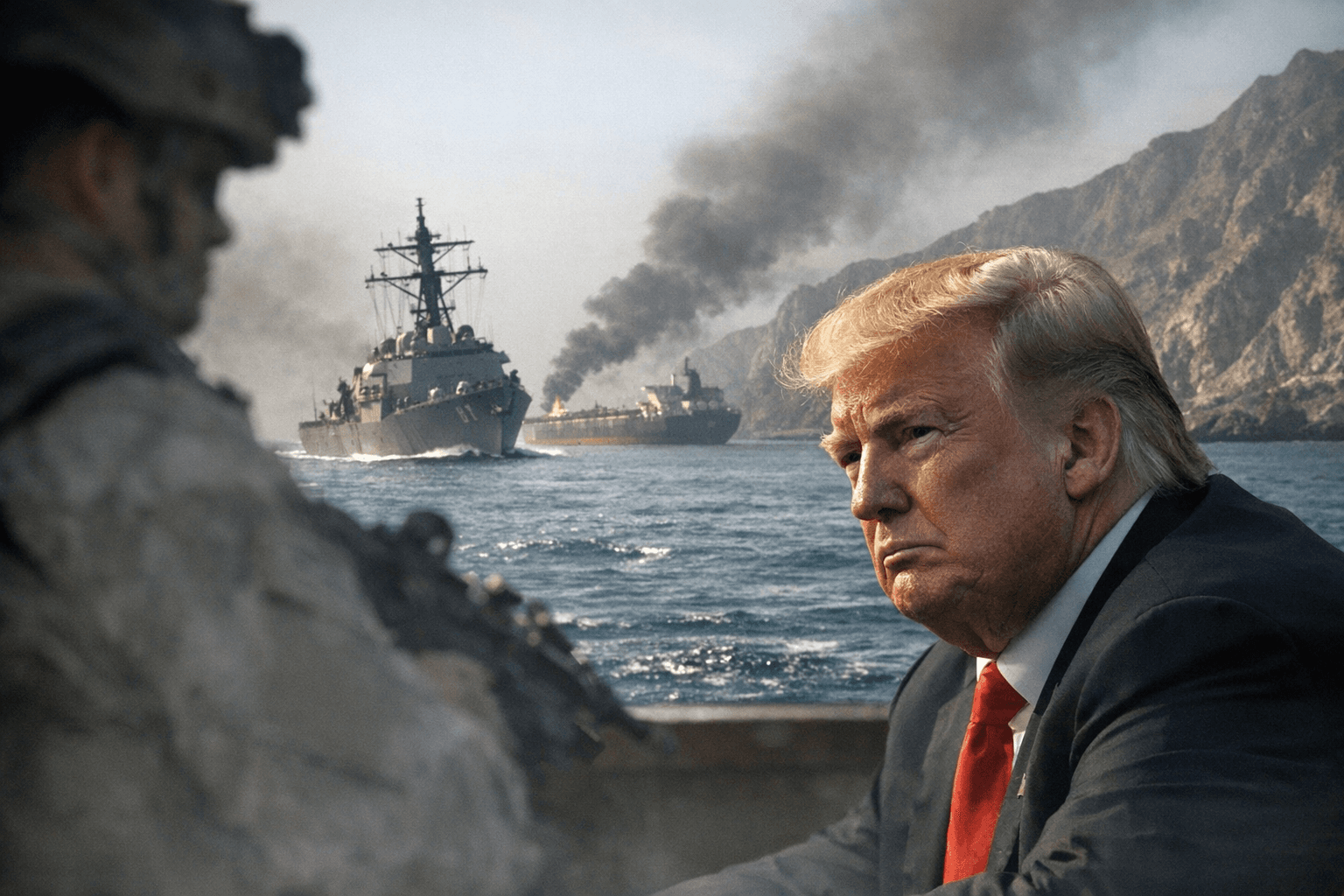
Operationally, U.S. forces were already posture-shifted toward the Gulf when the rhetoric intensified. Pentagon reporting and defense sources tracked the movement of roughly 2,500 Marines from the 31st Marine Expeditionary Unit and placed U.S. troop levels in the broader Middle East at about 50,000, alongside multiple carrier strike groups, including the USS George H.W. Bush Carrier Strike Group deployed in late March. Analysts caution that while the U.S. Navy can interdict or escort shipping, any long-term scheme to "control" Hormuz would require sustained assets and expose those assets to Iranian sea mines, anti-ship missiles, fast-attack craft and armed drones.
International law and humanitarian concerns complicate any blockade plan. A naval blockade is treated as an act of war under the San Remo Manual framework and must be declared, effective and observe humanitarian exceptions to bind neutral states. United Nations Secretary-General António Guterres said he was alarmed, and Amnesty International and Human Rights Watch condemned the threats. Legal scholars such as Oona Hathaway and former ICC prosecutor Luis Moreno Ocampo warned that explicit threats against civilian infrastructure could create evidence relevant to war-crimes inquiries, even as practical and jurisdictional obstacles to prosecuting a sitting U.S. president remain.
Strategic calculations are starkly numerical. The Strait of Hormuz chokes roughly 20 million barrels per day of oil and petroleum liquids in 2024–2025, about 20 percent of global consumption and more than one-quarter of seaborne oil trade, while the strait narrows to roughly 21–29 nautical miles with 2-mile-wide traffic channels. Bypass options, including Saudi Arabia's East–West pipeline and the UAE Habshan–Fujairah ADCOP line, offer some relief—ADCOP capacity is commonly reported near 1.5 million barrels per day—but cannot replace Hormuz's flows and are running near capacity.
Markets have already reacted. Oil prices spiked into triple digits during earlier escalation and then plunged after the April 7 ceasefire announcement, with Brent and WTI moving roughly in the mid-to-high teens percent on intraday swings, highlighting how rhetoric alone can swing global markets. Historical U.S. naval operations in the Gulf, including Operation Earnest Will and Operation Praying Mantis in 1987–88, show the Navy's capacity to act but also the costs and escalation each operation carried.
The Islamabad talks' failure on April 12 leaves diplomacy frayed, forces staged and legal and economic risks unresolved. Any attempt to enforce a blockade of the Strait of Hormuz would not be a simple show of force; it would require a declared legal framework, months of sustained naval operations, and a willingness to accept regional escalation and market disruption.
Sources:
Know something we missed? Have a correction or additional information?
Submit a Tip