Trump Threatens Iranian Ships as U.S. Begins Maritime Blockade
Trump warned Iranian ships would be destroyed as U.S. forces began a blockade that threatens Hormuz traffic, oil income and the next step toward war.
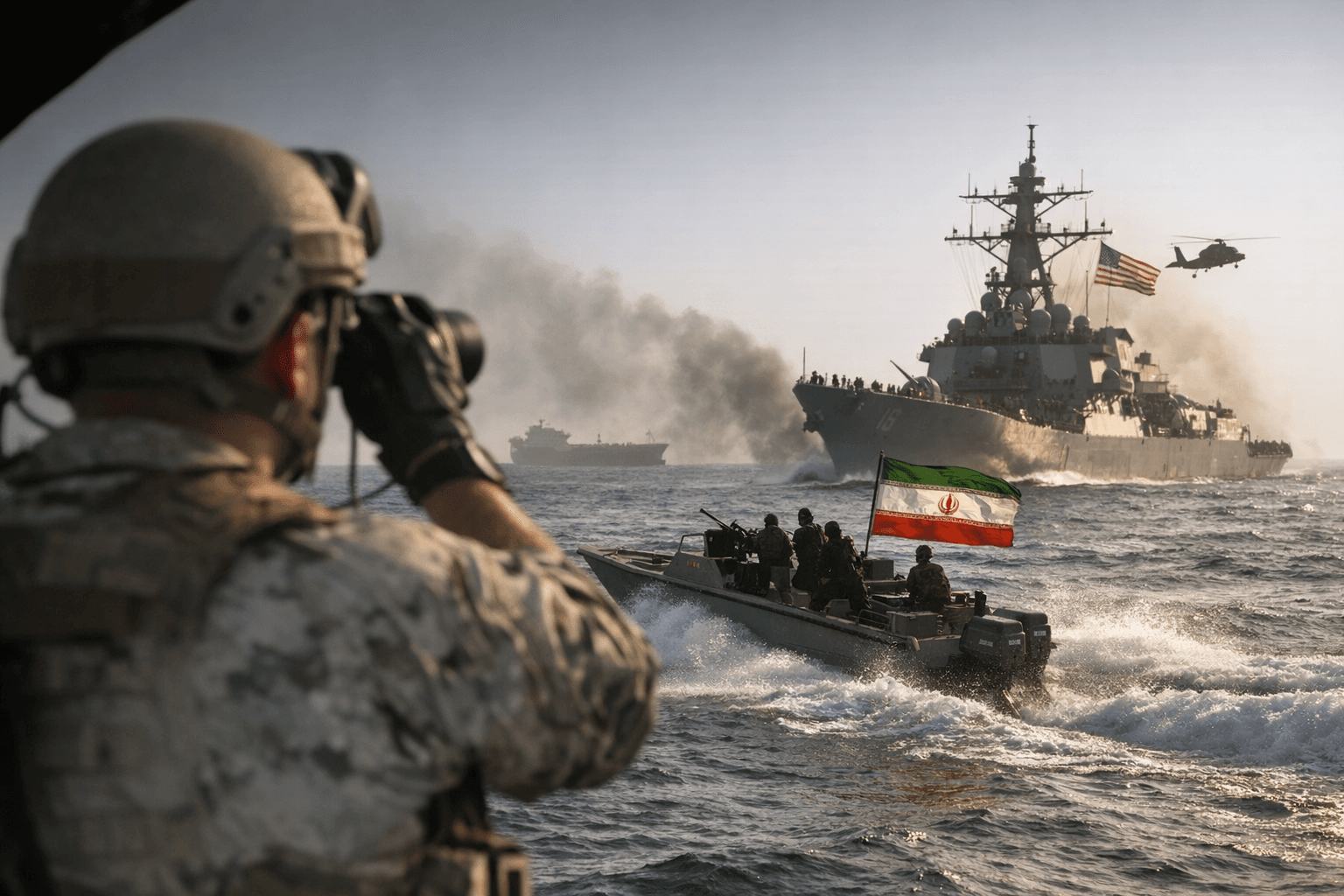
Donald Trump warned that any Iranian ships approaching the blockade would be destroyed as the U.S. military began sealing off maritime traffic into and out of Iranian ports, a move designed to cut off Tehran’s oil income and sharply raise the cost of any naval challenge. U.S. Central Command said the blockade took effect April 13 at 10 a.m. ET and would be enforced impartially against vessels of all nations entering or leaving Iranian ports on the Arabian Gulf and Gulf of Oman.
The escalation followed more than 21 hours of U.S.-Iran talks in Islamabad, Pakistan, that ended without a breakthrough over Iran’s nuclear program and other red lines. The meeting was the first direct U.S.-Iran encounter in more than a decade and the most senior since Iran’s 1979 Islamic Revolution. Pakistan said it would keep trying to facilitate dialogue after the collapse, while the breakdown left diplomacy in place only as a damaged backchannel.
The stakes are concentrated in the Strait of Hormuz, where the U.S. Energy Information Administration says about 20 million barrels of oil a day flowed in 2024, equal to about one-fifth of global petroleum consumption. The agency says flows through the strait in 2024 and the first quarter of 2025 accounted for more than one-quarter of global seaborne oil trade. It also estimates Iran’s oil companies earned about $53 billion in net oil export revenues in 2023, underscoring why the blockade cuts at a core source of state income.
Trump said he had instructed the Navy to interdict vessels in international waters that had paid a toll to Iran and to destroy mines he said Iran had laid in the strait. The Islamic Revolutionary Guard Corps warned that military vessels approaching the Strait could be treated as violating the cease-fire, and Iran threatened retaliation against ports in Gulf neighboring states. CENTCOM said the blockade would not impede ships transiting the Strait of Hormuz to and from non-Iranian ports, but the line between a pressure campaign and open war may narrow quickly if either side attacks shipping or naval forces.
Markets moved fast. Oil prices rose about 4% as traders absorbed the blockade and retaliation threats, with Brent crude topping $102 a barrel in some trading. Analysts and shipping experts warned the disruption could push insurance and transport costs higher and jeopardize global trade far beyond the region, especially if France, Britain, and other powers fail to reopen the waterway before a miscalculation turns maritime pressure into direct conflict.
This article was produced by Prism’s automated news system from verified source data, official records, and press releases, then run through automated quality and moderation checks before publishing. The system is built and supervised by the people who set the standards it runs under. Read our full AI policy.
Did this article answer your question?


