Trump Touts Daring Rescue as U.S. and Iran Trade Mixed Signals
Trump called the Easter Sunday rescue of a wounded F-15 colonel from deep inside Iran "one of the largest, most complex, most harrowing" missions in U.S. military history.

President Trump stood before reporters at the White House on Monday and described in vivid detail a special operations rescue of a downed Air Force colonel who had spent nearly 48 hours wounded and hiding in a cave inside Iranian territory, even as the broader conflict between the U.S., Israel, and Iran lurched between the prospect of a diplomatic deal and the threat of catastrophic escalation.
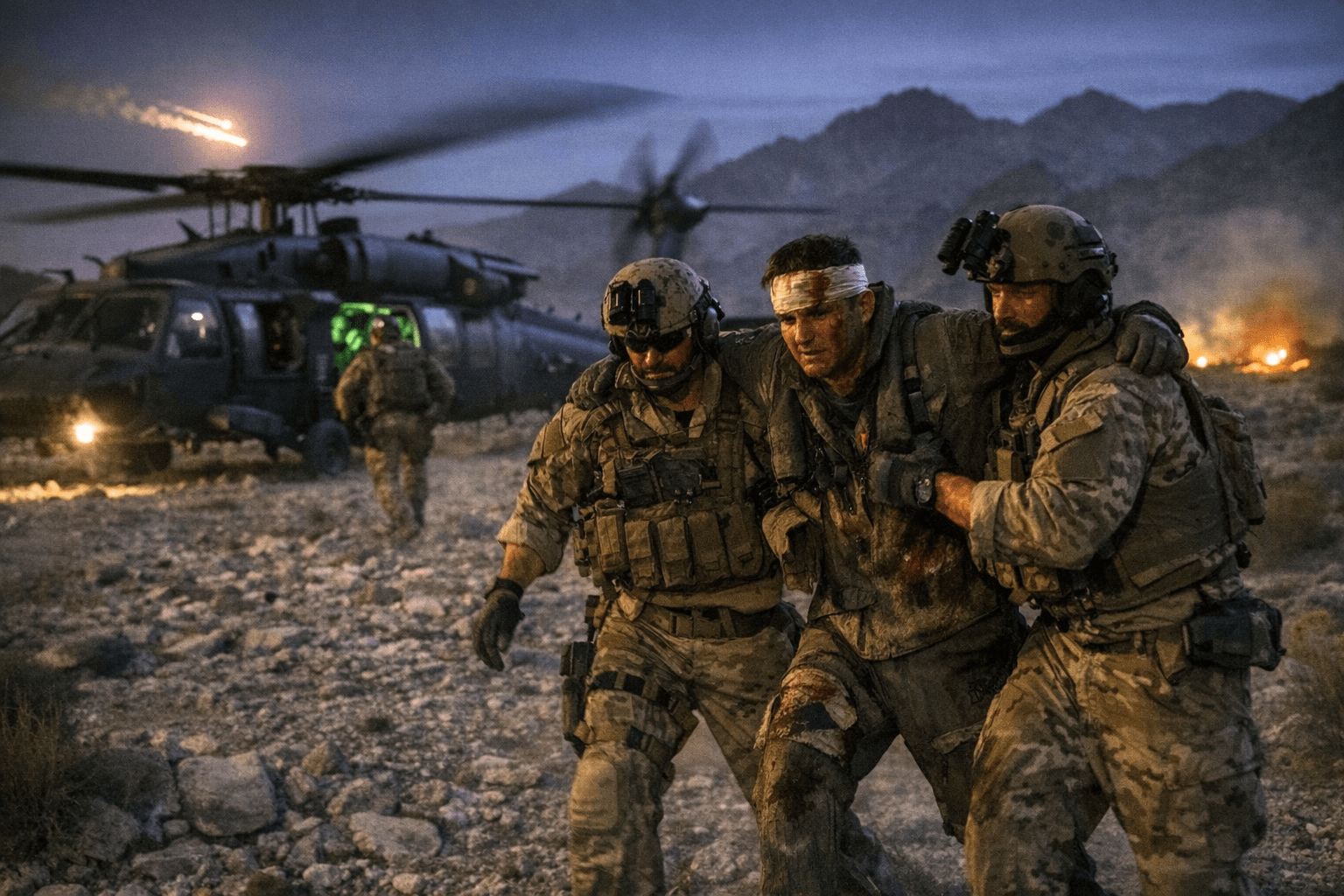
The rescue unfolded over a harrowing Easter weekend. An F-15 fighter jet carrying a two-man crew was shot down over Iran on Good Friday. The pilot was recovered that same day, but the colonel, wounded and bleeding, evaded Iranian forces for almost two full days before a massive special operations force descended to pull him out. Defense Secretary Pete Hegseth, who appeared alongside Trump at the White House briefing room, framed the timeline in stark terms: "Shot down on a Friday, Good Friday. Hidden in a cave, a crevice, all of Saturday, and rescued on Sunday. Flown out of Iran as the sun was rising on Easter Sunday."
Trump described the mission as "one of the largest, most complex, most harrowing" the U.S. military has ever conducted. Around 200 soldiers from special operations units participated. Drones and other aircraft engaged Iranian forces during the operation, and an A-10 aircraft was struck by enemy fire while communicating with the stranded colonel. Gen. Dan Caine, chairman of the Joint Chiefs of Staff, said the A-10 pilot continued to fight, eventually ejecting safely over friendly territory. When the colonel was finally able to activate his emergency transponder, Hegseth said, "his first message was simple and it was powerful. He sent a message: God is good."
Trump acknowledged that not all military advisers had supported authorizing the mission. "Not everybody was on board," he said. "There were military people that said, 'You just don't do this.'" He credited Hegseth and Caine as having been "totally on board." The president said the large-scale force deployment was partly designed to deceive Iranian forces about the officer's actual location, since Iran had deployed, in Trump's words, "a vast military force out there."
Israeli Prime Minister Benjamin Netanyahu, whose country has fought alongside U.S. forces in the now six-week-old conflict, called it a "perfectly executed American mission."
The triumphant press conference, Trump's first since the war began, arrived against a tense diplomatic backdrop. Trump set an 8 p.m. Tuesday deadline for Iran to reopen the Strait of Hormuz, threatening to strike Iranian power plants and bridges if Tehran refuses. He also said the country "can be taken out in one night, and that night might be tomorrow night." Yet in the same appearance, he said there was a "good chance" for a deal and called Iran's response to a ceasefire proposal "not good enough" rather than a dead end.
Tehran rejected the framing entirely. Iranian Foreign Ministry spokesperson Esmail Baghaei said a temporary ceasefire would simply give Washington and Jerusalem time to regroup, and insisted Iran would not accept anything short of a permanent end to hostilities. Iranian officials have also consistently denied being in direct negotiations with the United States, even as Trump has publicly claimed progress through third-party intermediaries.
With the Tuesday deadline now hours away, both the path to war and the path to diplomacy remain open, and the administration's own signals point in both directions at once.
This article was produced by Prism’s automated news system from verified source data, official records, and press releases, then run through automated quality and moderation checks before publishing. The system is built and supervised by the people who set the standards it runs under. Read our full AI policy.
Did this article answer your question?


