Trump Trades Tariffs, Aid, and Favors to Deport Migrants Worldwide
Only 139 of 560 migrants awaiting third-country deportation had criminal records, as the U.S. traded tariffs and aid to send people to African autocracies.
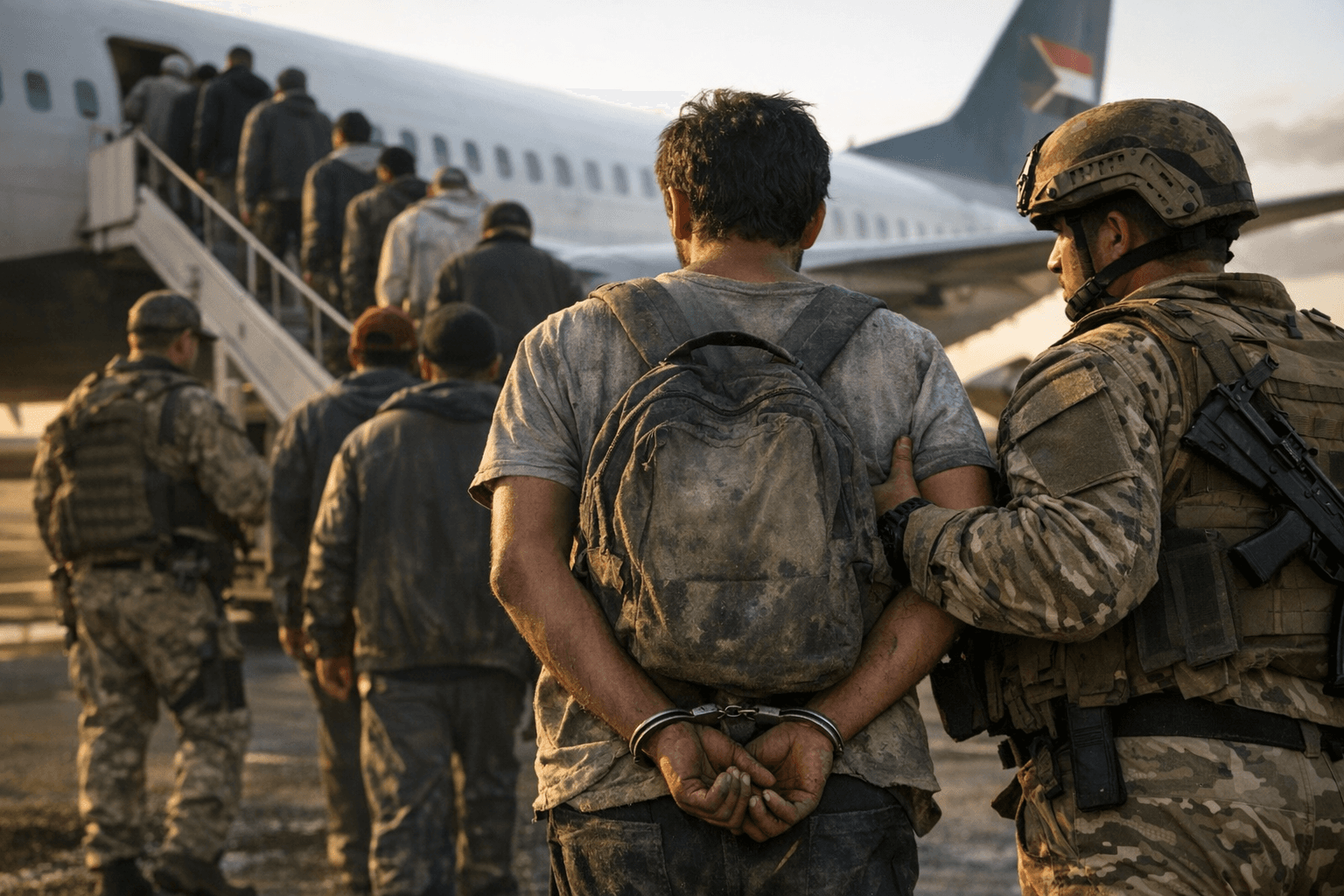
What began as a domestic immigration crackdown has become one of the Trump administration's most ambitious foreign policy tools, as American diplomats traded tariff relief, aid, and visa concessions to persuade governments worldwide to accept migrants, many with no ties to those countries and no criminal records.
The administration claimed roughly 140,000 deportations as of April 2025, though independent estimates put the figure closer to 70,000. The State Department signed at least seven Safe Third Country agreements and revoked more than 100,000 non-immigrant visas as part of the broader enforcement effort.
A February 2025 cable from Secretary of State Marco Rubio's office coached diplomats with suggested scripts to extract commitments: "If you are willing to take more individuals, then we can potentially provide more support," and "Without making any promises, what do you have in mind?" Offered incentives included payments to foreign security forces, eased tariff restrictions, financing for public health services, and reconsideration of countries' placements on U.S. watch lists.
The strategy took particular shape in Africa under a policy officially called "America First in Africa," where the administration prioritized deal-making over human rights enforcement. The United States struck agreements with at least four African governments. Rwanda became the third African country, after South Sudan and Eswatini, to formally accept non-citizen deportees from the United States. Rwanda confirmed seven deportees arrived, including an Iraqi refugee deported in April 2025, with as many as 250 migrants potentially headed there under the agreement. At a June 27 White House meeting, Trump held up a photograph of himself with Rwanda's Foreign Minister Olivier Nduhungirehe.
The Democratic Republic of Congo and the Central African Republic are both in active talks to receive deportees, confirmed by two government sources in Kinshasa, three United Nations sources, and two diplomats. Both countries have dysfunctional judicial systems, and government forces in each have been linked to torture and forced disappearances. Armed groups backed by Rwanda have also been accused of forced displacements amid conflict in eastern DRC.
The criminal record data exposes the gap between the administration's public safety rationale and operational reality. Of 560 migrants held in early March 2025 awaiting deportation to a third country, only 139 had criminal convictions. The administration was also eyeing 7,600 non-detained migrants for third-country deportation; roughly one in six had any criminal record.
In El Salvador, President Nayib Bukele released a widely-shared video in March 2025 showing hundreds of Venezuelans being transferred to the CECOT maximum-security prison. Many were subsequently found not to have criminal records, a pattern court documents showed was repeated among others targeted for deportation.
Federal District Judge Tanya S. Chutkan in Washington recognized the strategy for what it was but ruled she could not stop it. "What this appears to be is an end run around the United States' obligations," she said from the bench. The Justice Department argued that once migrants arrived in another country, neither the administration nor federal courts could direct what foreign governments did with them.
The Senate Foreign Relations Committee minority issued a report on February 13, 2026, titled "At What Cost? Inside the Trump Administration's Secret Deportation Deals," citing concern about the secrecy of the arrangements. With the administration still negotiating across Africa and beyond, the scope of the program appears far from its ceiling.
This article was produced by Prism’s automated news system from verified source data, official records, and press releases, then run through automated quality and moderation checks before publishing. The system is built and supervised by the people who set the standards it runs under. Read our full AI policy.
Did this article answer your question?