Trump Weighs Pulling U.S. Troops From Europe Amid NATO Tensions
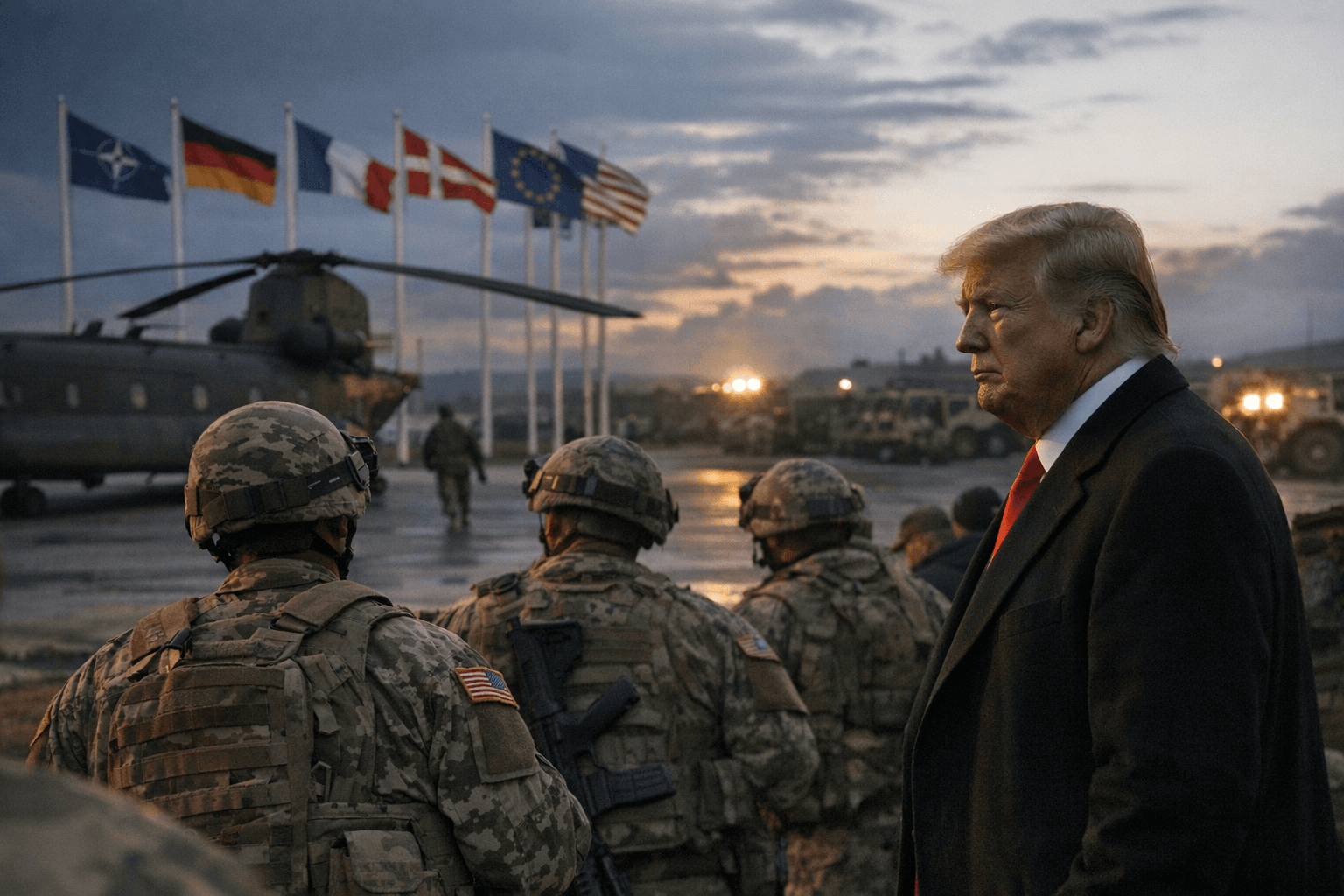
Trump discussed pulling some of the 80,000+ U.S. troops from Europe, driven by fury that NATO allies refused to help secure the Strait of Hormuz.
The White House has been weighing a partial withdrawal of U.S. forces from Europe, a senior administration official disclosed on April 9, 2026, adding a concrete military dimension to what had been a worsening diplomatic rift between Washington and its NATO allies.
The discussions, reported by Reuters correspondents Gram Slattery and Steve Holland, were described by the official as internal deliberations driven in part by President Trump's frustration over European allies' refusal to join U.S. efforts to secure the Strait of Hormuz, through which roughly 20 percent of global oil and gas flows. The official, who requested anonymity to discuss the private deliberations, stressed that no formal directive had been issued to the Pentagon to draw up specific redeployment plans.
The United States currently stations more than 80,000 troops across Europe, with major concentrations in Germany, Italy, the United Kingdom and Spain. That presence, assembled and expanded across eight decades, underpins NATO's deterrence posture against Russian aggression. The administration's deliberations reportedly include closing at least one U.S. base, with Germany and Spain identified as potential targets, while countries viewed as supportive of Washington's position, including Poland, Romania, Lithuania and Greece, could see increased troop presence.
The context is the Iran war, which began on February 28, 2026. White House Press Secretary Karoline Leavitt framed the conflict as a "test" that NATO had failed, after allied governments declined to contribute forces to operations and France and Spain restricted U.S. access to their airspace. Trump's frustration also extended to what the official described as slow movement on other administration priorities, including Washington's long-mooted bid to acquire Greenland.
The disclosure came days after Trump met with NATO Secretary-General Mark Rutte at the White House, a meeting that, according to the Reuters account, did not substantially improve transatlantic relations. NATO did not immediately respond to a request for comment.
The operational stakes of even a partial redeployment are substantial. Military planners would have to navigate logistics, equipment relocation and host-nation agreements built up over generations. A previous Trump-era proposal to withdraw 12,000 troops from Germany, which would have included the 12th Combat Aviation Brigade and the 2nd Cavalry Regiment, collapsed during his first term without implementation. That episode illustrated the difficulty of disentangling forces whose basing, training pipelines and allied interoperability are deeply embedded in European infrastructure.
Analysts warned that repositioning forces along political lines, rewarding allies seen as cooperative and penalizing those that pushed back on the Iran campaign, carries its own strategic risks. Gaps in coverage across the Western flank of the alliance could complicate joint exercises and readiness, and any signal of reduced U.S. commitment is likely to accelerate contingency planning in European capitals already questioning the durability of American security guarantees. Whether Trump translates these deliberations into orders will determine whether 2026 marks a tactical adjustment or a fundamental reorientation of the alliance's military architecture.
This article was produced by Prism’s automated news system from verified source data, official records, and press releases, then run through automated quality and moderation checks before publishing. The system is built and supervised by the people who set the standards it runs under. Read our full AI policy.
Did this article answer your question?


