Trump's China delegation is mostly men as summit opens in Beijing
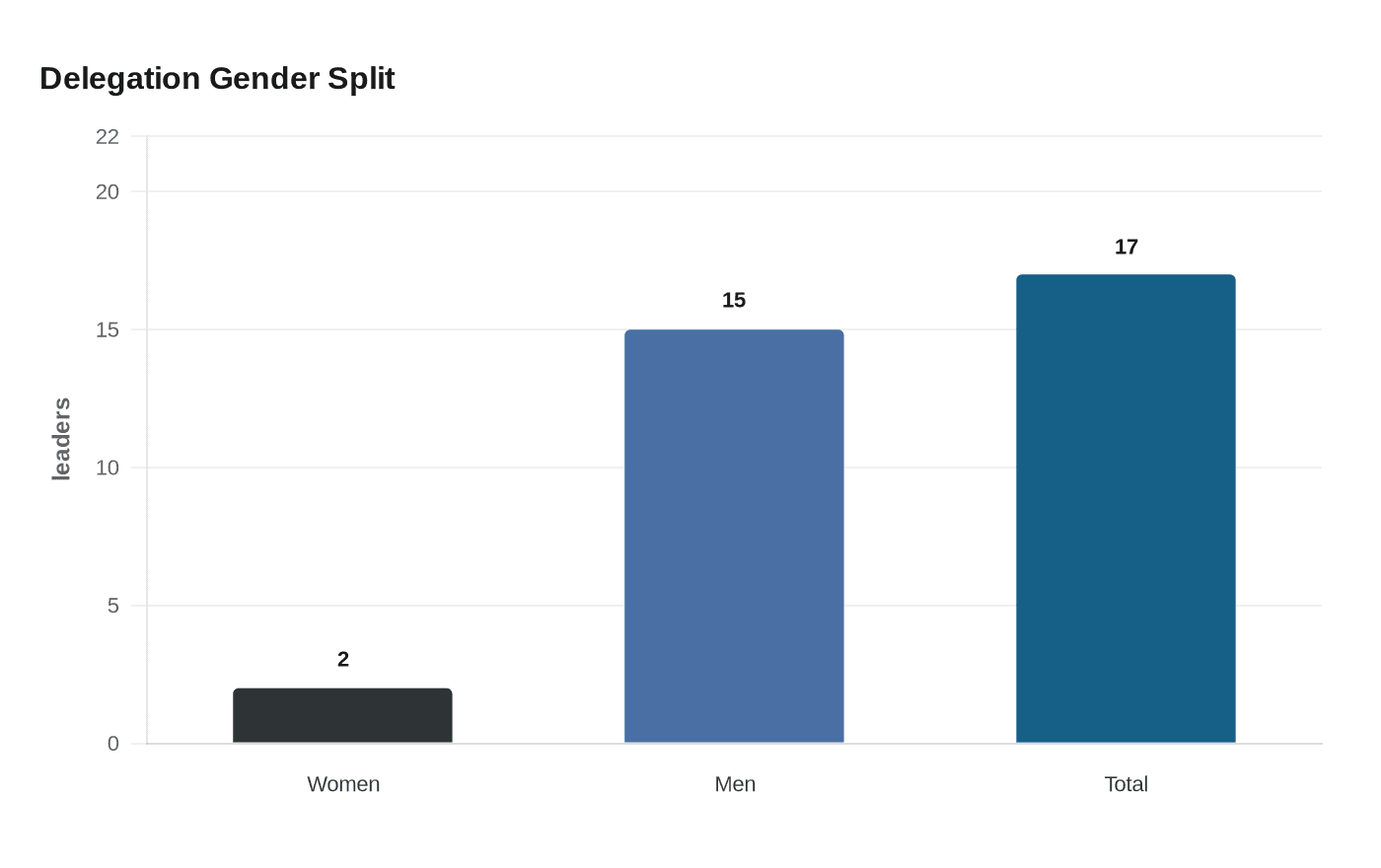
Only two women joined the 17-person U.S. business delegation in Beijing, as Trump opened his first state visit to China since 2017. The optics underscored who is being asked to speak for American commerce.

Donald Trump arrived in Beijing with a business delegation that was overwhelmingly male, even as his summit with Xi Jinping was cast as a high-stakes test of trade power and economic influence. Of the 17 business leaders the White House invited, only two were women: Citigroup chief executive Jane Fraser and Meta President and Vice Chairman Dina Powell McCormick. The other 15 were men.
That imbalance was visible on both sides of the table. Few women were seen in the Chinese official welcome and summit setting, reinforcing a summit atmosphere dominated by male power brokers on both sides of the U.S.-China relationship. The optics mattered because this visit was framed not just as diplomacy, but as a signal of which business voices Washington wanted representing American interests in one of the world’s most consequential economic relationships.
Trump’s agenda in Beijing reached well beyond ceremonial protocol. Trade and tariffs sat at the center of the talks, alongside rare earths, artificial intelligence, the war in Iran and Taiwan. Trump said he would ask Xi to “open up” China to the executives traveling with him, making the trip itself part of his leverage. The White House has not publicly explained how it chose the invitees.
The missing names were as striking as the ones included. Other prominent women leaders with deep China exposure, including General Motors chief executive Mary Barra, AMD chief executive Lisa Su and Accenture chief executive Julie Sweet, were not on the list. The delegation instead featured top men from finance, technology, manufacturing and aviation, including Elon Musk, Tim Cook, Larry Fink, David Solomon, Kelly Ortberg and Jensen Huang. That concentration of decision-makers placed the most visible bargaining power in male hands.
The scale of the delegation also marked a retreat from Trump’s 2017 China visit, when he traveled with roughly two dozen executives. The White House then said the trip produced $253 billion in commercial deals, though analysts later questioned many of those announcements as largely non-binding letters of intent. Reuters reported that the smaller delegation this time reflected divisions inside the administration over China policy and limited expectations for the summit.
The gender gap carried symbolic and substantive weight. In a relationship defined by tariffs, supply chains, advanced chips and rare earths, the leaders at the table signaled whose industries and priorities were being elevated. In Beijing, the message was plain: the business face of American power remained mostly male.
This article was produced by Prism’s automated news system from verified source data, official records, and press releases, then run through automated quality and moderation checks before publishing. The system is built and supervised by the people who set the standards it runs under. Read our full AI policy.
Did this article answer your question?