Trump’s Iran policy shows the cost of impulsive, go-it-alone decisions
Trump’s Iran policy traded allied leverage for unilateral risk, then paid for it in missile strikes, troop injuries, and a weaker nuclear bargain.

A multilateral deal gave way to unilateral force
The sharpest damage from Trump’s Iran policy is not abstract. It can be measured in the collapse of a nuclear agreement backed by the United Nations, the erosion of allied trust, the risk to U.S. troops and bases, and the long shadow cast over energy and shipping markets whenever Washington and Tehran move toward confrontation.
The original framework was the 2015 Joint Comprehensive Plan of Action, a deal that was not simply a bilateral arrangement but part of an international diplomatic order. United Nations Security Council Resolution 2231 endorsed the agreement unanimously on July 20, 2015, giving it legal and political weight far beyond a single administration’s preference. That mattered because it bound the Iran question to a broad coalition, including European partners who saw the deal as a working instrument of nonproliferation, not a disposable talking point.
Trump broke that structure on May 8, 2018, when he announced that the United States would withdraw from the JCPOA and reimpose sanctions lifted under the deal. The White House framed the move as a correction to what it called an unacceptable agreement, but the practical effect was to discard a multilateral restraint system and replace it with “maximum pressure.” That shift did not just change the tone of policy. It changed the operating environment for allies, adversaries, and markets.
The nuclear payoff ran in the wrong direction
The main case for leaving the deal was that pressure would force Iran into a better bargain. Instead, Iran gradually breached the JCPOA’s limits and invested in additional nuclear capabilities. The Arms Control Association says those advances brought Iran “to the threshold of nuclear weapons,” while International Atomic Energy Agency monitoring was later reduced. That is not a theoretical setback. It is a measurable deterioration in the visibility and predictability that the deal was designed to create.
This is where the cost of going it alone becomes concrete. A multilateral agreement with inspectors and agreed limits gave the United States leverage, but once Washington abandoned it, Tehran had stronger incentives to climb the nuclear ladder while portraying itself as the injured party. For U.S. policymakers, that means more uncertainty, less monitoring, and a shorter fuse in any future crisis. For allies, especially in Europe, it meant watching Washington weaken a framework they had helped build and then having to manage the consequences.
Soleimani turned policy into open-ended escalation
The next stage was even more revealing. On January 3, 2020, the United States killed Iranian Maj. Gen. Qassem Soleimani in a drone strike near Baghdad International Airport, an order from Trump that converted a policy dispute into a direct military escalation. Whatever tactical logic the administration claimed, the strike raised immediate questions about legal authority, the end state, and the risk of retaliation against U.S. forces and facilities in Iraq.
Iran answered on January 8, 2020, with missile strikes on Al Asad Airbase and other locations in Iraq. The Pentagon later said 109 U.S. service members were diagnosed with mild traumatic brain injury after the attack. That number matters because it captures the hidden cost of a supposedly clean strike. Even without a larger war, unilateral force created real injuries, damaged confidence, and exposed troops to danger on bases that are supposed to anchor American deterrence.
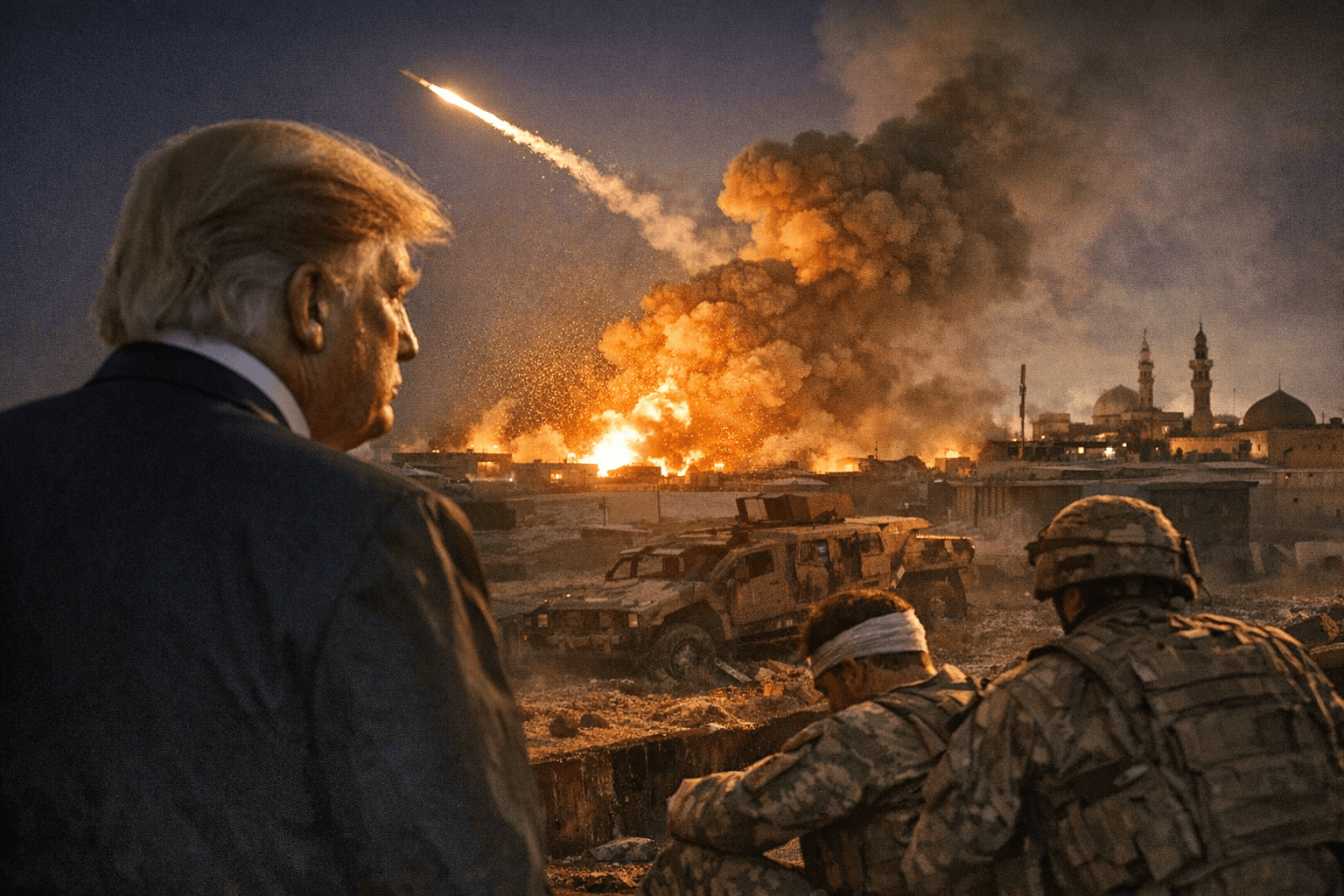
The political fallout inside Iraq was just as important. In the aftermath of the strike, Iraq’s parliament passed a resolution calling for the expulsion of foreign troops. That is the clearest sign of how unilateral U.S. action can weaken America’s position even when the target is an enemy commander. A strike meant to demonstrate resolve instead called U.S. basing rights and long-standing partnerships into question, showing that deterrence can come with a heavy price if it is not paired with coalition management.
Deterrence credibility is not the same as strategic control
Analysts at Brookings treated the Soleimani killing as a watershed moment for U.S.-Iran relations and for America’s role in the Middle East, precisely because the consequences were not limited to the battlefield. The debate was never just about whether Iran would be deterred. It was about whether the United States had created a cycle of escalation that made the region less stable, less predictable, and harder to manage with allies.
That is the long-tail problem with impulsive, go-it-alone decision-making. It can produce a short burst of perceived toughness while quietly degrading the tools that make power durable. Allies become less certain that Washington will consult before acting. Adversaries learn that the U.S. can be provoked into reactions that complicate its own position. Troops and installations in Iraq, including at Al Asad in Al Anbar Governorate, become more exposed because every exchange invites retaliation.
Congress tried to reassert limits, but the pattern held
The domestic response underscored how far the policy had drifted from a disciplined strategy. Trump vetoed the Iran War Powers resolution, S.J.Res.68, on May 6, 2020, and the Senate failed to override the veto the next day by a vote of 49-44. That fight was not just procedural. It showed a broad worry in Washington that war-making authority was becoming too concentrated and too improvisational.
The economic spillovers are part of the same story. When the United States abandons a multilateral framework and moves toward repeated escalation, it raises the risk premium on the broader region. Energy flows, shipping routes, insurance costs, and market expectations all become more fragile because the world cannot separate diplomacy from the threat of force. The result is a weaker America not because it lacks military power, but because it spends that power in ways that strain alliances, endanger troops, and reduce its own room to maneuver.
The lesson from the Iran episode is plain: pressure without coalition discipline does not strengthen U.S. leverage for long. It can leave Washington more isolated, Tehran more advanced, and the region more dangerous than before.
Sources:
Know something we missed? Have a correction or additional information?
Submit a Tip