Trump's Iran War Drives Oil Prices Higher, Public Support Falls
Oil topped $126 a barrel as Trump’s Iran war stretched beyond the promised quick strike, while 62% of Americans now disapprove of his handling.
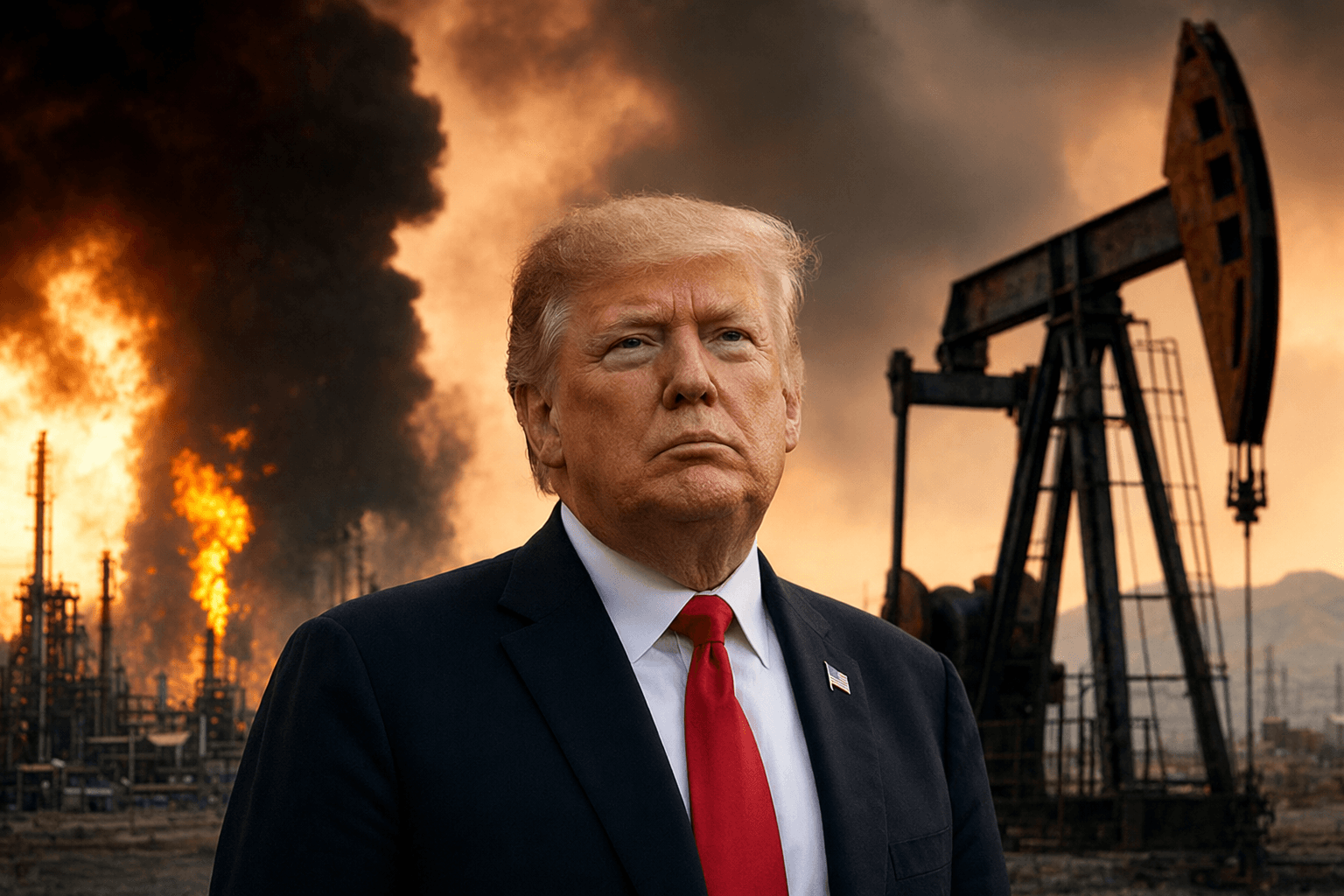
Donald Trump’s promise of a short, manageable confrontation with Iran is colliding with a widening bill: higher oil prices, a longer military commitment and a political backlash that is hardening by the day. What was framed as a limited use of force has become a test of whether the United States can contain the fallout without paying more at the pump or losing public support.
The conflict, which began on Feb. 28, has already pushed global markets into alarm. Oil prices climbed to more than $126 a barrel, a four-year high, as traders weighed the risk that the fighting could disrupt energy flows through the Middle East. The central pressure point is the Strait of Hormuz, where the U.S. Energy Information Administration says about 21 million barrels of oil moved each day in 2022, equal to roughly 21% of global petroleum liquids consumption. The International Energy Agency says the strait is the primary export route for oil from Saudi Arabia, the United Arab Emirates, Kuwait, Qatar, Iraq, Bahrain and Iran.
Washington has responded by tightening economic pressure rather than signaling any retreat. The State Department announced new sanctions on May 1 targeting entities and a vessel involved in Iranian petroleum trade. The Treasury Department’s Office of Foreign Assets Control issued an alert the same day warning about sanctions risks tied to Iranian demands for passage through the Strait of Hormuz, and another alert on April 28 focused on teapot oil refineries. Those moves show that the administration’s strategy is now running on two tracks at once: military confrontation and financial strangulation.
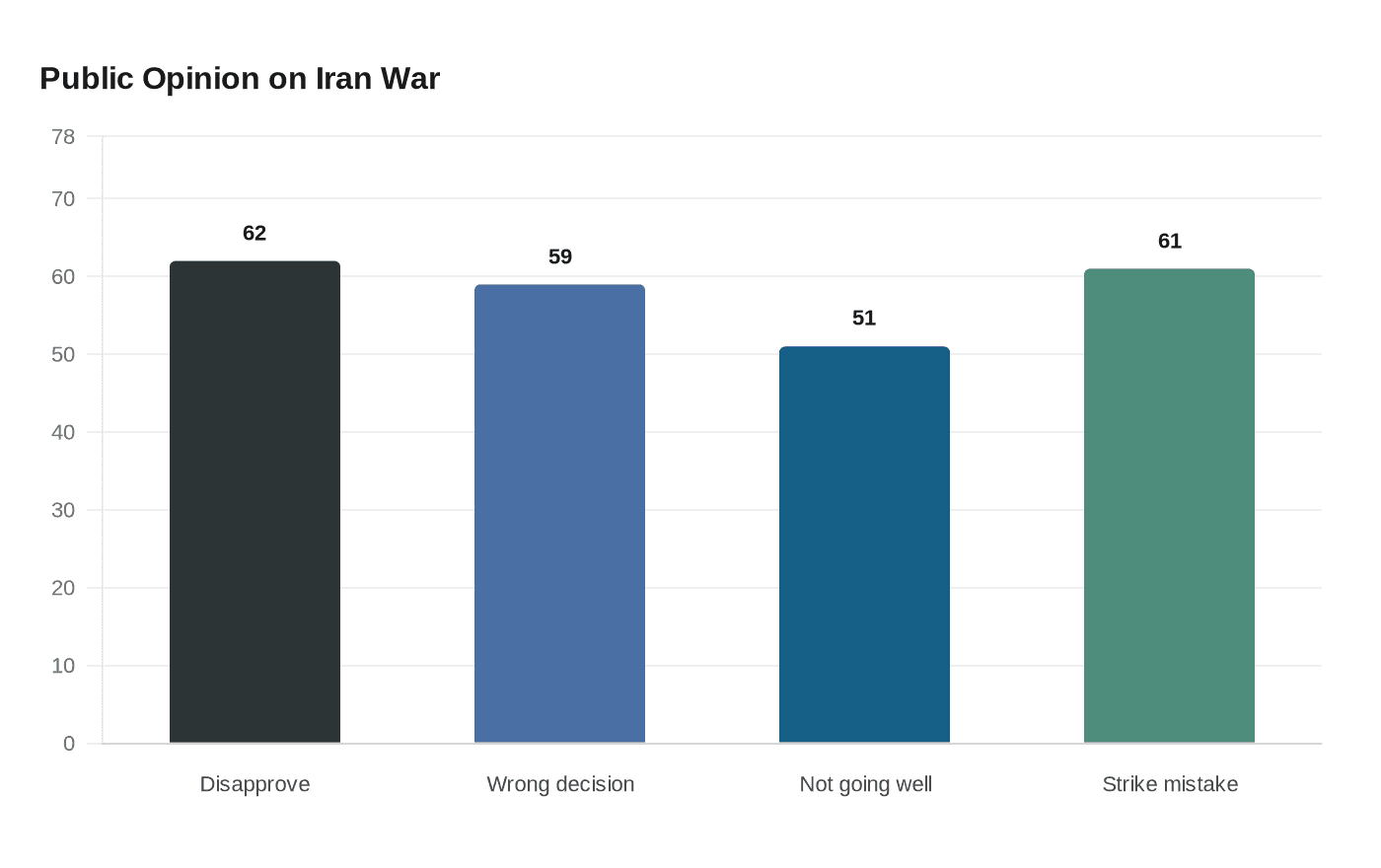
Public patience is thinning just as the economic stakes rise. Pew found on May 1 that 62% of Americans disapprove of Trump’s handling of the military action against Iran, while 59% say the United States made the wrong decision in using military force. Another 51% said the action is not going too well or not going well at all. A separate Washington Post-ABC News-Ipsos poll found 61% of adults calling the strike a mistake, and a Politico poll published April 17 found a majority of voters said the war was not in the national interest.
The political risk is sharpened by gas prices, which Pew said were Americans’ top concern in the war on April 7. Among Republicans worried about higher prices, confidence in Trump’s Iran policymaking was lower. Trump extended a Pakistan-brokered ceasefire on April 21, but the ceasefire effort has not erased fears that the conflict could drag on and keep markets jittery.
The broader debate in Washington is now over whether the war can be contained at all. RAND called it a dilemma rather than a debacle, saying the United States still had multiple paths forward. Carnegie argued the opposite, saying the conflict was disrupting alliances, empowering a more hostile regime and fueling anti-Americanism. For Trump, the larger problem is that the costs are becoming visible faster than the promised gains.
This article was produced by Prism’s automated news system from verified source data, official records, and press releases, then run through automated quality and moderation checks before publishing. The system is built and supervised by the people who set the standards it runs under. Read our full AI policy.
Did this article answer your question?

