Trump's Iran War Speech Draws Criticism for Contradictions and Strategic Confusion
Trump claimed "the hard part is done" while vowing heavier strikes on Iran, a contradiction critics called incoherent as Tehran warned of broader retaliation.

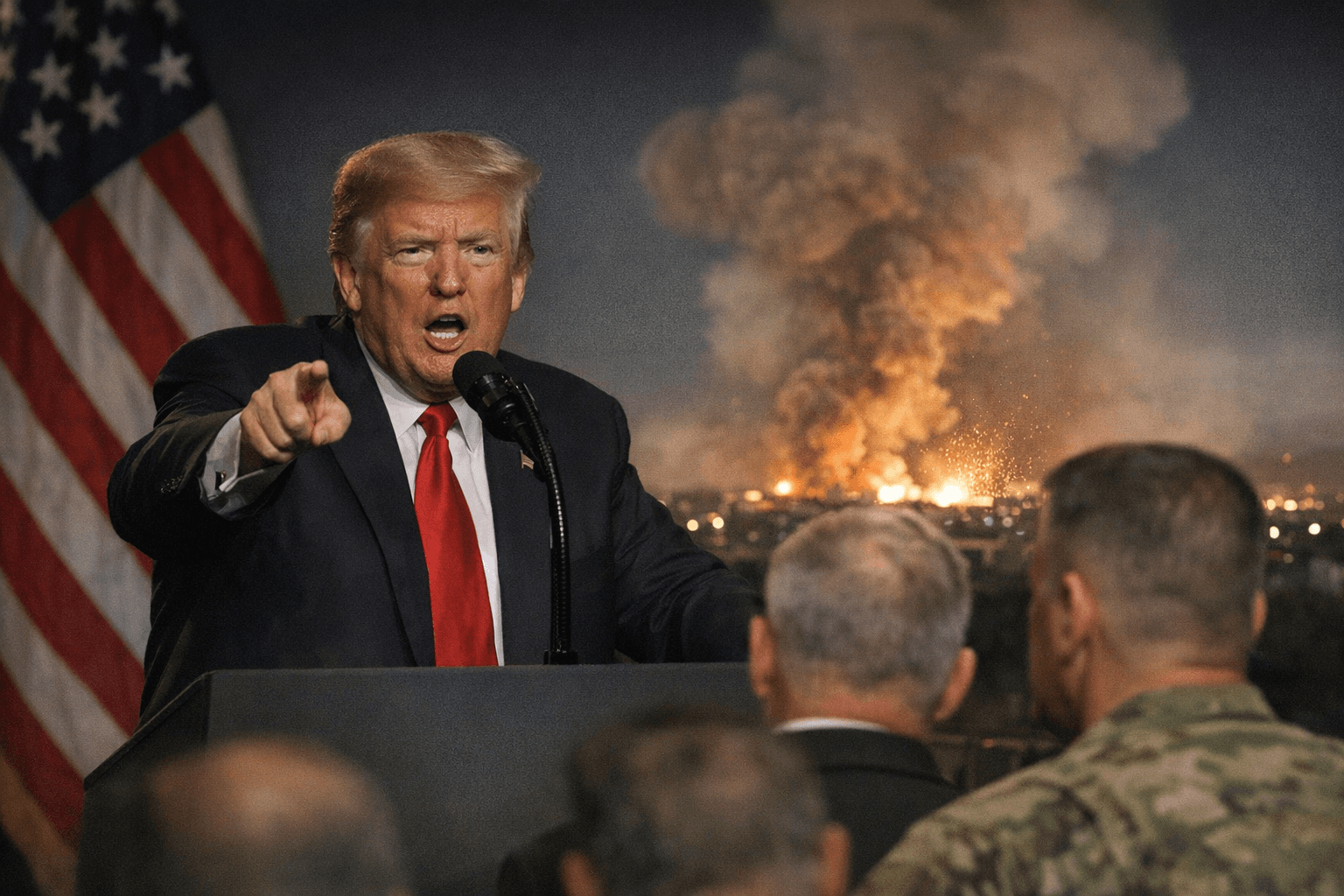
The contradiction was impossible to miss. Speaking from the White House Cross Hall on April 1, President Trump declared "the hard part is done" in the U.S.-Israel joint military campaign against Iran, then immediately warned that the United States planned to strike Iran "extremely hard" over the next two to three weeks. The roughly 19-minute address, his first formal primetime speech on the war since hostilities began in early March, prompted swift and pointed backlash from military analysts, lawmakers, and foreign policy observers.
Harlan Ullman, a former senior U.S. naval officer, called the speech "embarrassing" and "incoherent," saying it failed to outline a clear strategy. Senator Chris Murphy of Connecticut was blunter: "That speech was grounded in a reality that only exists in Donald Trump's mind. We are losing this war. We cannot destroy all their missiles or drones, nor their nuclear program." Time described the address as a "meandering series of statements that were as contradictory as they were unhelpful," while Foreign Policy called it "perhaps the clearest evidence yet" of incoherent leadership.
The war has already extracted significant costs. Among those killed in U.S.-Israeli strikes were Ali Larijani, secretary of Iran's Supreme National Security Council, and Gholam Reza Soleimani, commander of the Basij paramilitary force. On March 18, thousands gathered at Enghelab Square in Tehran for a funeral honoring 84 Iranian Navy personnel also killed in the strikes. Tehran's response to the April 1 address was defiant, with Iranian officials warning of "broader" retaliatory attacks. Iran's remaining missile and drone capacity remained a central concern for critics challenging the war's strategic direction. Constitutional questions have also shadowed the conflict: the Brennan Center for Justice argued the strikes are unconstitutional, as unilateral presidential initiation of war without congressional authorization raises fundamental separation-of-powers issues.
The Iran speech came on the same day Trump personally attended Supreme Court oral arguments in Trump v. Barbara, challenging birthright citizenship under the 14th Amendment. Sitting presidents rarely attend oral arguments, making his appearance extraordinary. The court's majority appeared skeptical. Chief Justice John Roberts questioned how the administration's narrow examples could justify ending citizenship for a far larger class of U.S.-born children, citing the landmark 1898 precedent in United States v. Wong Kim Ark. Justice Brett Kavanaugh pressed the solicitor general on why Congress repeatedly reaffirmed that precedent during the 1940s and 1950s. After arguments concluded, Trump posted on Truth Social calling the U.S. "the only Country in the World STUPID enough to allow" birthright citizenship.
The birthright case arrived weeks after Trump suffered a major legal defeat. On February 20, the Supreme Court ruled 6-3 in Learning Resources, Inc. v. Trump that the International Emergency Economic Powers Act does not authorize the president to impose tariffs unilaterally. Chief Justice Roberts wrote the majority opinion; Justices Clarence Thomas, Brett Kavanaugh, and Samuel Alito dissented. All IEEPA-based tariffs were terminated at midnight on February 24. By that point, importers had already paid an estimated $200 billion or more under the struck-down authority, and the court declined to order refunds.
The economic backdrop sharpens each of these battles. U.S. GDP growth in the fourth quarter of 2025 registered an anemic 1.4 percent, with inflation holding at 3 percent, pressures that the invalidated tariff regime helped stoke. Trump's approval rating has slipped since the Iran campaign began, and his disputes with NATO allies over the operation have reportedly produced the unintended effect of binding those allies more tightly together in opposition to his approach.
This article was produced by Prism’s automated news system from verified source data, official records, and press releases, then run through automated quality and moderation checks before publishing. The system is built and supervised by the people who set the standards it runs under. Read our full AI policy.
Did this article answer your question?