Trump’s Lincoln Memorial reflecting pool renovation nears $15 million
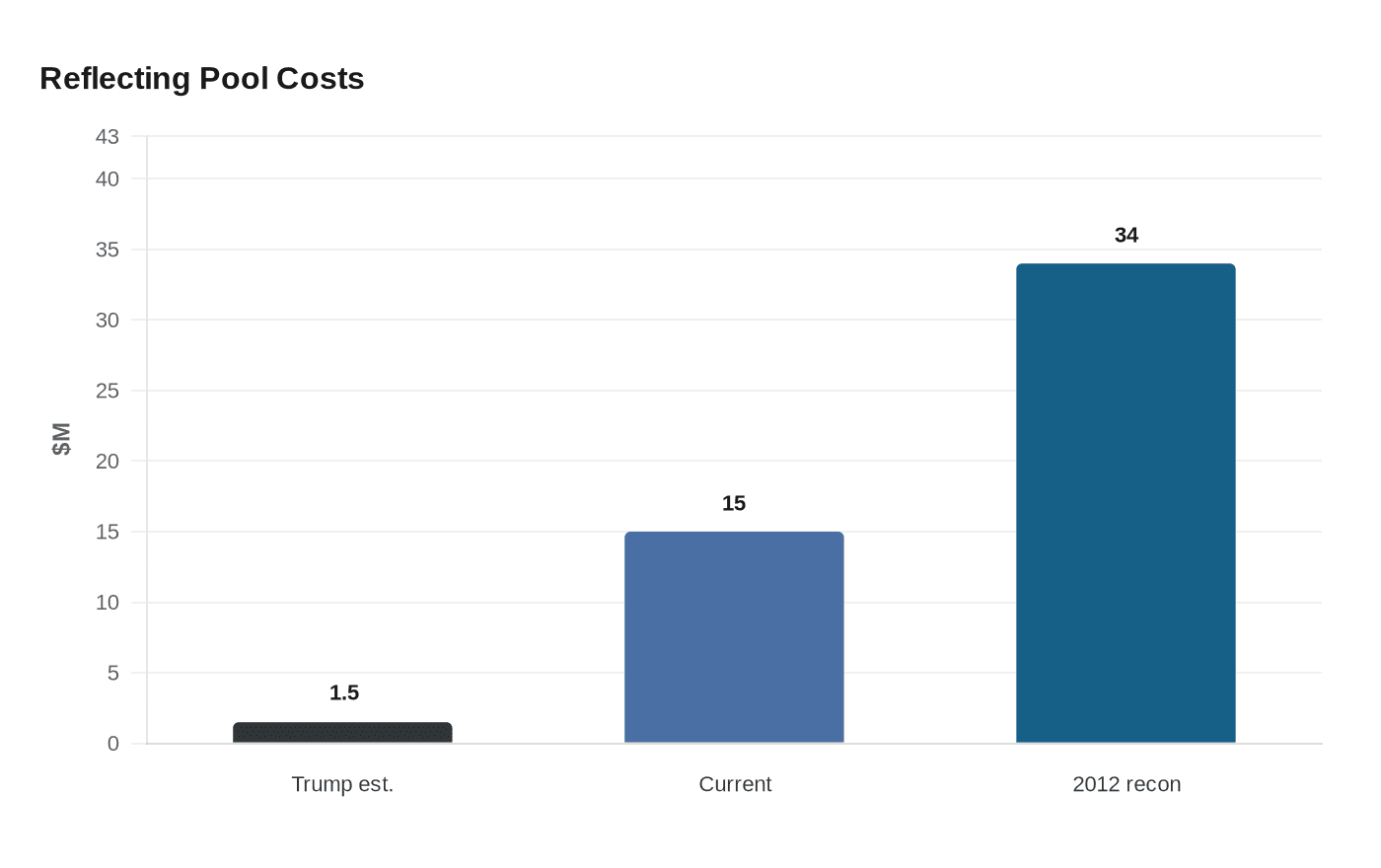
Trump's reflecting pool overhaul had climbed to nearly $15 million, far above the $1.5 million estimate he cited. The bill rose as crews resurfaced one of the Mall’s most visible landmarks.

Federal contract records showed the Lincoln Memorial reflecting pool renovation had climbed to nearly $15 million, a price tag that dwarfed the $1.5 million estimate Donald Trump has repeatedly cited. The work, which includes resurfacing the basin and replacing its filtration system, was awarded without the usual competitive bidding process, putting a high-profile federal project squarely in the center of a cost-overrun and accountability fight.
The Interior Department said the renovation had to move on an accelerated timetable because the National Park Service needed the site ready for the nation’s 250th anniversary events. Officials argued that delaying long enough to run a full procurement would keep the agency from finishing on time and would create serious government and visitor-safety problems. That urgency has made the reflecting pool, one of the most visible and symbolically charged places on the National Mall, a focal point for scrutiny over how much extra taxpayers are being asked to absorb for speed.
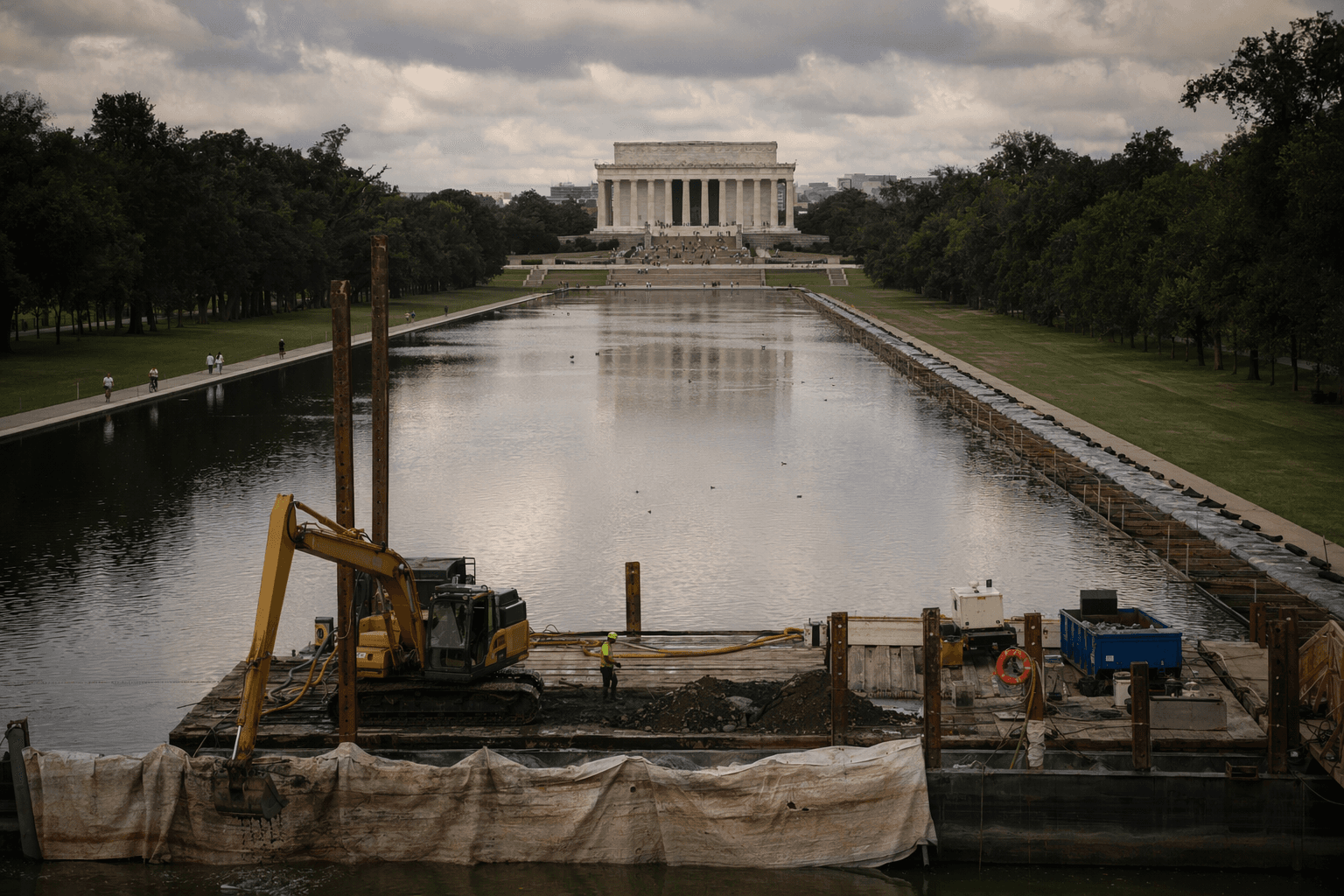
The pool is not a minor landscape feature. The National Park Service says it is one of the most recognizable and filmed sites in Washington, D.C., and that it was not completed in time for the Lincoln Memorial’s 1922 dedication, finally reaching completion in 1924. The grounds and pool also sit on the memorial’s symbolic axis facing the Washington Monument, which helps explain why any change to the site carries political and preservation weight far beyond ordinary maintenance.
This is not the first time the reflecting pool has required major federal spending. Earlier National Park Service rehabilitation work found that differential soil settlement had compromised the structure, while the foundation, joints and coping leaked water and the pool lacked circulation or filtration. That earlier project was funded through the American Recovery and Reinvestment Act, and the pool reopened in 2012 after a two-year, roughly $34 million reconstruction.
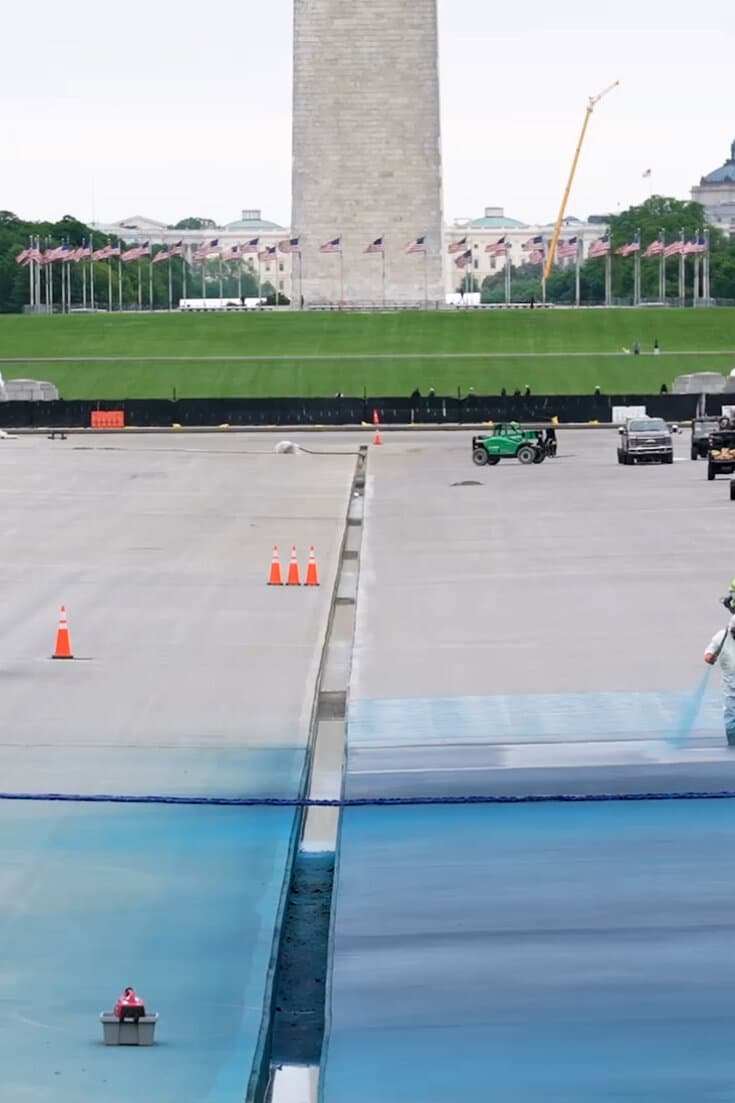
The latest renovation has already drawn a legal challenge. The Cultural Landscape Foundation and its founder, Charles A. Birnbaum, sued the Interior Department and Secretary Doug Burgum, arguing that resurfacing the pool with a vivid blue coating altered a historic landscape without the consultation required under Section 106 of the National Historic Preservation Act. The complaint says the pool and surrounding landscape are listed in the National Register of Historic Places as part of the National Mall Historic District.
The project also sits inside a broader Trump administration push tied to Freedom 250. The White House says July 4, 2026, will mark 250 years of American independence, and Interior says it plans to activate more than $345 million over five years to preserve and restore historic places. For the reflecting pool, that national celebration has become an expensive and highly visible test of how far the federal government will go to meet a deadline on one of Washington’s most watched monuments.
This article was produced by Prism’s automated news system from verified source data, official records, and press releases, then run through automated quality and moderation checks before publishing. The system is built and supervised by the people who set the standards it runs under. Read our full AI policy.
Did this article answer your question?

