Trump's Pardoned Criminals Return to Breaking the Law
At least 33 people pardoned by Trump have committed new crimes, including one convicted of plotting to kill law enforcement officers, exposing gaps in how clemency risk is assessed.

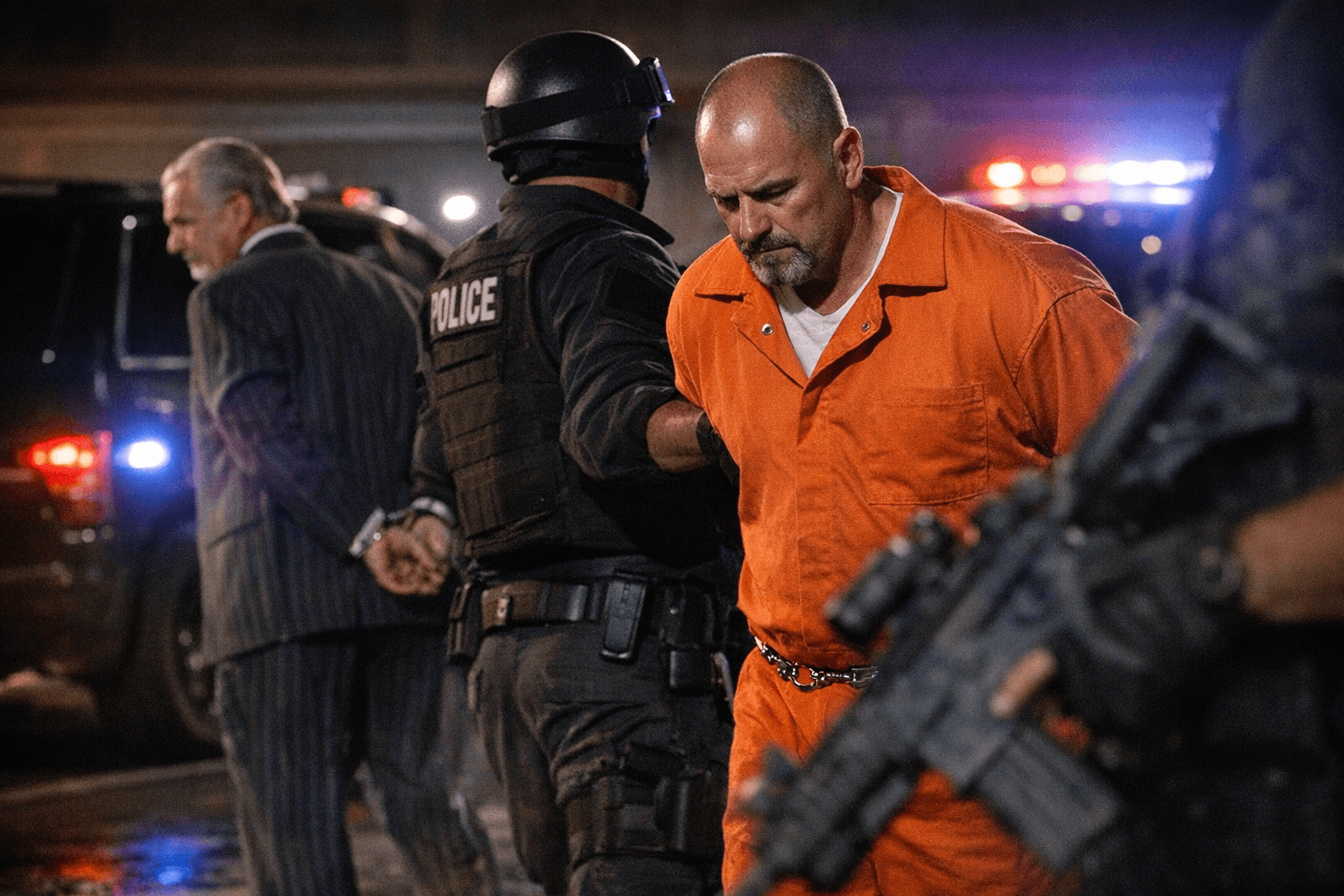
When Edward Kelley received a presidential pardon for his role in the January 6 Capitol attack, no documented evidence in the public record indicates that anyone evaluated whether he posed a future threat. He was subsequently convicted of plotting to assassinate law enforcement officers. Kelley is one of at least 33 people pardoned by President Donald Trump who went on to commit additional crimes, according to a House Judiciary Committee Democrats' report, a figure that frames a precise and uncomfortable question: was recidivism risk ever assessed before any of these clemency decisions were made?
Andrew Taake, a Texas man pardoned by Trump after his January 6 conviction, was arrested on an outstanding charge of soliciting a minor. The House Democrats' report, titled "Where Are They Now: The Perpetrators of January 6th and the Defenders of Democracy Who Stopped Them," catalogues those cases alongside others, without identifying what vetting procedures, if any, preceded the mass blanket pardon extended to 1,500 January 6 defendants.
That absence of documented process runs alongside a mounting financial ledger. A House Judiciary Committee Democratic staff analysis released on June 17, 2025, claimed that Trump's pardons wiped out $1.3 billion in restitution payments and fines owed directly to victims and taxpayers, covering both the January 6 pardons and dozens of mostly white-collar criminals. Rep. Jamie Raskin, the committee's ranking member, who released the memo, argued that "prior presidents overwhelmingly reserved pardons for those who accepted responsibility for their crimes, made full restitution to their victims and paid all their legal fines," while Trump "uses pardons not only to shorten the sentences of his political friends but to wipe out the debt they owe to their victims and to our society."
A separate NBC News analysis of pardons across the last four administrations found that the 87 people and one corporation pardoned by Trump in a single recent year had been ordered to pay more than $298 million in fines and restitution, a figure that already exceeded the entire cumulative total wiped out during Trump's first term, when pardons nullified more than $276 million over four years. Twenty-three of the most recent pardonees each owed more than $100,000 individually.
The administration's review process itself raises structural questions. The White House pardon operation is led by Alice Marie Johnson, who holds the title of pardon czar and was herself pardoned by Trump in 2020. Johnson announced in one recent week that the president had pardoned 21 people. Among them was James Womack, son of Arkansas Republican Rep. Steve Womack, who had pleaded guilty in 2023 to distributing more than five grams of methamphetamine. A White House official cited humanitarian grounds for the commutation, pointing to the mother's diagnosis of abdominal cancer and a sibling's seizure disorder. Rep. Womack, a Trump ally who had received the president's endorsement in his most recent reelection campaign, publicly thanked Trump the following day.
That same week brought a pardon for Venezuelan banker Julio Herrera Velutini, who had been charged with bribery and wire fraud in an alleged scheme connected to former Puerto Rico Governor Wanda Vázquez, whom Trump also pardoned. White House officials told The New York Times that a donation had played no role in Herrera Velutini's pardon.
Sen. Chris Murphy described the pattern as "bread-and-butter corruption," saying Trump had issued "audaciously politically toxic pardons," including for individuals convicted of drug trafficking and fraud.
What the post-pardon records of Kelley and Taake make plain is that when clemency bypasses individualized risk assessment, the consequences fall on people other than the president. The House Democrats' report was released on the fifth anniversary of January 6; in the same period, House Republicans, led by Speaker Mike Johnson, continued to block the hanging of a congressionally mandated plaque honoring the law enforcement officers who responded to the attack. More than 100 House Democrats hung reproductions outside their offices. The juxtaposition was hard to miss: a plaque for the officers who held the line, hidden; pardons for those who crossed it, signed.
Sources:
Know something we missed? Have a correction or additional information?
Submit a Tip