Trump’s unilateral Iran strategy deepens tensions, weakens U.S. leverage
Trump’s go-it-alone Iran campaign has produced battlefield gains and global pain, but it has shredded allied consensus, strained U.S. forces, and reduced Washington’s long-term leverage.
Background and timeline
Coordinated U.S.-Israeli strikes on Feb. 28, 2026, ordered by President Donald J. Trump, punctuated a longer pattern of unilateral pressure that began with the U.S. withdrawal from the 2015 Iran nuclear deal on May 8, 2018. That withdrawal launched a "maximum pressure" sanctions campaign whose economic effects were stark: Iran endured a deep contraction in 2019–2020 and accessible foreign-exchange reserves fell to roughly $4 billion by 2020, according to widely reported indicators. Earlier kinetic escalation under the same posture included the Jan. 3, 2020 drone strike that killed Qasem Soleimani, an action that prompted congressional war-powers disputes and Iranian retaliation against U.S. bases in Iraq.
The 2026 escalation and ceasefire
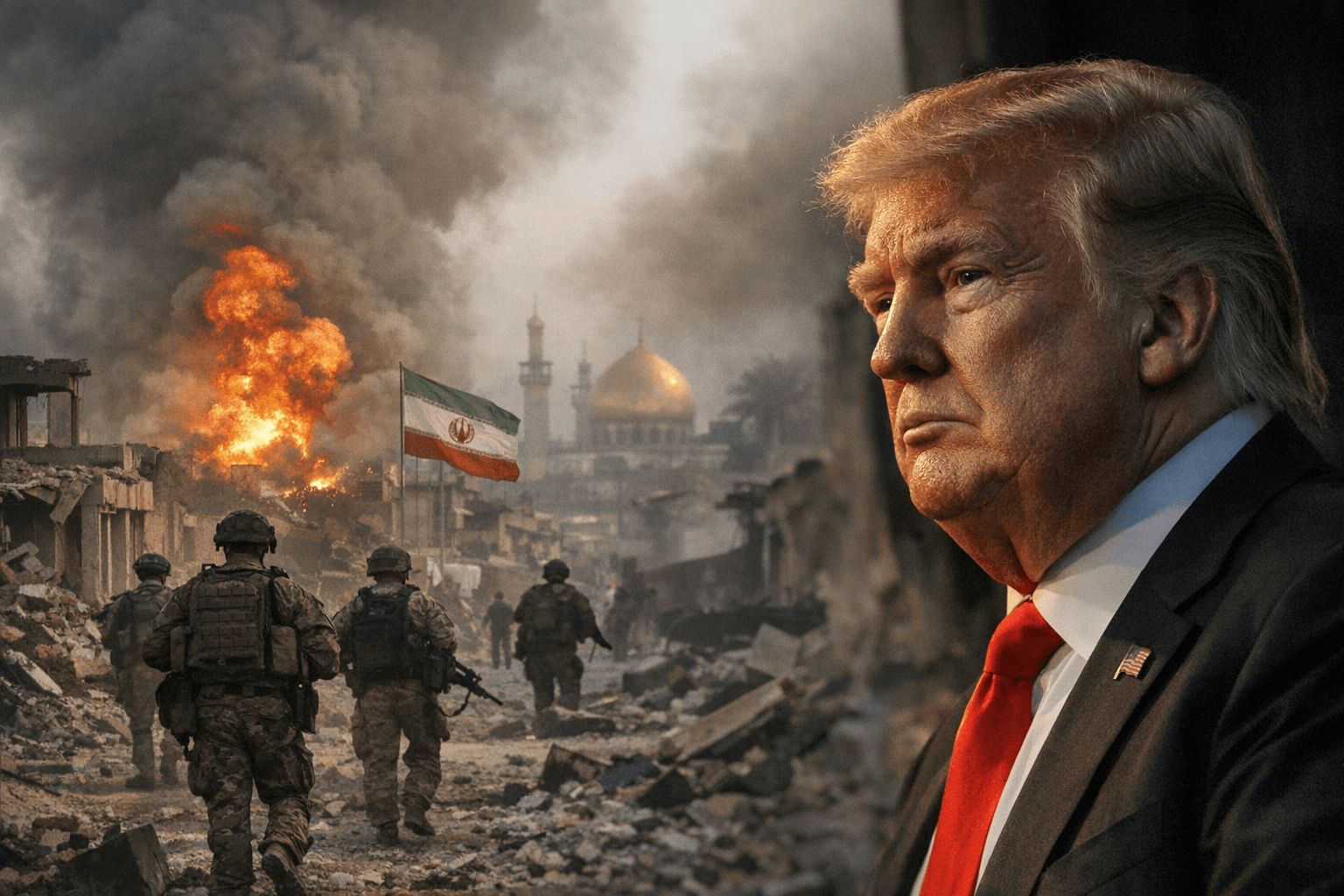
The Feb. 28, 2026 strikes were described in U.S. reporting as "major combat operations" and were followed by reports that Iran’s supreme leader, Ayatollah Ali Khamenei, had been killed, a development Tehran marked with 40 days of national mourning. The fighting rapidly expanded across the region, producing sustained exchanges and prompting Iran and the United States to agree a temporary two-week ceasefire announced April 7–8, 2026. Face-to-face talks in Islamabad began April 11 under Pakistani mediation and ended without a comprehensive settlement by April 12, 2026.
Military and human costs
The human toll has been substantial and immediate. Iranian health-ministry figures and independent tallies reported in February through April 2026 counted thousands dead and many thousands wounded inside Iran as weeks of strikes continued. U.S. Department of Defense and CENTCOM reporting confirmed about 13 U.S. service members killed and several hundred wounded during the campaign, with additional casualties in Israel, Lebanon, Iraq and Gulf states as the conflict expanded. The killing of Khamenei and the high casualty counts have intensified questions about escalation management, force protection, and the limits of precision strikes when political objectives are not aligned with broader allied strategy.
Economic and market consequences
The conflict produced one of the largest modern disruptions to global oil supplies when Iran effectively curtailed traffic through the Strait of Hormuz, the chokepoint through which roughly one-fifth of the world’s oil and liquefied natural gas transits. The International Energy Agency described the crisis as the largest supply disruption in the history of the market, with flows through the strait plunging from roughly 20 million barrels per day to a trickle. The U.S. Energy Information Administration reported Brent crude averaged $103 per barrel in March 2026 and reached near $128 per barrel on April 2, 2026 in intraday trading, forcing emergency energy planning and raising global inflation and recession risks. Fatih Birol at the IEA and EIA administrator Tristan Abbey publicly warned of heightened volatility and prolonged economic pain tied to the shutoff.
Diplomatic isolation and allied confidence
European capitals—France, Germany and the United Kingdom—publicly distanced themselves from the Feb. 28 strikes, urging restraint and diplomacy while declining to join the operations. That reaction highlights a widening gap between Washington’s unilateral operational choices and the preferences of key allies who remain concerned about escalation, regional stability, and legal authorization. Israel endorsed the strikes and praised the operation, but Gulf states grew alarmed over economic fallout and security instability, with Pakistan and Oman stepping forward as mediators. Think tanks and foreign-policy scholars at Brookings, the Council on Foreign Relations, Carnegie and RAND have argued that this pattern of unilateral actions erodes long-term U.S. leverage and creates openings for strategic competitors like China and Russia to shape outcomes.
Congress, law, and presidential authority
The strikes re-ignited the constitutional fight over war powers. Members of Congress, including Representative Jimmy Gomez and Senators Tim Kaine and Mark Warner, publicly criticized the Feb. 28 operations for proceeding without explicit congressional authorization and pressed for War Powers resolutions and votes. The White House supplied a War Powers notification after the strikes, but the episode recalls earlier legislative responses to unilateral uses of force, notably congressional action in January 2020 after the Soleimani strike. That institutional friction matters because sustained military campaigns require not only operational authority but also political legitimacy and funding lines that Congress controls.
Iranian succession and regime stability
Khamenei’s death activated Iran’s constitutional succession mechanisms and placed an interim, three-person leadership council at the center of immediate governance, including President Masoud Pezeshkian, Chief Justice Gholamhossein Mohseni-Eje'i, and senior cleric Alireza Arafi. Analysts point to the Assembly of Experts’ 2024 composition, described as dominated by regime loyalists, and to the Islamic Revolutionary Guard Corps’ powerful behind-the-scenes role as decisive variables for how succession unfolds. Those domestic dynamics matter for U.S. strategy because an orderly, predictable transition could open diplomatic windows while a disorderly one could further radicalize policy and regional proxies.
Comparative leverage: what Washington had and what it lost
Before the recent campaign, U.S. leverage rested partly on multilateral frameworks and allied alignment. The 2015 JCPOA provided a diplomatic architecture that, while imperfect, linked sanctions relief and verification in a multinational forum. After May 8, 2018, when the United States withdrew from the JCPOA, that architecture frayed and sanctions became a predominantly unilateral tool, imposing severe economic costs on Iran but also shrinking coalition options. The February 2026 strikes amplified the pattern: short-term tactical effects were achieved, including the elimination of senior leadership, but those gains came at the cost of allied trust, diplomatic standing in Europe and the Gulf, and the ability to marshal coordinated long-term pressure or reintegrate verification regimes. The result is measurable: energy markets convulsed, Congressional actors demanded oversight and limits, and international institutions warned of global economic fallout.
Institutional and policy implications
Policymakers must weigh immediate military gains against durable strategic power. The record shows that unilateral sanctions and strikes can inflict economic and operational pain but also erode multilateral leverage and invite regional escalation. Practically, that suggests a two-track approach: restore credible, multinational mechanisms for verification and pressure while reasserting clear legal authorizations and congressional partnerships for any kinetic steps. It also means investing diplomatic capital with Europe and Gulf partners to rebuild coalition trust and contingency planning to keep critical chokepoints, like the Strait of Hormuz, open under crisis conditions.
Bottom line and forward look
The cumulative record from May 8, 2018 through Feb. 28, 2026 demonstrates a strategic tradeoff: impulsive, go-it-alone actions have delivered immediate effects but at a rising cost in allied confidence, legal legitimacy, military strain and global economic stability. The temporary ceasefire and Islamabad talks offer a narrow breathing space; whether Washington uses that space to repair multilateral ties, clarify legal authority with Congress, and rebuild energy safeguards will determine whether U.S. leverage recovers or continues to erode. The presidency should recognize that the tactical benefits of unilateral strikes are real but limited, and that rebuilding the broader instruments of influence is essential to protect American interests over the long term.
This article was produced by Prism’s automated news system from verified source data, official records, and press releases, then run through automated quality and moderation checks before publishing. The system is built and supervised by the people who set the standards it runs under. Read our full AI policy.
Did this article answer your question?