Turkmenistan legalizes crypto mining and trading under strict central-bank control
Turkmenistan has legalized cryptocurrency mining and trading, bringing virtual assets under civil law while banning their use as payment. The move signals a cautious opening in a tightly controlled, gas-dependent economy but leaves key licensing, tax and enforcement details unresolved.
President Serdar Berdimuhamedov signed legislation that legalizes cryptocurrency mining and the exchange of virtual assets, placing those assets under civil law and subjecting exchanges and miners to a formal licensing regime overseen by Turkmenistan’s central bank. The law took effect on January 1, 2026 and was publicly announced on January 2, 2026, marking one of the most consequential economic policy changes in the country in decades.
Under the new framework, cryptocurrency mining and trading are explicitly permitted, but the law bars cryptocurrencies from being used as a means of payment. Exchanges and mining operations must obtain licenses and will operate under strict government supervision, according to the published summaries of the legislation. Beyond those core provisions, the text released so far does not disclose licensing criteria, fee schedules, tax liabilities, anti-money-laundering obligations, penalties for noncompliance or whether foreign operators may participate.
The decision injects a new dynamic into Turkmenistan’s highly managed economy. The country is one of Central Asia’s largest natural gas providers and remains among the world’s most isolated states, with tight controls on media, travel, investment and internet access. Analysts expect the pace of domestic crypto development to be slow and selective given those constraints and the centrality of state oversight.
Energy and infrastructure considerations add another layer of complexity. Cryptocurrency mining is electricity-intensive, and governments across the region have wrestled with where to permit or restrict operations in order to protect grids and prioritize household and industrial supply. The Turkmen law does not yet specify geographic or power-related limits, leaving open questions about how authorities will balance potential tax or innovation gains against grid reliability and environmental impacts.
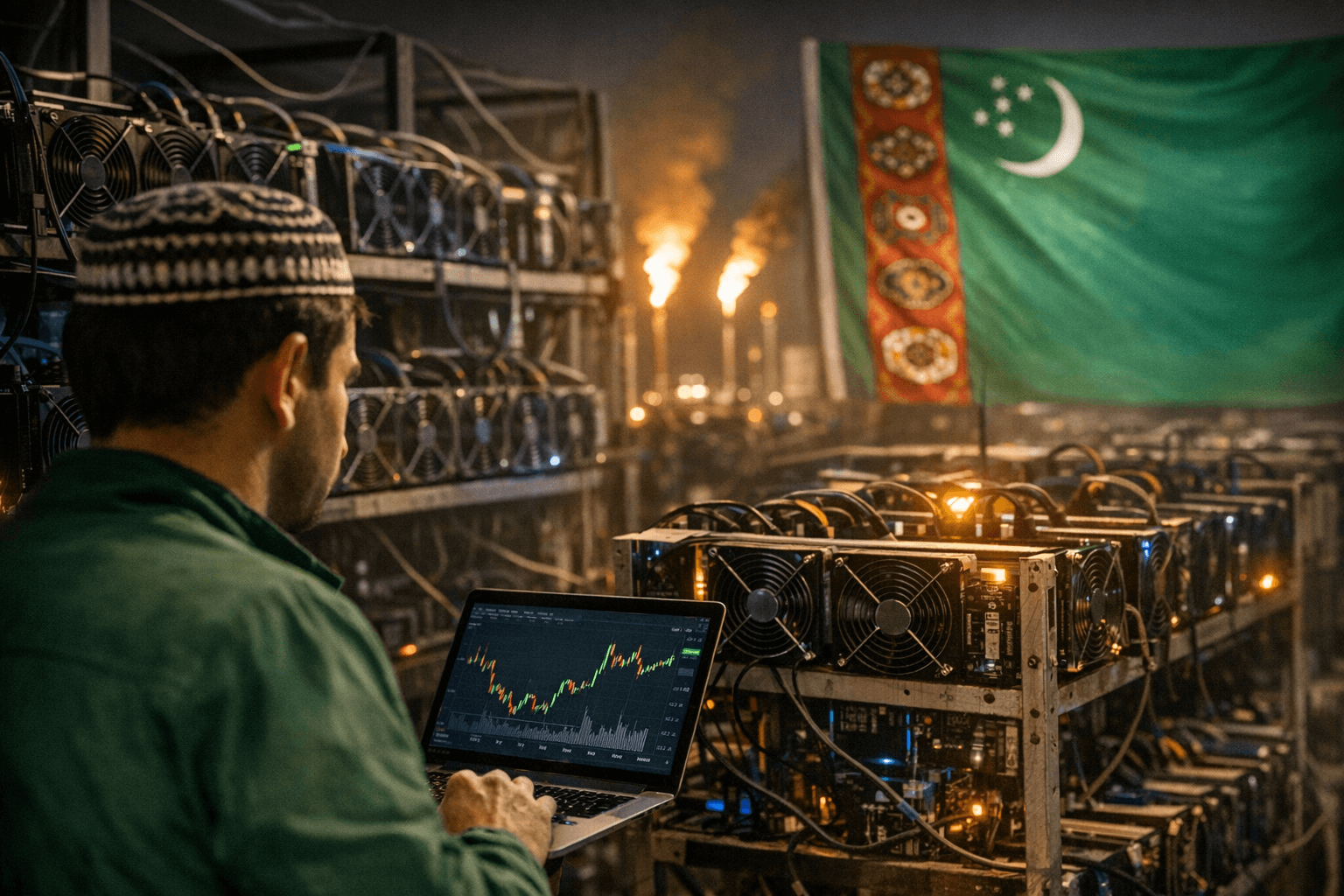
The policy also reflects a broader Eurasian pattern of shifting mining activity from informal to regulated channels. Some neighboring states have moved to tax mining and restrict operations in power-stressed regions. Turkmenistan’s move arrives amid those trends while the country maintains a formal policy of permanent neutrality and does not have a dependent alignment with any single regional power.
Legal and commercial actors will be watching closely for implementing regulations from the central bank and for the full text of the law, which so far has not been published in full detail. Important unknowns include the rules for licensing exchanges, measures to prevent illicit finance, the tax treatment of miners and trading activity, and whether foreign companies will be allowed to apply for licenses or face barriers.
For citizens and businesses, the immediate implications are mixed. The legalization could create new opportunities for domestic technology services, data centers and tax revenues if the state opens access and investment conditions are favorable. At the same time, persistent capital controls, internet censorship and bureaucratic oversight will likely limit broad participation. How Turkmenistan reconciles these competing priorities will determine whether the measure amounts to a meaningful opening or a tightly boxed, state-directed sector.
This article was produced by Prism’s automated news system from verified source data, official records, and press releases, then run through automated quality and moderation checks before publishing. The system is built and supervised by the people who set the standards it runs under. Read our full AI policy.
Did this article answer your question?