Tuscaloosa Builder Pilots Modular Tiny Houses for Rapid Disaster Relief
Tuscaloosa builder tests a 133-square-foot octagonal tiny house that shelters four people, with a prototype built locally and a first unit already funded and erected in Jamaica.

A 133-square-foot octagonal tiny house designed by Andrew Blake is being tested in Tuscaloosa as a rapid-deploy shelter intended to speed disaster relief for storms and emergency housing across Alabama and the Gulf Coast. The prototype, designed and built in Tuscaloosa, packs a fully functional kitchenette, a bathroom with shower, toilet and sink, a sleeping loft and a retractable sofa bed, and is sized to house four people.
Blake, a construction site supervisor for Habitat for Humanity Tuscaloosa, worked on the prototype with Brandon Kasteler, construction director for Habitat in Tuscaloosa. The unit’s compact internal layout is intended to deliver basic living needs quickly in post-disaster settings while minimizing transport and on-site construction time.
To keep costs down and speed assembly, Blake is developing prefabricated panels that can be shipped and assembled on-site. He described the plan this way: “It will be like a DIY (do it yourself) project.” Blake added a business model for scaling the idea: “I will manufacture and sell the panels here, then use the money to fund my work overseas.”
The project already has one field deployment. Judy Holland, director of the charity High Socks for Hope, funded the first unit that was constructed in Jamaica. Blake’s childhood in Jamaica, where he grew up watching hurricanes and earthquakes destroy lives, is the origin story Blake cites for the design and urgency of the concept: “Andrew Blake grew up watching hurricanes and earthquakes destroy the lives of people in his native Jamaica. Little could be done to thwart the forces of nature, but the problems nature created never left his mind.”
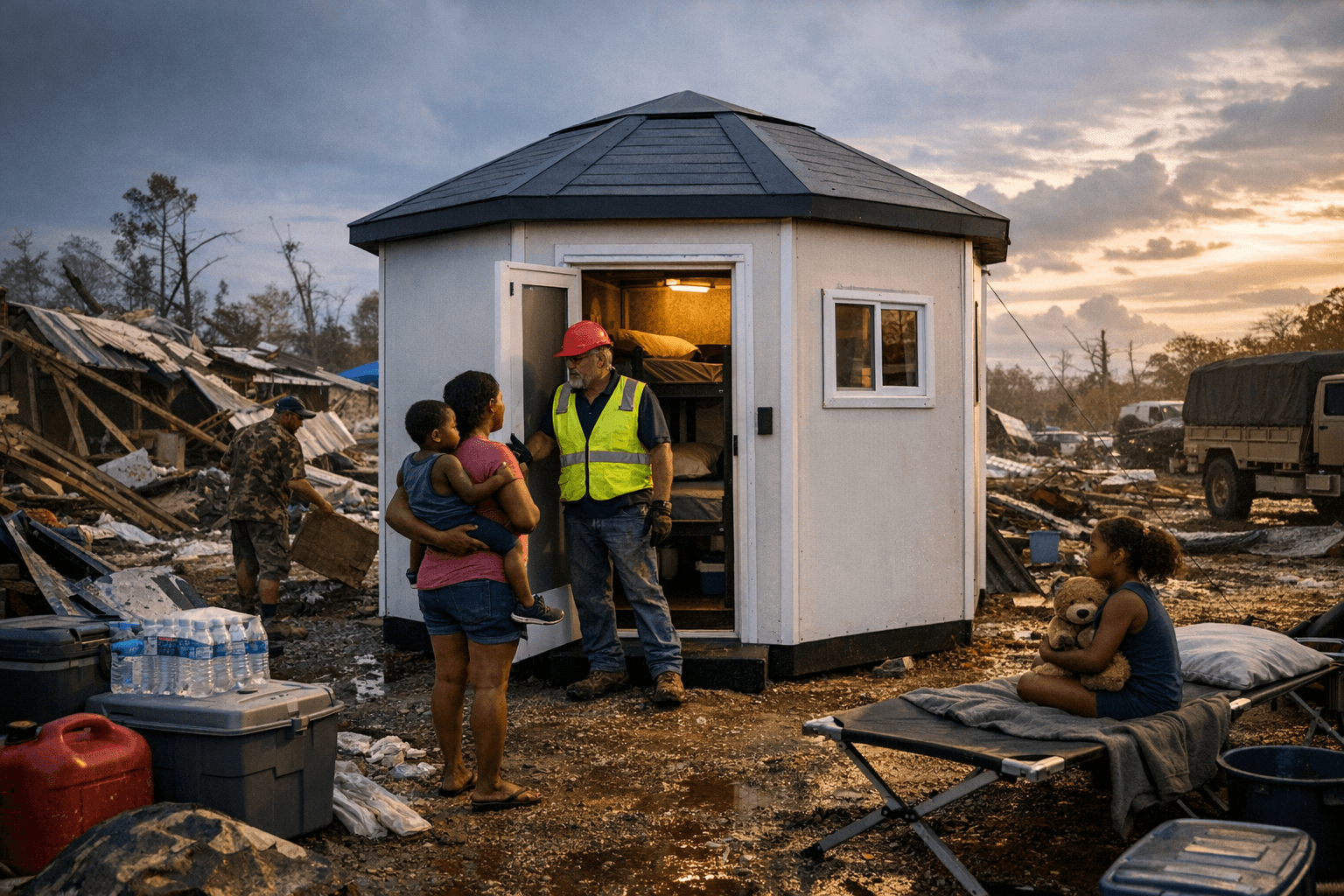
Blake hopes the model will attract larger institutional buyers, naming FEMA and international disaster-relief organizations associated with the United Nations as potential adopters. He framed the concept’s geographic ambition plainly: “It will work in any country. We want to be able to build and erect the external structures fast.”
The reporting documents the prototype and the Jamaica unit but does not include production costs, per-unit pricing, material specifications, wind or seismic ratings, assembly time metrics, or regulatory compliance details. Habitat for Humanity Tuscaloosa’s involvement is clear in design and construction support, but further testing data and formal engagements with FEMA or U.N.-affiliated organizations have not been reported.
A photo dated Jan. 28, 2026, shows Blake with the small house and notes the kitchenette; photo credit goes to Gary Cosby Jr. For additional visual material or follow-up, reach Gary Cosby Jr. at gary.cosby@tuscaloosanews.com.
Know something we missed? Have a correction or additional information?
Submit a Tip

