Utah lawmakers earmark $1M to expand Other Side Village amid homelessness overhaul
Utah lawmakers set aside $1 million to expand The Other Side Village tiny-home site, short of Gov. Spencer Cox’s $5 million ask and leaving a larger expansion contingent on future funding.

Utah lawmakers earmarked $1 million to expand The Other Side Village, a tiny-home community on Salt Lake City’s west side serving chronically homeless adults, even though Gov. Spencer Cox had requested $5 million for the project. The legislative set‑aside reduces, for now, the scale of the buildout the village had planned and leaves the bigger expansion dependent on additional appropriations.
The $1 million for The Other Side Village sits inside a broader homelessness budget that includes a mix of ongoing and one-time investments: $4.6 million ongoing and $2.7 million one-time to target “high utilizers,” $1.1 million ongoing and $7.8 million one-time to expand intensive residential mental health beds, $9.4 million ongoing and $5 million one-time for new styles of shelter space, and $2.5 million ongoing and $9.4 million one-time for emergency shelters and temporary housing. Lawmakers also greenlit nearly $25 million in one-time homelessness money this session, after re-appropriating nearly $23 million set aside last year for expanding the state’s low-barrier emergency shelter.
Legislative budget chairs added new intent language conditioning some shelter dollars on local participation: funding for new and current shelter space, the language states, "may only be expended with a 1:1 match from local governments." Lawmakers flagged $26.4 million of the package as contingent on that one-to-one local match, a change officials described as the first time homelessness money has been tied to a dollar-for-dollar local commitment and a reflection of House Speaker Mike Schultz’s push for cities and counties to "step up."
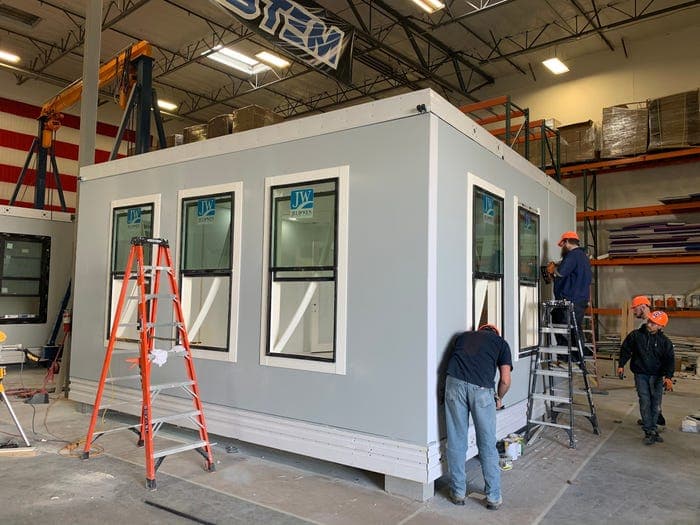
The Other Side Village operates as a democratically run, long-term residential development on the west side with, by one account, almost 60 single-person tiny homes and a residency process that requires applicants to complete a prep school and pass a community vote. The village runs social enterprises — the Other Side Inn, an Airbnb-style lodging operation, plus The Other Side Donuts and The Other Side Foods — which CEO Preston Cochrane says help fund operations: "Those revenues are able to generate the necessary operational funding to make our programs no cost to anybody." Vice president and cofounder Camille Winnie framed the model this way: "This is our approach, nobody else is doing it how we're doing it. The home is one part of the puzzle, it's not the whole story." Resident Lori McQueen described daily life at the village: "It's all about family, being together, holding each other accountable."

The group had signaled a rapid expansion plan: if the full $5 million were approved, The Other Side Village planned to add 35 homes within a few weeks, bringing total capacity to 95 units. State officials are also pursuing a nearly 16-acre property in northwest Salt Lake City for a potential central campus; Coleman called the budget recommendations a "tremendous vote of confidence" in focused programs and said the funded items could "lay the groundwork" for whatever that campus becomes.
Salt Lake City Mayor Erin Mendenhall cautioned that the city already "invests millions of dollars addressing homelessness, homeless-related issues, deeply affordable housing and public safety," and said the city is prepared to articulate its contributions during budget negotiations. With $1 million on the books but the governor’s $5 million request unmet, The Other Side Village’s next phase now depends on whether lawmakers approve further funding and whether local governments can meet the new 1:1 match conditions to unlock the larger shelter dollars.
Know something we missed? Have a correction or additional information?
Submit a Tip