Two Doctors Detained by Immigration Agents While Traveling Within Days
Two doctors were detained by immigration agents while traveling within days of each other, raising alarms about healthcare staffing and the chilling effect of visa enforcement on foreign-trained physicians.
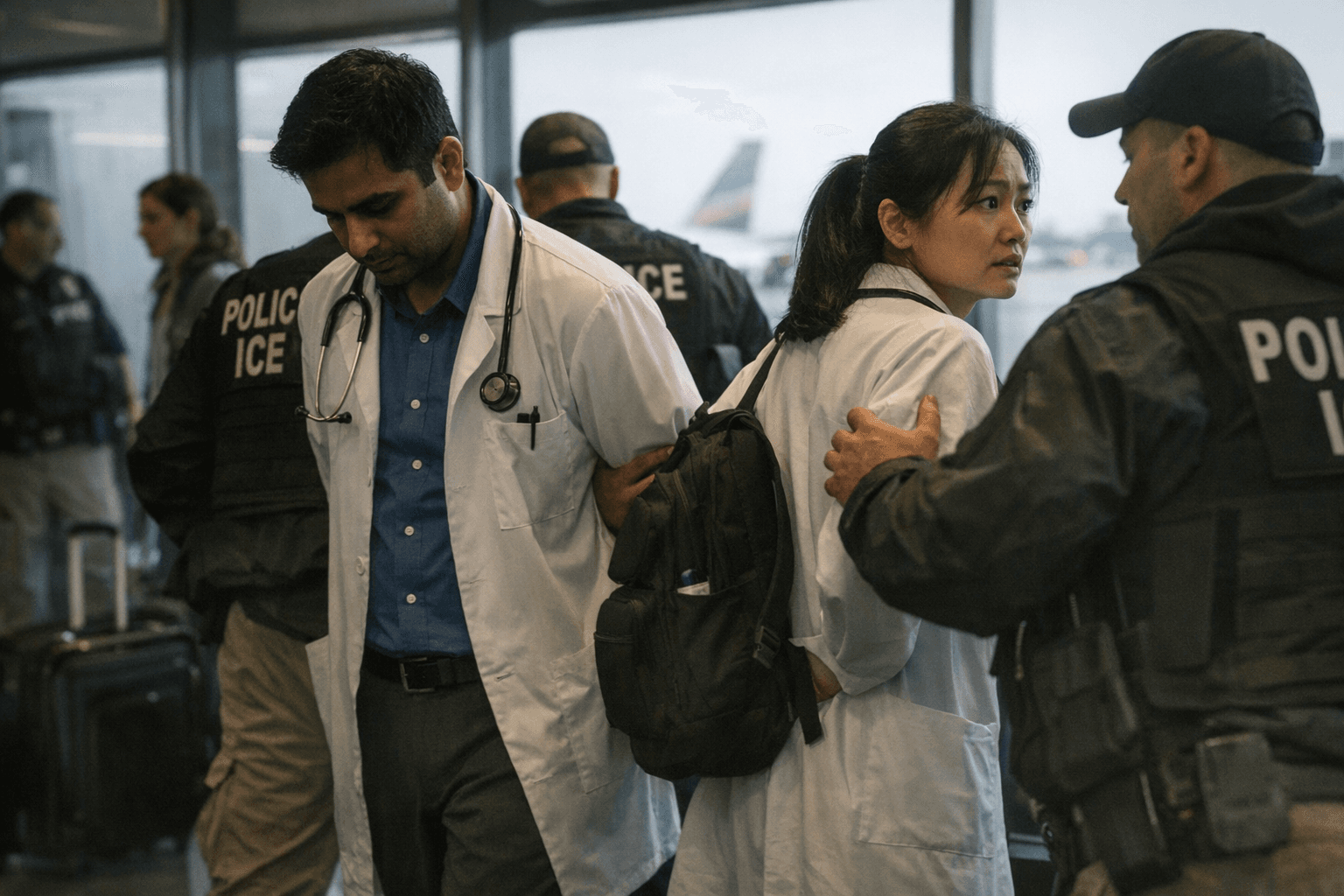
Within the span of a single week, two physicians were pulled from their travels and taken into immigration custody, a convergence that has shaken medical communities across Texas and intensified warnings from healthcare advocates about what aggressive visa enforcement means for an already strained U.S. healthcare system.
Dr. Ezequiel Veliz, a family medicine physician based in Weslaco, Texas, was detained at the Sarita Border Patrol checkpoint on April 6 while traveling to Houston with his husband, Joseph Williams. "He said 'they're detaining me...' I started crying," Williams recounted.
Williams said Border Patrol agents were unable to verify Veliz's legal status or the status of his application and detained him. Veliz was taken to McAllen to be processed before appearing before an immigration judge. Then, on Saturday, April 11, an emergency room physician was detained by immigration agents while also traveling, authorities confirmed, a second case in less than a week involving a licensed medical doctor.
Veliz, a Venezuelan physician recognized as Resident of the Year in Texas, was detained by ICE on April 6 while processing his J-1 visa. That status changed late last year after Veliz lost his job through his work permit because his immigration status ended and he became undocumented. His employment authorization card had been issued through a Temporary Protected Status designation. In October, the Trump Administration ordered that people with Veliz's status from Venezuela would have their status terminated.
Veliz is one of many foreign-trained professionals affected by the Trump administration's decision to suspend processing for certain immigration applications. That suspension has left physicians across the country in legal limbo, holding valid medical licenses but no clear immigration pathway, their futures contingent on agency adjudications that have ground to a halt.
Immigration attorney Carlos Garcia, who does not represent Veliz but has clients in similar situations, said: "We've seen people in all phases of their immigration process being detained, and that's extremely concerning." Garcia recommends avoiding travel through Border Patrol checkpoints. "What's going on in South Texas is that even if you entered lawfully, but your visa has lapsed for whatever reason, then if you encounter an official from immigration or Border Patrol, the likelihood of you being detained is huge," Garcia said.
That legal vulnerability is not abstract. Doctors who entered the country on J-1 exchange visitor visas to complete residency and fellowship training, a pipeline that supplies a significant share of physicians to underserved rural and urban communities, now face the prospect of detention at routine checkpoints where agents have wide discretion to hold individuals whose status cannot be immediately verified. Physicians are required to complete at least three years of residency, and some train for seven years or more to subspecialize in fields like pulmonary and critical care medicine.
The detentions come as healthcare systems are already grappling with staffing shortfalls. The visa crackdown has reshaped the nation's healthcare landscape, leaving hospitals understaffed and patients traveling farther for essential services. With foreign-born doctors accounting for a significant share of the clinical workforce, and many now unable to renew or secure visas, the staffing crisis shows no sign of abating unless policymakers act.
The American Medical Association said it is "deeply concerned by reports of immigration enforcement activity in and around hospitals and emergency rooms, a tactic fueling fear among patients and hospital staff alike." Two doctors detained at checkpoints in the same week gives that concern a new and urgent dimension. For emergency departments already running on thin margins of coverage, the fear that a routine drive through South Texas could end in detention is now a professional calculation that physicians cannot afford to ignore.
This article was produced by Prism’s automated news system from verified source data, official records, and press releases, then run through automated quality and moderation checks before publishing. The system is built and supervised by the people who set the standards it runs under. Read our full AI policy.
Did this article answer your question?