Uber-backed Lime files for IPO after years of growth, narrowing losses
Lime filed to go public after revenue hit $886.7 million, but it still warned of $675.8 million due by the end of 2026.
Lime filed for a U.S. initial public offering Friday, betting that years of revenue growth and three straight full years of positive free cash flow can outweigh a balance-sheet burden that reaches well into next year. The Uber-backed micromobility company, incorporated as Neutron Holdings, Inc., intends to list on Nasdaq under the ticker LIME.
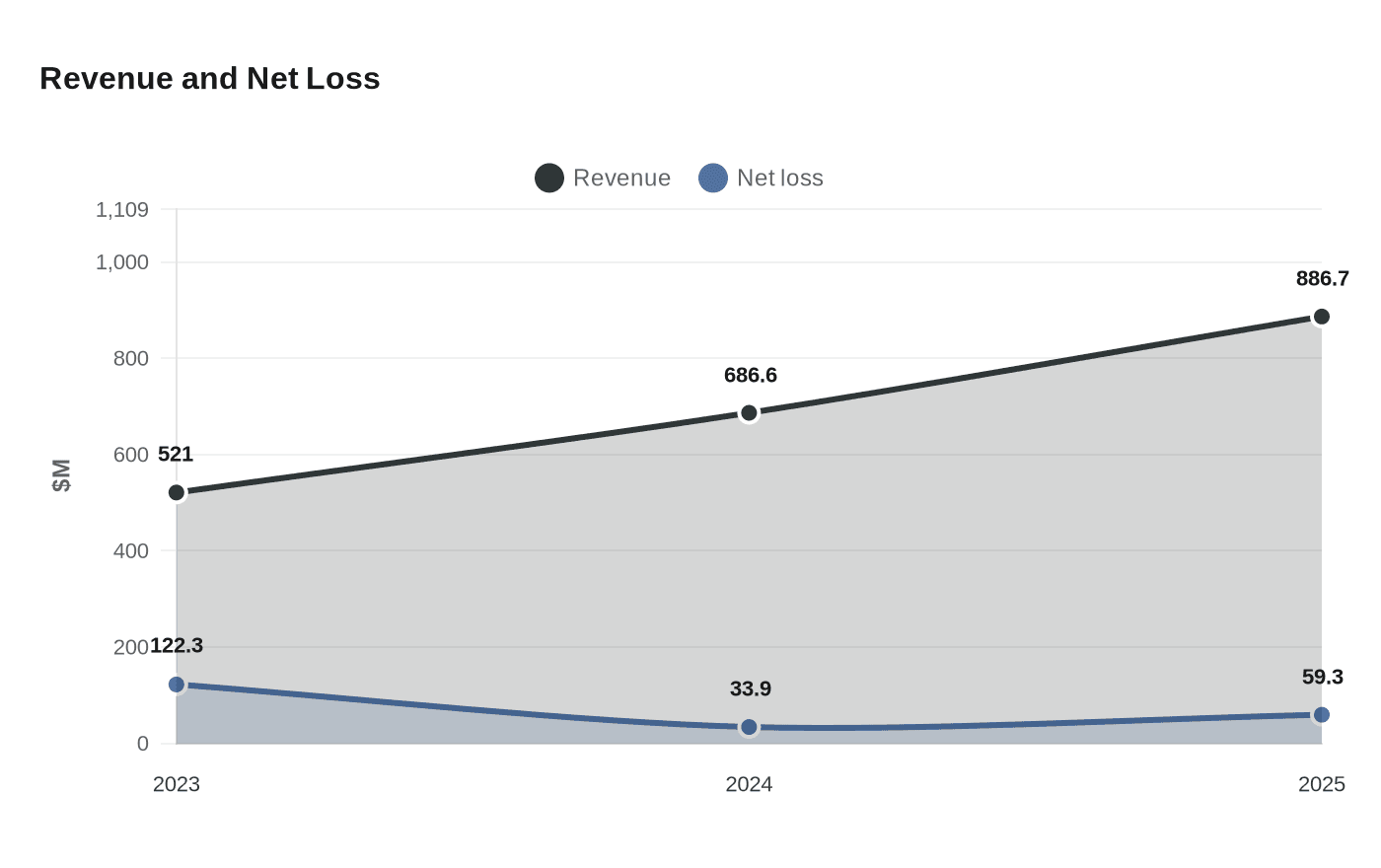
The filing shows a business that has scaled quickly but is not yet consistently profitable. Revenue rose from $521 million in 2023 to $686.6 million in 2024 and $886.7 million in 2025, a 29.1% increase last year. Net losses narrowed from $122.3 million in 2023 to $33.9 million in 2024, then widened to $59.3 million in 2025. Even so, Lime said it generated about $104 million in free cash flow last year, its third consecutive full year of positive free cash flow.

The harder test is debt. Lime reported about $1 billion in current liabilities, including roughly $846 million due within 12 months and about $675.8 million due by the end of 2026. The company said it had $261 million in cash as of March 31, 2026, and warned that it had “substantial doubt” about its ability to continue as a going concern without fresh financing. The IPO, in other words, is not just a growth milestone. It is also a refinancing event, with proceeds expected to help cover obligations the company says it does not have “sufficient liquidity” to meet on its own.
Uber remains central to the story. Uber led Lime’s $170 million funding round in 2020, which also gave Lime control of Jump, Uber’s electric bike and scooter division. Uber invested another $523 million in 2021, and Reuters reported that Uber remains Lime’s largest shareholder with a stake of more than 10%. Integration with the Uber app generated 14% of Lime’s total revenue last year, underscoring how much Lime’s public-market case still depends on platform distribution as much as on standalone demand.

Lime’s filing also reopens a category that public investors once treated with caution. Reuters said Lime operated in about 230 cities across 29 countries at the end of 2025, while Morningstar and Dow Jones reported about 230 cities across 20 countries. The discrepancy aside, the scale is substantial for a business that remains exposed to city regulation, fleet utilization and weather. Morningstar said Lime posted negative free cash flow of $79 million in the first quarter of 2026, a reminder that scooters and e-bikes earn their keep in warm, dry months and lose momentum when conditions turn cold or wet.
Bird’s bankruptcy still hangs over the sector. Lime’s IPO will test whether micromobility can finally persuade public investors that it is more than a volatile urban novelty, and whether the economics can hold up once the market looks past growth and toward durability.
This article was produced by Prism’s automated news system from verified source data, official records, and press releases, then run through automated quality and moderation checks before publishing. The system is built and supervised by the people who set the standards it runs under. Read our full AI policy.
Did this article answer your question?

