UK alcohol-specific deaths fall for first time since 2018, but remain high
UK alcohol-specific deaths fell 6.3% in 2024, but Northern Ireland still had the highest rate and deep inequalities remained stark.
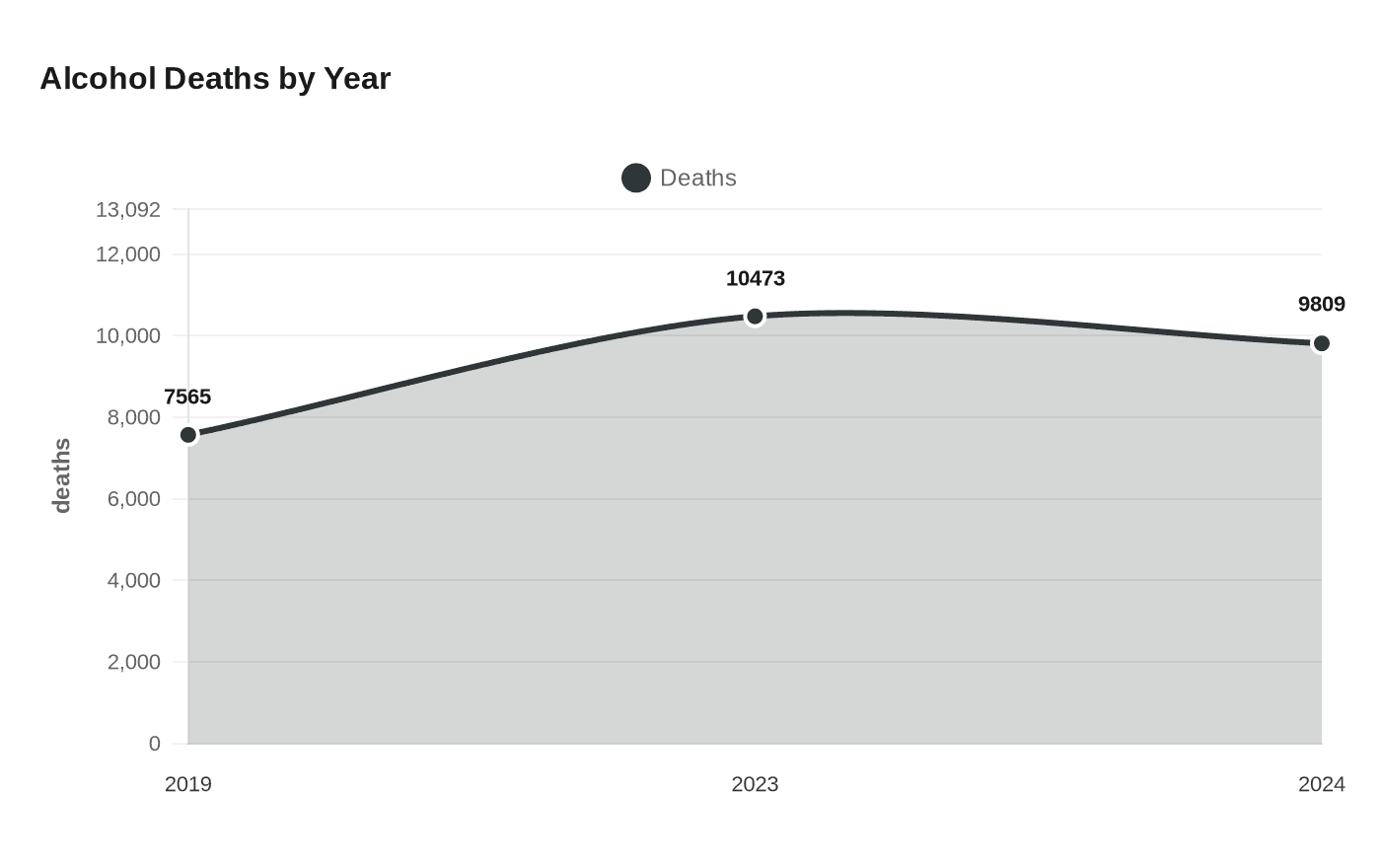
Alcohol-specific deaths fell in the UK for the first time since 2018, but the decline looked more like a fragile pause than a recovery. The Office for National Statistics said 9,809 deaths from alcohol-specific causes were registered in 2024, down 664 from 10,473 in 2023, while the death rate eased to 14.8 per 100,000 people.
That was the first year-on-year fall since 2018, but it came after a steep post-pandemic surge. UK alcohol-specific deaths rose from 7,565 in 2019 to 10,473 in 2023, a 38.4% increase, and the 2024 total remained far above pre-Covid levels. The ONS said alcohol-specific deaths cover conditions directly caused by alcohol, such as alcoholic liver disease, and do not capture every death linked to drinking. It also said the figures are based on registrations, not the date of death, with 85.5% of the 2024 registrations occurring in 2024, 12.9% in 2023 and 1.5% in 2022 or earlier.
The improvement was not even across the country. Northern Ireland recorded the highest alcohol-specific death rate of any UK nation at 21.4 per 100,000 people, ahead of Scotland on 20.9, Wales on 16.8 and England on 13.8. Within England, the North East had the highest regional rate at 21.1, while London had the lowest at 10.9. Men continued to die at around twice the rate of women, with rates of 20.2 and 9.7 per 100,000 respectively.
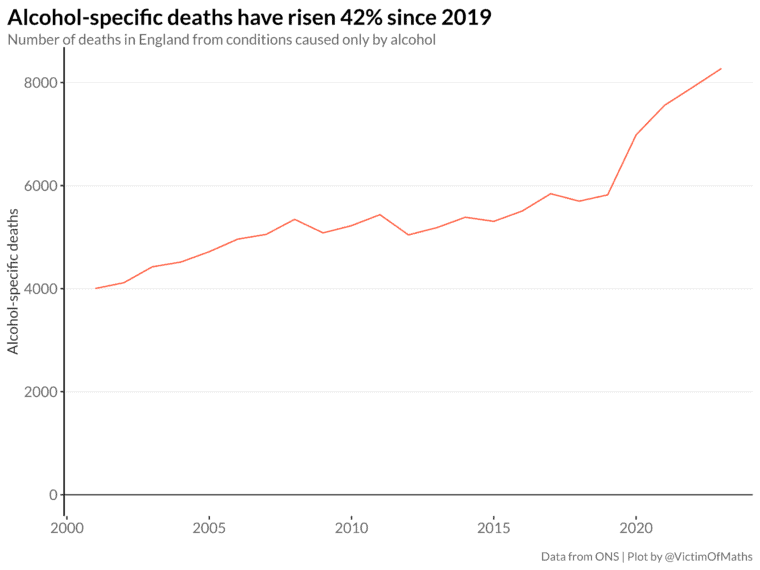
Age patterns also pointed to uneven progress. In England, the alcohol-specific mortality rate for both sexes combined fell significantly in 2024, the first fall since the rise seen during the Covid-19 pandemic. But the ONS said people aged 80 and over were the only age group in England whose rate increased last year, a reminder that the burden is not easing uniformly across age groups or places.
Public health groups welcomed the drop but warned against reading too much into it. Dr Katherine Severi of the Institute of Alcohol Studies said the reduction was welcome but “not cause for complacency,” arguing that efforts to cut deaths should be redoubled. She pointed to the fact that people in the most deprived communities remain three to four times more likely to die from alcohol than those in the least deprived areas. Dr Richard Piper of Alcohol Change UK said the fall was positive but “no cause for complacency,” and called for stronger action on cheap strong alcohol and marketing.
The policy fight is sharpest in Northern Ireland, where health groups and medical bodies have pushed for minimum unit pricing. Supporters say the measure, already used in Scotland, can reduce deaths and hospital admissions, especially among heavier drinkers and people living in poverty. With Northern Ireland now at the top of the UK table, the latest fall in deaths has reopened a harder question: whether this is the start of a durable shift, or only a brief interruption in a longer crisis.
This article was produced by Prism’s automated news system from verified source data, official records, and press releases, then run through automated quality and moderation checks before publishing. The system is built and supervised by the people who set the standards it runs under. Read our full AI policy.
Did this article answer your question?