UK borrowing costs hit 2008 high as Starmer faces quit pressure
Britain’s borrowing costs hit their highest level since 2008, squeezing room for tax cuts and spending as Keir Starmer faced a fast-moving leadership revolt.

Higher borrowing costs are now biting at the heart of Britain’s policy choices. The benchmark 10-year gilt yield climbed to about 5.103% on Tuesday morning, while the 30-year yield jumped to 5.79%, the highest at the long end since 1998, pushing up the price of financing government debt and narrowing room for tax cuts, public spending and relief for households facing high mortgage costs.
The selloff reflected both political stress in Westminster and a wider fear that Britain’s fiscal discipline could weaken if Keir Starmer is forced out. Bloomberg said investors worried a leadership change could bring more spending, while the pound slipped against the euro. Reuters reported the 10-year gilt at 5.11%, the pound down 0.5% to $1.354 and the FTSE 100 nearly 1% lower, with bank shares under pressure.
Starmer was trying to steady the party after Labour’s heavy local election losses on May 8 across England, Scotland and Wales. He said he would stay in office to “deliver change,” but that message did little to calm a revolt that had spread through the parliamentary party. Reuters said almost 80 Labour lawmakers were publicly calling for him to go, and Starmer was consulting colleagues ahead of a crunch cabinet meeting after ministerial aides quit.
Markets had already been rattled on Monday, when 30-year borrowing costs rose to 5.67% and 10-year yields climbed to just shy of 5%. The Guardian said Starmer’s reset speech failed to reassure bond markets, while analysts warned that a more populist leftward policy direction under new leadership could make investors even more wary. The question now is whether the latest jump is mainly a verdict on Starmer’s authority, or part of a broader bond-market pressure that has kept long-term borrowing costs elevated across the year.
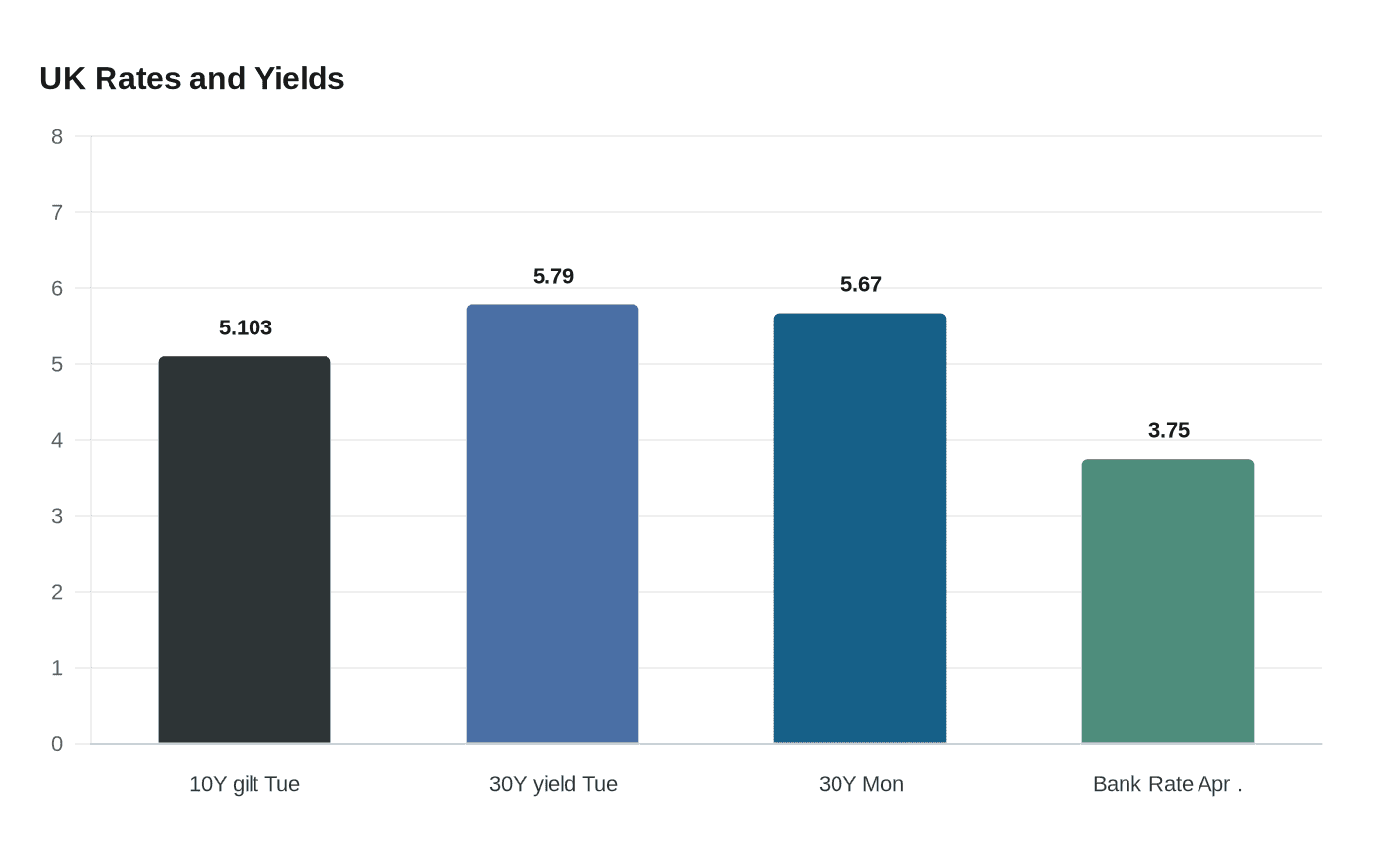
The public-finance numbers leave little room for error. UK borrowing in the year ending March 2026 came in at £132.0 billion, or 4.3% of GDP, close to the Office for Budget Responsibility’s £132.7 billion forecast. With the Bank of England holding Bank Rate at 3.75% on April 30, the rise in gilt yields is adding market-driven pressure without any fresh rate increase from Threadneedle Street.
Starmer also used May 11 to announce legislation paving the way for full nationalisation of British Steel after failed talks with Jingye, arguing the move served the public interest. The policy reset was meant to project control. Instead, it has arrived as bond traders are testing whether Britain’s government can still command the confidence that comes with stable leadership and a credible fiscal plan.
This article was produced by Prism’s automated news system from verified source data, official records, and press releases, then run through automated quality and moderation checks before publishing. The system is built and supervised by the people who set the standards it runs under. Read our full AI policy.
Did this article answer your question?