UK economy contracts in April as Iran war hits services output
UK GDP fell 0.1% in April as Middle East conflict-hit services dropped 0.2%, with sports output down 9.1% and fuel costs rising.
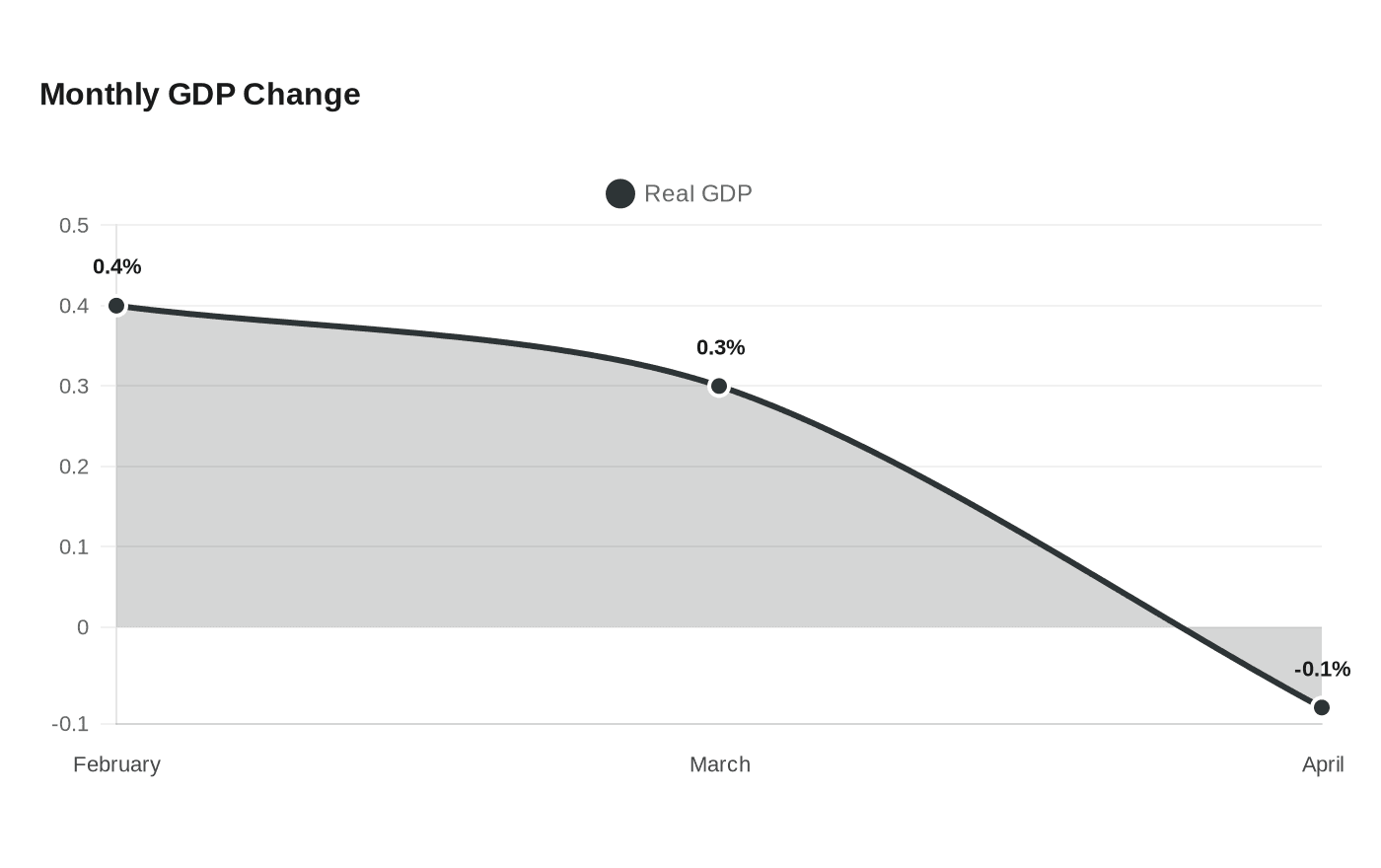
Britain’s economy shrank in April as the shock from the Iran war began to show up in services, travel and energy-sensitive industries. Real GDP fell 0.1% after gains of 0.3% in March and 0.4% in February, a setback that followed a stronger-than-expected spring run-up but still left output 0.7% higher in the three months to April than in the three months to January.
The Office for National Statistics said services output fell 0.2% in April, while construction rose 0.1% and production was flat. The biggest drag came from sports, amusement and recreation, where output dropped 9.1%. The ONS said some of that weakness reflected the cancellation of sporting events in the Middle East linked to the Iran war, a reminder that conflict shocks can filter quickly into domestic activity through event cancellations, travel disruption and lower turnover.

The pressure was not confined to leisure. Companies in manufacturing, wholesale, transportation support and travel agencies reported reduced turnover tied to the Middle East conflict, with many ONS comments pointing to higher energy and fuel costs. The House of Commons Library has said the Israel-US-Iran conflict disrupted oil and gas flows through the Strait of Hormuz, affecting around 20 million barrels of oil per day in mid-March. Brent crude briefly climbed above $100 a barrel, while UK wholesale natural gas prices rose roughly 75% between late February and March 23.
That sequence matters for households as much as for markets. Higher energy costs can feed through to petrol, heating and shipping bills, squeezing real incomes and business margins at the same time that uncertainty clouds investment plans. The House of Commons Library has warned that the price shock may lift inflation later in 2026 and make Bank of England rate cuts less likely, with rate hikes now possible if the inflation pass-through proves persistent.
The International Monetary Fund has sharpened that warning. In April, it cut its 2026 UK growth forecast to 0.8% from 1.3% and said Britain would suffer the biggest hit of any rich economy from the Iran war, even as it projected global growth of about 3.1%. Suren Thiru of the Institute of Chartered Accountants in England and Wales said the April GDP decline pointed to a “damaging descent into stagflation,” arguing that higher fuel costs had flipped from being a tailwind in March to a headwind in April. For now, April looks like a single-month wobble after a solid start to the quarter. The deeper risk is that geopolitical instability is becoming a measurable drag on everyday economic life.
This article was produced by Prism’s automated news system from verified source data, official records, and press releases, then run through automated quality and moderation checks before publishing. The system is built and supervised by the people who set the standards it runs under. Read our full AI policy.
Know something we missed? Have a correction or additional information?
Submit a Tip