UK food shortages could hit by summer in worst case scenario
A secret government exercise warned that a Strait of Hormuz blockade could leave UK supermarkets short of chicken, pork and fizzy drinks by summer.
A prolonged blockade of the Strait of Hormuz could cut into UK food supplies by summer, with government contingency planning warning that carbon dioxide shortages may ripple through chicken, pork and fizzy-drink production.
The scenario was drawn up as a “reasonable worst-case scenario” in a secret civil contingency exercise reportedly codenamed Exercise Turnstone, with senior officials from No. 10, HM Treasury and the Ministry of Defence involved. The planning assumes the Middle East conflict drags on and keeps the Strait of Hormuz closed, a route that matters not only for fuel shipping but for the industrial supply chains that feed British food processing.
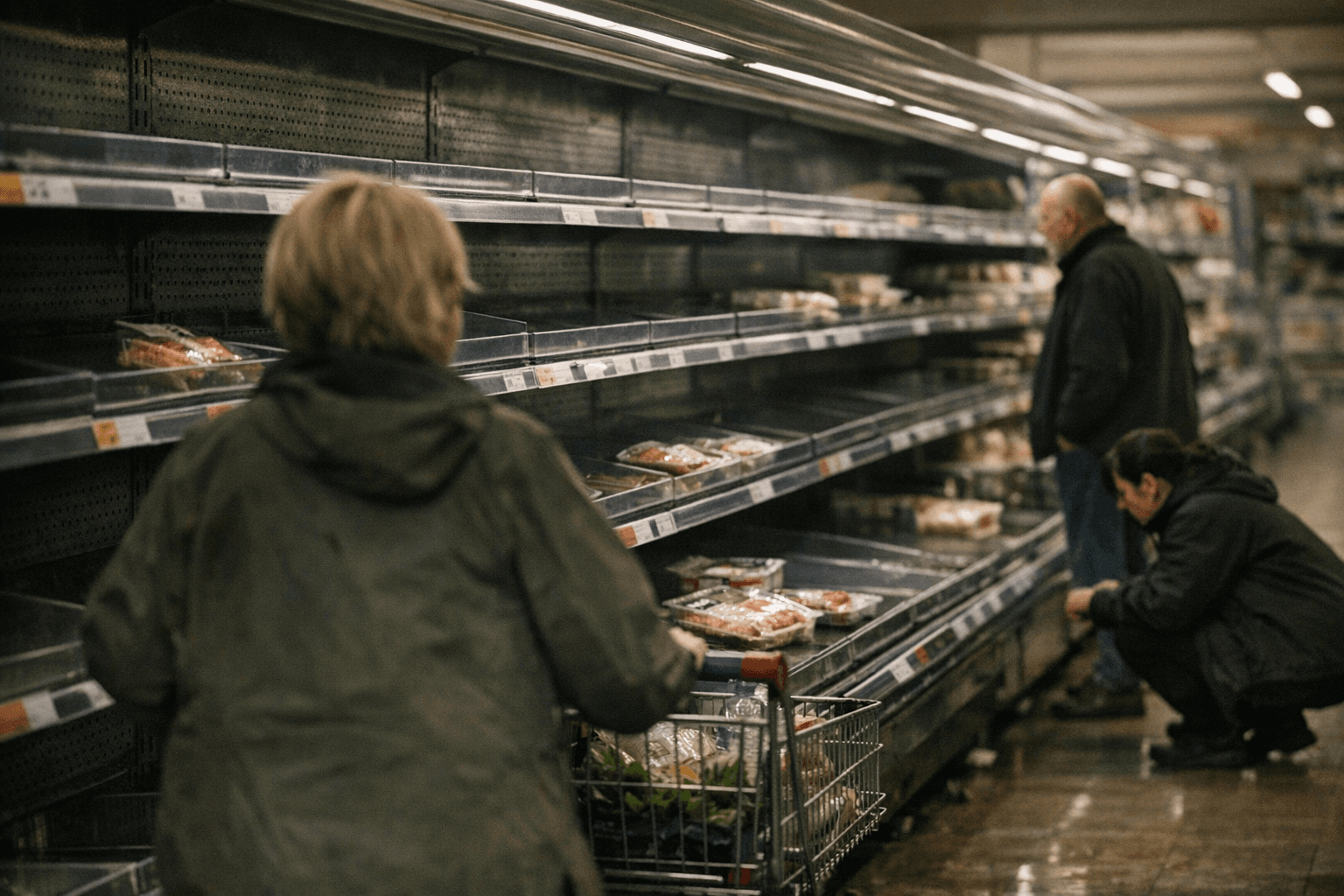
Carbon dioxide sits at the centre of the risk. It is used across parts of the food industry, and if supplies tighten, producers can struggle to process meat, preserve food and make beverages. In the worst case, that means smaller production runs, slower throughput and, eventually, gaps on supermarket shelves. The immediate consumer risk is not a nationwide food collapse. It is narrower choice, intermittent shortages in specific categories and occasional empty shelves if processing and distribution slow at the same time.
The government moved to shore up supplies on 26 March 2026, directing Ensus UK Ltd to restart production at Wilton, Teesside, to generate CO2 for food manufacture and preservation, beverage manufacture, energy, healthcare and other essential uses. Officials say they are also working with industry on a long-term plan to diversify the UK’s carbon dioxide supply, a sign that ministers see this as a supply-chain vulnerability rather than a one-off industrial glitch.
The wider food system remains exposed. The UK Food Security Report 2024 says the country is highly dependent on imports to meet consumer demand for fruit, vegetables and seafood. It also notes that conflict in the Middle East has already disrupted trade routes and navigational safety in the Red Sea, while Russia’s invasion of Ukraine pushed up key input costs such as energy and fertiliser.
That combination leaves the UK sensitive to shocks far beyond the checkout aisle. If shipping is slowed, fuel costs rise, fertiliser gets pricier and CO2 supplies tighten, the pressure moves quickly from ports and processors into supermarkets. The worst-case language used inside government is not a prediction of national famine. It is a warning that the food system is heavily exposed, and that a war-driven squeeze in one strategic waterway could still reach British tables by summer.
This article was produced by Prism’s automated news system from verified source data, official records, and press releases, then run through automated quality and moderation checks before publishing. The system is built and supervised by the people who set the standards it runs under. Read our full AI policy.
Did this article answer your question?