UK, France convene 51 nations for Hormuz shipping protection mission
Britain and France rallied 51 nations behind a defensive Hormuz mission as leaders warned the blockade could rattle inflation, food and flights worldwide.
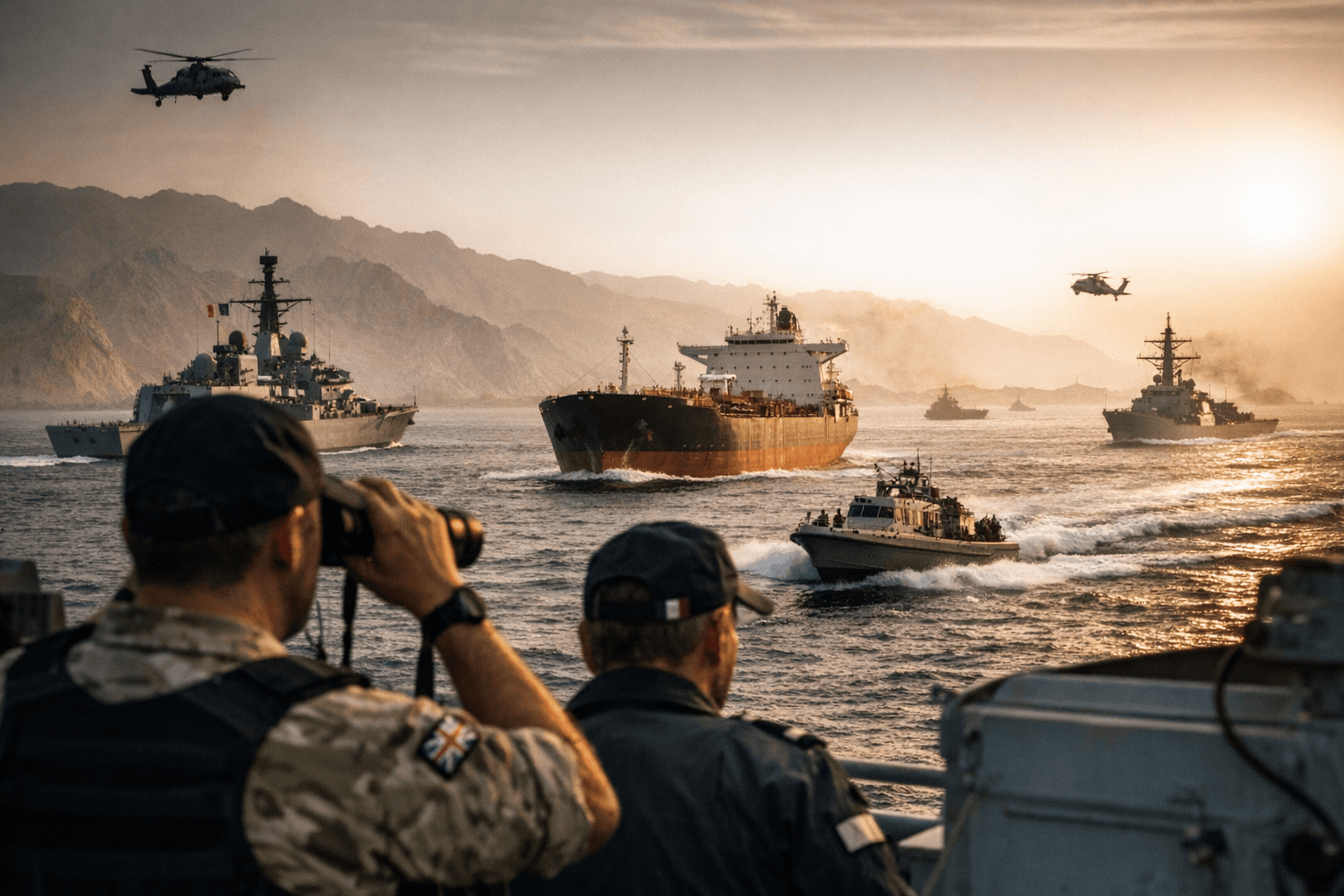
A defensive patrol plan for the Strait of Hormuz is being cast as a shield for far more than tankers. Britain and France brought 51 countries into an international summit in London on the waterway’s security, betting that a credible show of force can steady shipping insurers, oil markets and supply chains that still hinge on the narrow passage.
The summit statement said the mission would be “independent and strictly defensive,” with the aim of protecting merchant vessels, reassuring commercial shipping operators and clearing mines once conditions permit after a sustainable ceasefire agreement. It also called for the “unconditional, unrestricted, and immediate re-opening” of the Strait of Hormuz, a message that went straight to the heart of global trade vulnerability. Any prolonged disruption there can ripple quickly into higher freight costs, dearer oil, tighter insurance premiums and delays that reach supermarket shelves, factory inputs and airline schedules.
Sir Keir Starmer said more than a dozen countries had already offered to contribute assets, and he said a military plan conference would be held in London next week to set out more detail on the mission’s composition. The British prime minister said reopening the strait was “a global necessity and a global responsibility,” framing the operation as an international test of whether commerce can be protected without widening the conflict.
European leaders have reason to be anxious. France 24 reported that those expected to take part in the video conference included Germany, Britain and France, and that officials feared a continuing blockade could drive higher inflation, food shortages and flight cancellations if jet fuel runs short. The summit also backed the International Maritime Organisation’s work to keep seafarers and vessels safe, and called on shipping operators, insurers and industry bodies to prepare for a resumption of operations when conditions allow.
The plan now looks like an early security architecture rather than pure summit theater, but its credibility will depend on whether the pledges become ships, mine-clearing capacity and clear rules of engagement. A French presidential official said allies would need both an Iranian commitment not to fire on passing ships and a US commitment not to block ships leaving or entering the strait. That makes the mission as much a diplomatic test as a naval one, and a reminder that the world’s energy system can be shaken by a chokepoint far beyond the Gulf.
This article was produced by Prism’s automated news system from verified source data, official records, and press releases, then run through automated quality and moderation checks before publishing. The system is built and supervised by the people who set the standards it runs under. Read our full AI policy.
Did this article answer your question?