UK Inquiry Finds Putin Authorized 2018 Novichok Attack, Sanctions Follow
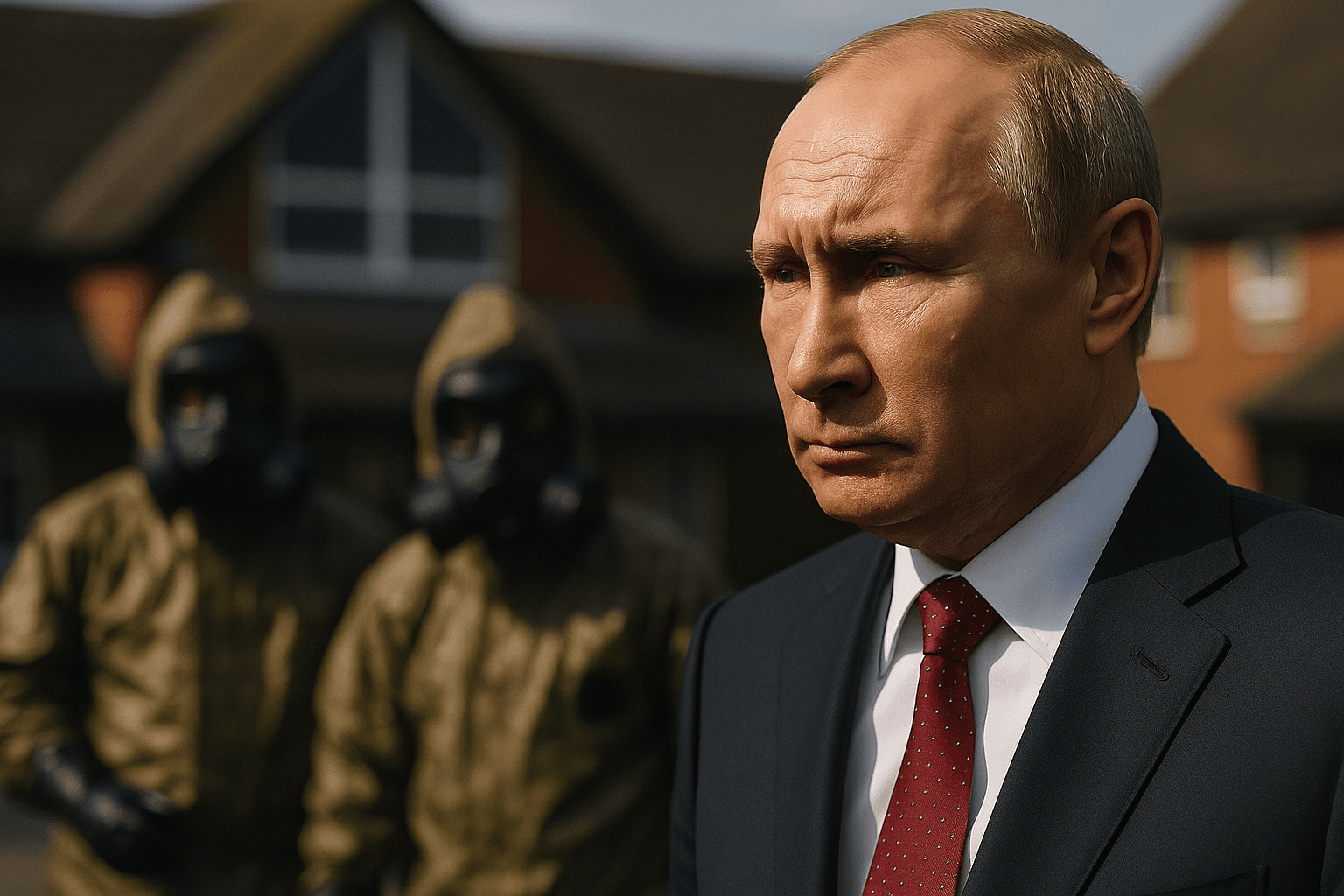
A British public inquiry concluded today that the 2018 Salisbury Novichok poisoning was carried out by a Russian military intelligence team and that President Vladimir Putin must have authorised the operation. The UK government responded with fresh sanctions targeting the GRU and individual officers and summoned the Russian ambassador, a move that will deepen diplomatic strain and test international mechanisms for accountability.

A public inquiry published on December 4, 2025 concluded that the attempted murder in Salisbury in 2018 was executed by operatives from Russia’s GRU military intelligence and that the operation could not have proceeded without authorisation from President Vladimir Putin. The attack involved the attempted killing of former Russian double agent Sergei Skripal and his daughter, and resulted months later in the death of Dawn Sturgess after a member of the public came into contact with the nerve agent Novichok.
Following the inquiry’s findings, the UK government announced a package of sanctions aimed explicitly at the GRU and labelled measures against individual officers implicated in the operation. Officials also summoned the Russian ambassador to London to convey the seriousness with which Britain treated the inquiry’s conclusions. Reuters reported the publication and the immediate governmental response on December 4, 2025.
The inquiry’s determination that responsibility rests at the highest levels of the Russian state frames the episode not merely as an intelligence operation gone wrong, but as an act with moral and political weight. It places questions of state responsibility and leadership decision making at the heart of a case that has become a touchstone for disputes over foreign intervention, the use of chemical agents, and the limits of diplomatic immunity when national security and public safety are at stake.
Under international law, the use of a nerve agent on foreign territory engages multiple frameworks including prohibitions established under the Chemical Weapons Convention. While a domestic public inquiry cannot itself impose criminal liability on foreign leaders, its attribution of blame shapes the diplomatic environment and can justify targeted measures by states and multilateral bodies. The British government’s decision to single out the GRU and named individuals signals an intent to combine moral denunciation with tangible punitive steps designed to deter similar operations in the future.
The publication of the inquiry and the ensuing sanctions are likely to harden already strained relations between London and Moscow. Diplomatic ties frayed after the 2018 attack, and the new findings are expected to complicate any efforts to normalise relations. For allies in Europe and beyond the case will be closely watched as a test of collective responses to cross border wrongdoing that involves state security services.
Beyond geopolitics, the inquiry’s conclusion resonates at a human level. The deaths and long lasting suffering caused by the poisoning have remained a source of public indignation and a point of political contention. The families of victims and communities affected in Salisbury will regard the inquiry as a form of recognition, but the verdict does not remove the practical difficulty of holding foreign officials to account.
As London presses its case through sanctions and diplomatic channels, the broader international community confronts a perennial question about the balance between punitive measures and engagement. How states translate moral attribution into enforceable policy will shape norms around state conduct, the safety of dissidents abroad, and the future of intelligence operations that cross borders.
This article was produced by Prism’s automated news system from verified source data, official records, and press releases, then run through automated quality and moderation checks before publishing. The system is built and supervised by the people who set the standards it runs under. Read our full AI policy.
Did this article answer your question?